🦊 Forest & Woodland Animals
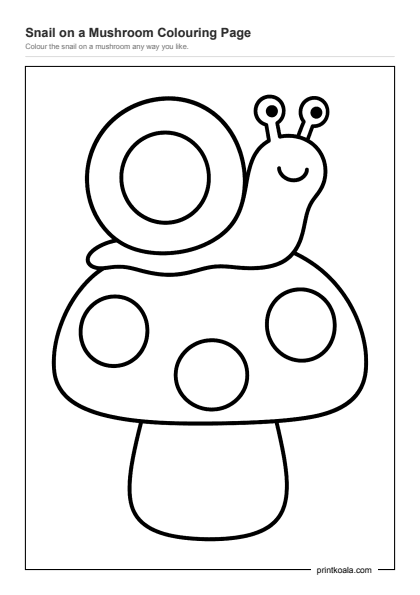
Snail on a Mushroom Coloring Page
Ages 2–48
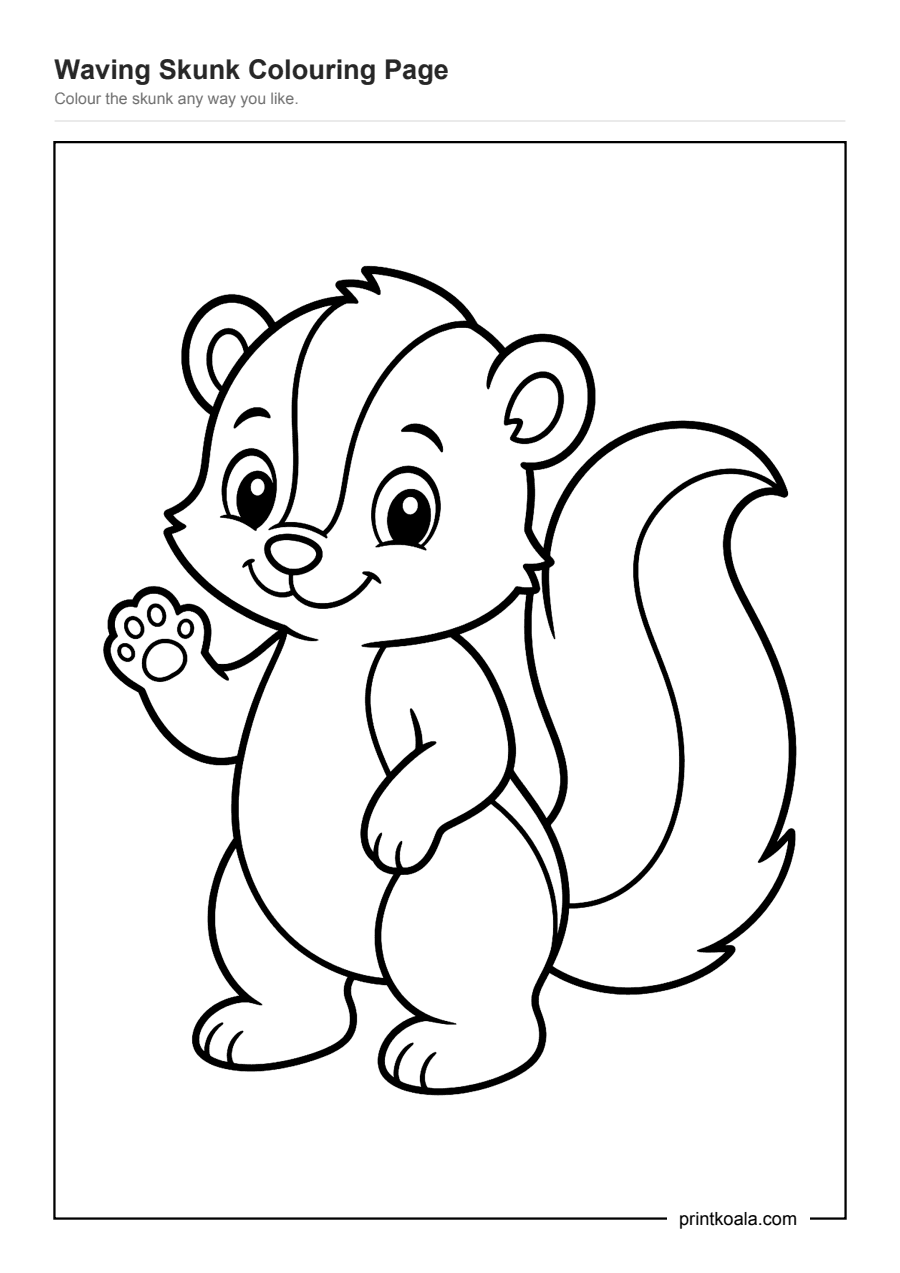
A friendly skunk stands on its hind legs, one paw raised in a wave, with a big curling tail and a flame-shaped stripe down its head.
Free, no sign-up. Downloaded 9 times · A4 · Print at 100% scale
This skunk stands upright on two feet, one front paw lifted in a wave with its little pads facing out, the other paw resting near its round tummy. Its tail sweeps up and out behind it, wide and fluffy, taking up almost as much space as the body itself. The white stripe starts as two pointed tufts on top of the head, runs down between two big round eyes, and fades out just above the shoulders. Two rounded ears, a small oval nose and a soft smile finish off the face. There is no background and nothing else on the page, so every bit of attention goes to the skunk.
The tail and the body are the parts to enjoy here: wide, curved shapes a young child can fill in with big strokes without worrying about staying inside tiny lines. The stripe and the paw pads are the opposite challenge, small pointed and round patches that ask for a slower hand and maybe a finer crayon. Because the whole animal can be done in two or three colors, black for the body, white or a pale color left blank for the stripe, and something warm for the paw pads, it is an easy page to talk through before starting: what color skunk shall we make today.
It sits on the easier side of the pile. The outlines are thick and well separated, there is no clutter or background to fill in, and the pose is calm rather than busy, so it will not overwhelm a child who is still getting used to holding a crayon. It suits younger colorers best, with just enough small detail in the face and paw to keep an older four or five year old interested too.
Start with the big tail and body, then move to the smaller paw pads and stripe once your child has settled in. If the stripe feels fiddly, it is fine to leave it white and just color around it.