🦊 Forest & Woodland Animals
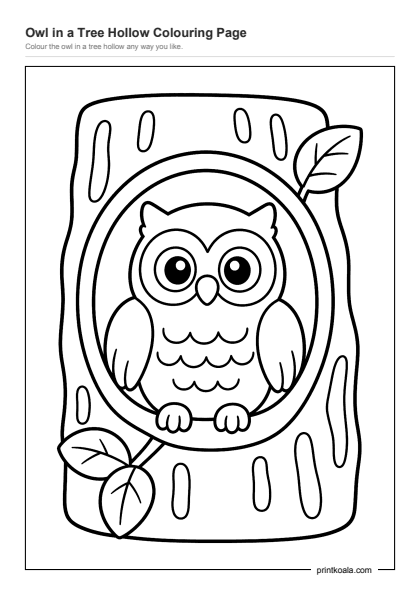
Owl in a Tree Hollow Coloring Page
Ages 2–510
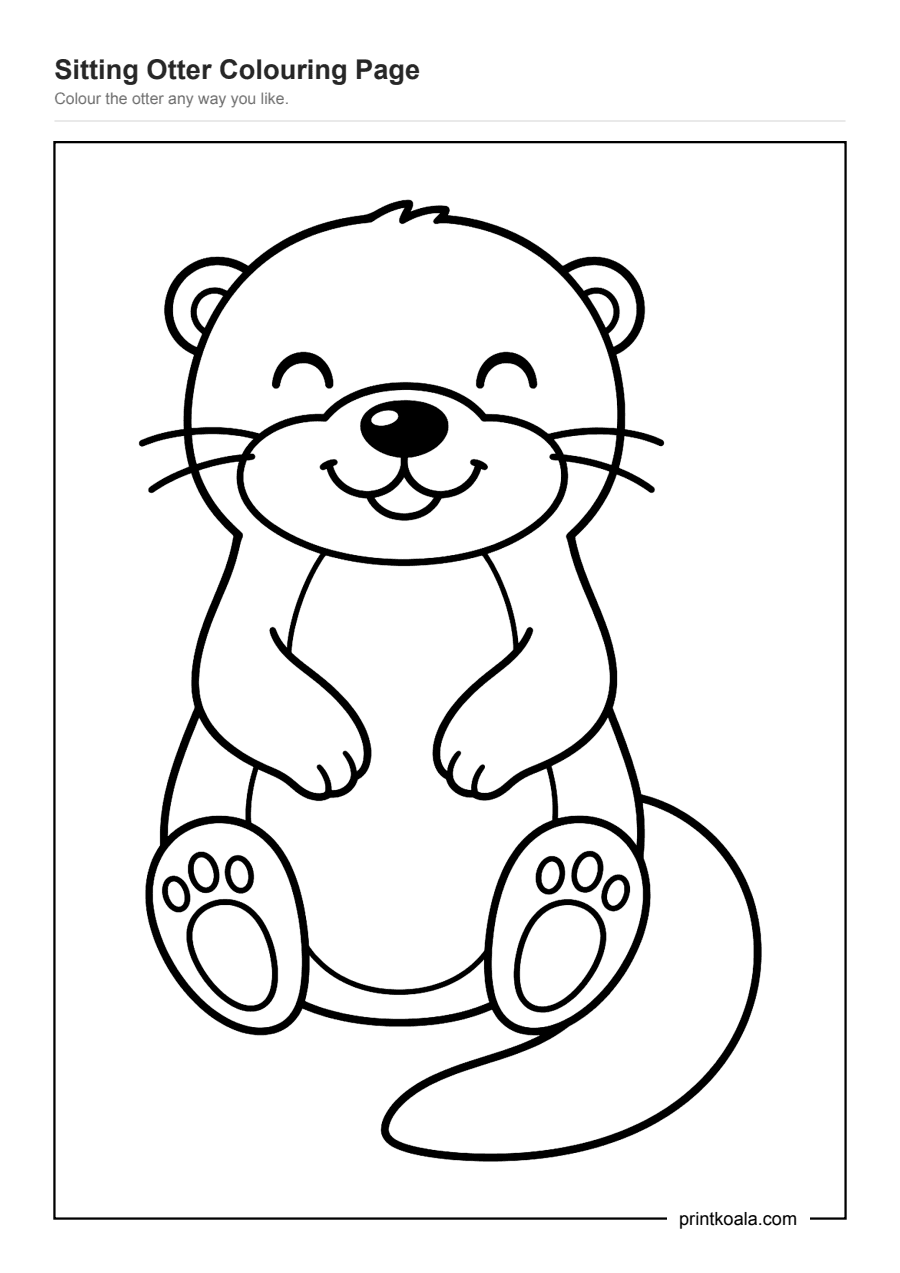
A round, front-facing otter sits with both paws forward, eyes closed in a happy smile, and a broad curled tail sweeping out to one side.
Free, no sign-up. Downloaded 8 times · A4 · Print at 100% scale
This otter sits square to the page, propped up on two big flat feet, with both front paws resting just in front of its round belly. Its eyes are closed in a happy curve, its mouth is open in a smile with two small teeth showing, and a little tuft of fur sticks up between its rounded ears. Long whiskers fan out from each cheek, and a broad tail curls out from behind the body and loops back on itself at the tip. Look closely and there are small oval pads on all four paws to find and count.
Almost everything here is one big, closed shape: the head, the belly, the chest, and that wide curling tail. That makes it a good page for a child who is still working on staying inside lines rather than one who wants to test their skill. The paw pads and whiskers are the only fiddly parts, and they are small enough to skip without spoiling the picture, so a child can decide for themselves how much detail to take on.
Because the shapes are so large and the linework is thick and simple, this sheet sits at the easy end of the otter coloring pages in this set. It suits younger children who are just getting comfortable holding a crayon, or anyone who wants a quick, satisfying page rather than a long, detailed one.
Let your child start with the belly or tail, the biggest and easiest shapes, before moving to the smaller paw pads and whiskers. If the whiskers feel too fiddly, it is fine to leave them white or color over the lines loosely.