🦕 Dinosaurs & Prehistoric
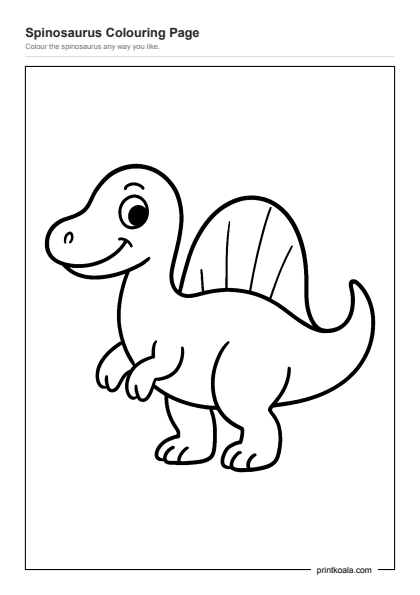
Spinosaurus Coloring Page
Ages 2–511
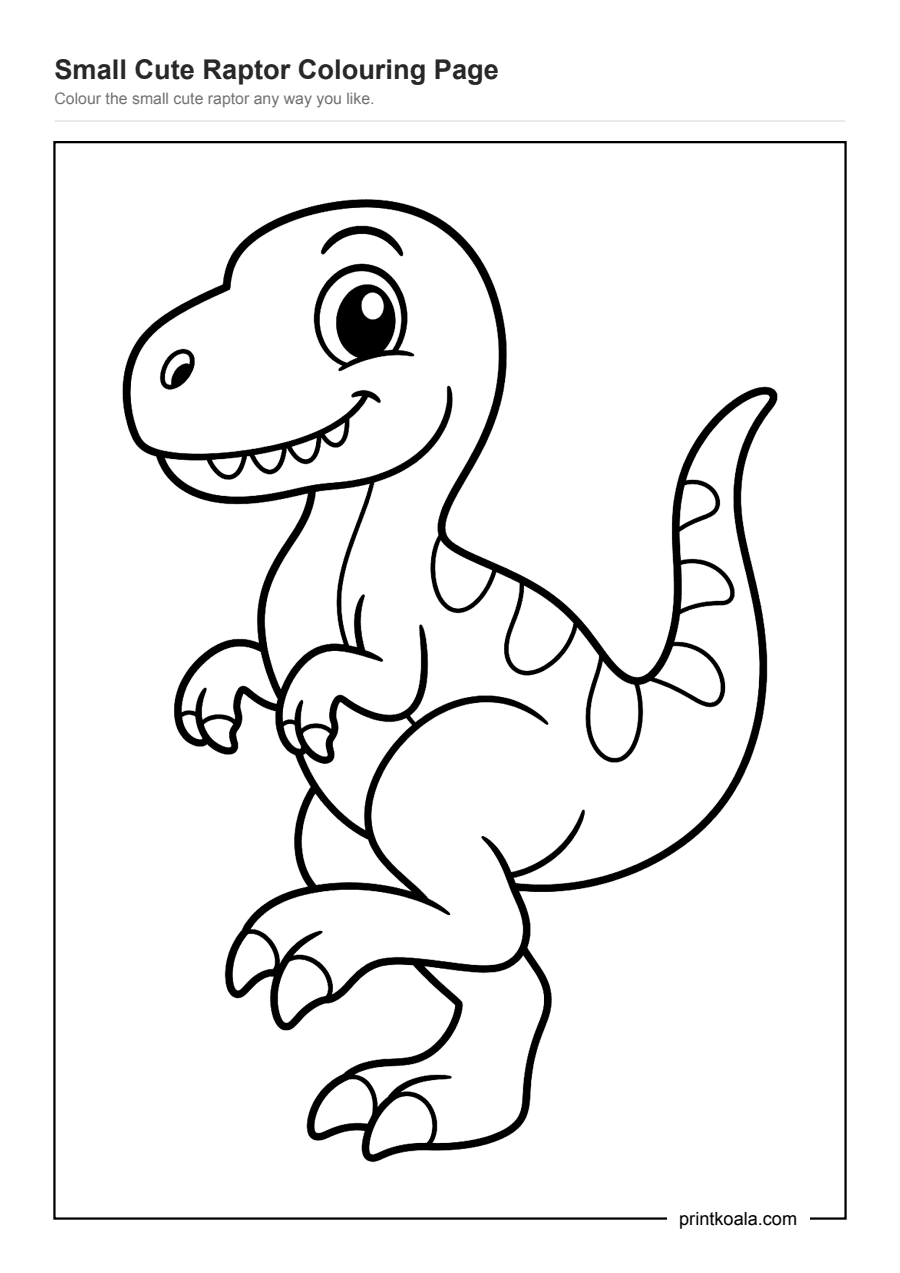
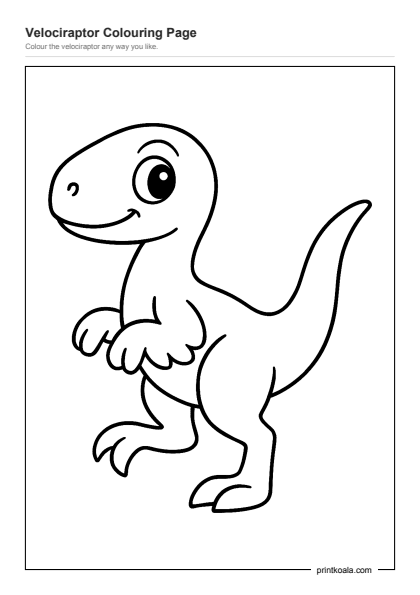
A grinning baby raptor balances on one clawed foot, tail curled high, with a row of big oval spots down its back to color.
Free, no sign-up. Downloaded 19 times · A4 · Print at 100% scale
This raptor is caught mid-step, standing on its planted back leg while the other leg lifts off the ground, three clawed toes pointing out. Its two tiny arms are tucked up near its chest, each with three curved claws. The head is oversized and friendly, with one big round eye, a raised brow line, a pointed snout and an open, toothy smile. Behind it, a thick tail sweeps up and curls over in a high arc, tapering to a point. Running from the shoulders down the back and along the tail is a row of large oval markings, seven in total, each one big enough to fill in on its own.
Nothing here is fiddly. The body, tail and head are all wide open spaces, so a child can color with big strokes and stay inside the lines without much trouble. The oval markings are the one place that asks for a bit more care, since each spot needs its own color choice and a steady hand around a curved edge. It is a good page for talking about balance too, ask your child why the raptor is holding one foot up, or what color they think a raptor's spots should be.
Because the shapes are so large and there is only one small character on the page, this sits on the easier end of the dinosaur sheets in this set. It suits a child who is still working on staying inside lines and wants a picture that colors in quickly, as well as older preschoolers who fancy adding a pattern of spots.
Start with the body and tail since they are the biggest spaces, then let your child pick a different color for each of the seven back spots. If the claws feel too small, skip them or fill them in together.