🦜 Birds
Flamingo Standing on One Leg Coloring Page
Ages 2–56
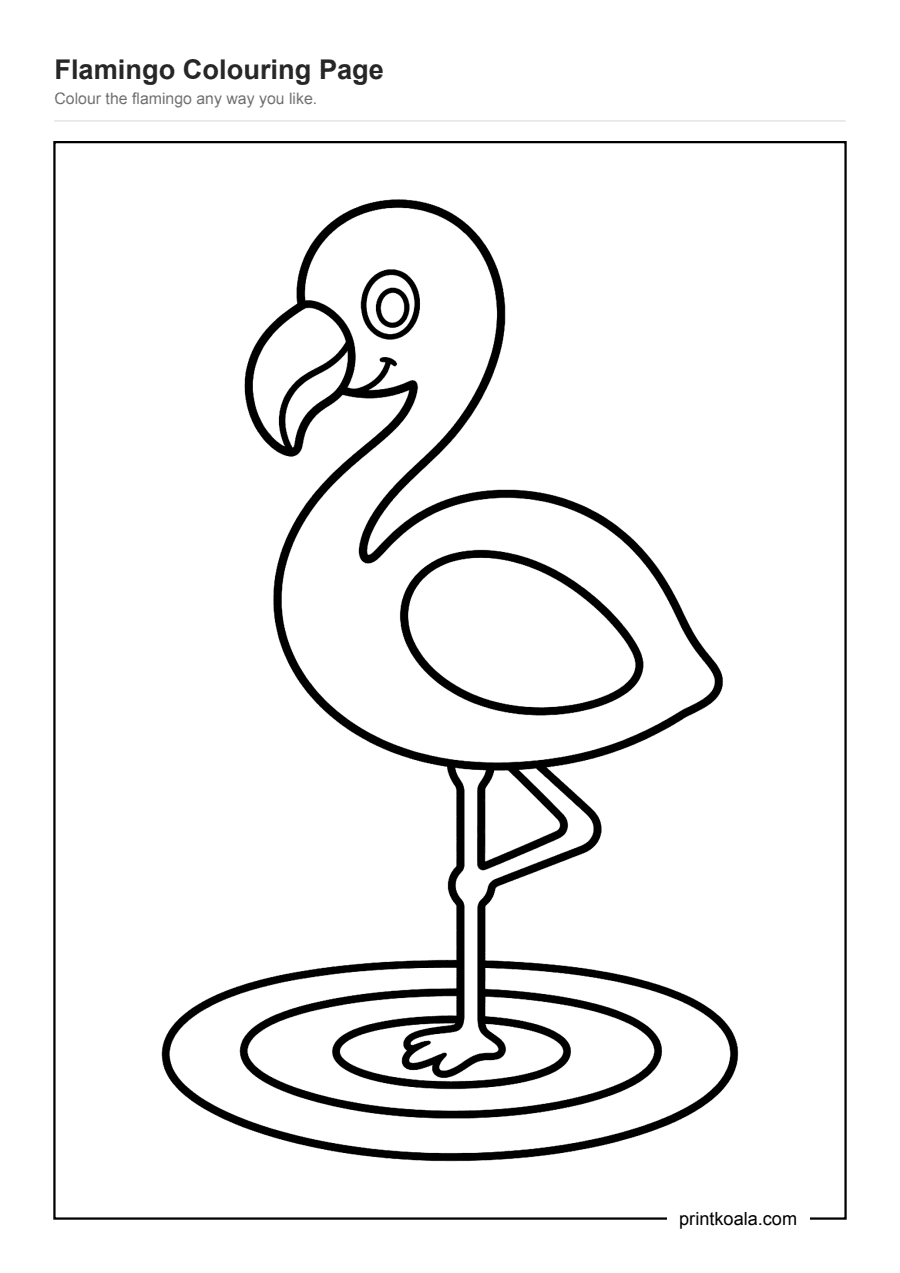
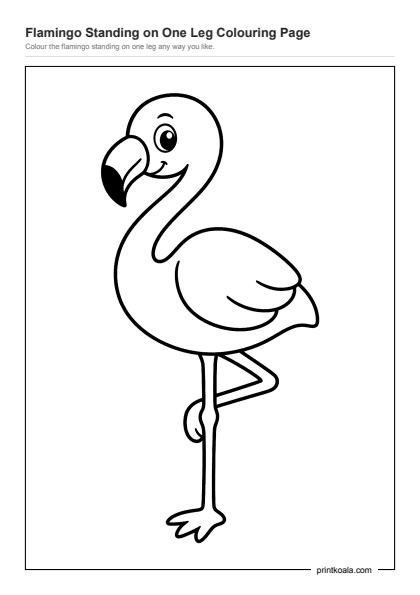
A smiling flamingo balances on one leg in a rippling pond, with a curved neck and one large oval wing panel to color.
Free, no sign-up. Downloaded 4 times · A4 · Print at 100% scale
This flamingo stands on one straight leg, its other leg bent up with the knee poking out to the side, exactly the pose real flamingos strike when they rest. The neck curves in a long S from the shoulders up to a round head with one eye, a small closed-mouth smile, and a hooked beak pointing down. The body is one big rounded shape with a single oval marked out in the middle for the wing. Underneath the standing foot, the water is drawn as three rings spreading out like ripples on a pond.
Almost everything here is a large, open space: the body, the wing oval, the neck, and the head can each take one color with a chunky crayon and no careful edging required. The only fiddly bits are the beak, the eye, and the thin bent leg with its three-toed foot, which reward a bit more care and a finer crayon or marker tip. The ripple rings give a nice excuse to talk about ponds, water, and why a flamingo might stand on one leg, which is usually the first question a small colorist asks.
This is a gentle, uncluttered sheet, well suited to toddlers and preschoolers who are still working on staying inside big shapes, and calm enough for a three-year-old to finish in one sitting. Older preschoolers who want a bit more challenge can use it to practice keeping the wing panel a different color from the rest of the body, rather than coloring the whole bird one shade.
Start with the big body shape so your child gets an easy win early on, then let them tackle the wing oval, neck and head. Save the thin bent leg and the water rings for last, and it is fine to skip them if patience runs out.