🦄 Fantasy & Fairy Tale
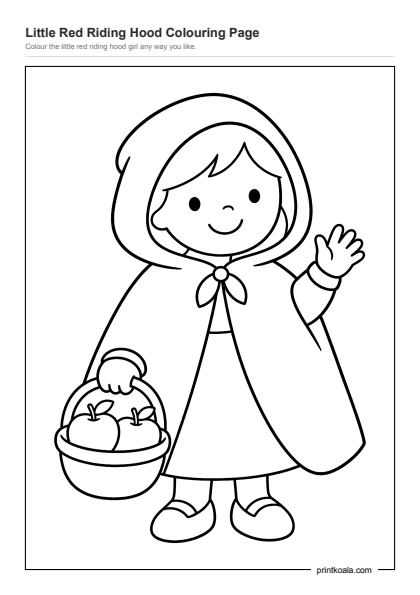
Little Red Riding Hood Coloring Page
Ages 2–511
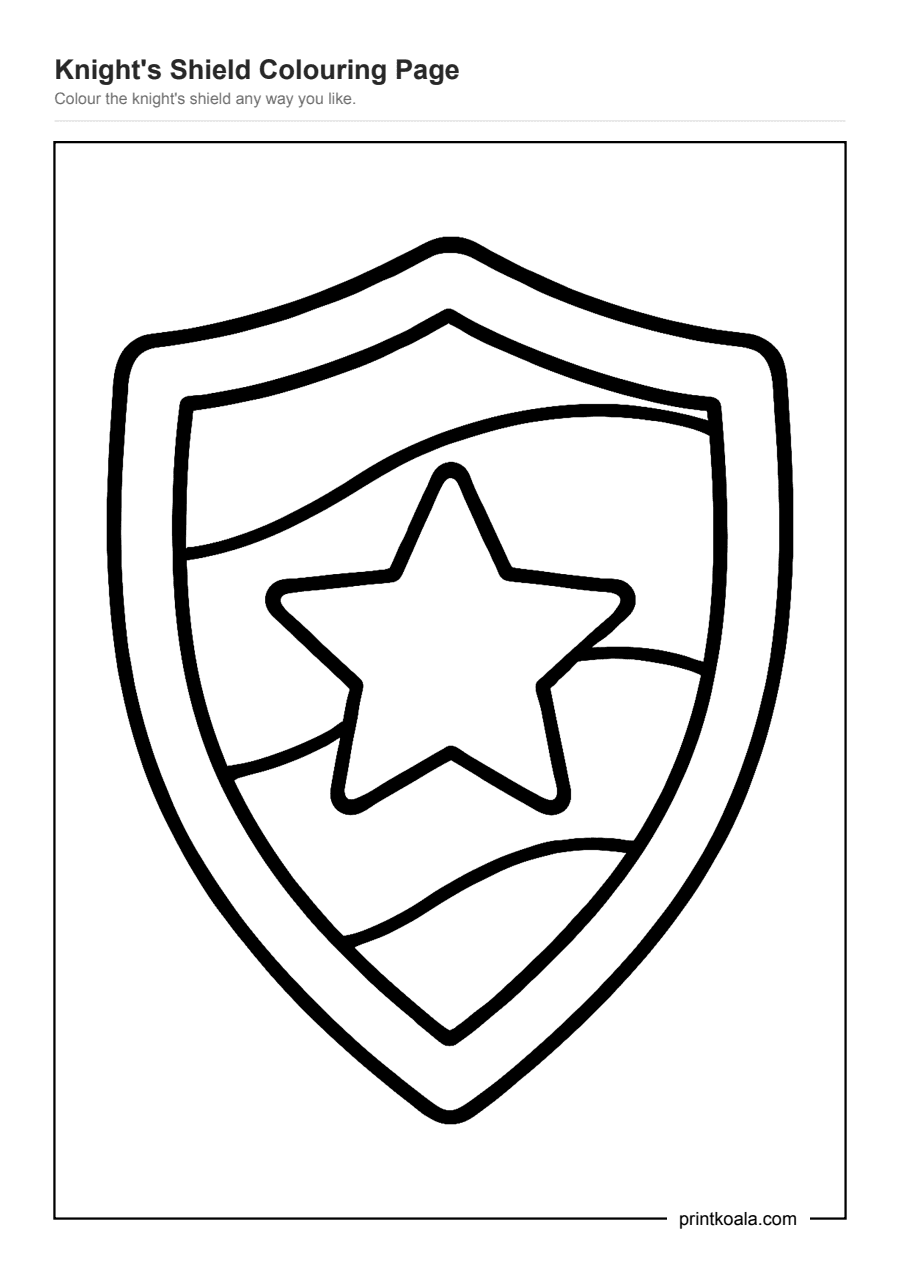
A big shield with a thick double border, a five-pointed star in the middle, and three wavy lines dividing the background into bands.
Free, no sign-up. Downloaded 4 times · A4 · Print at 100% scale
This page is one large shield, pointed at the bottom and curved at the top, drawn with a thick outer edge and a second outline just inside it, so there's a neat frame running all the way round. In the center sits a big five-pointed star, drawn plain with no pattern inside it. Behind the star, three wavy lines sweep across the shield from side to side, splitting the background into four curved bands above, below and around the star.
There's nothing fiddly here. The frame between the two outlines is one long, even strip, the star is a single bold shape, and each wavy band is wide enough for a young hand to fill without much steering. That makes this a good one for talking through choices out loud: will the shield be all one color, or will each band get its own, and should the star stand out or blend in? Because the shapes are so open, it's also forgiving of scribbling outside a line here and there.
It's on the easier end for a knight or fantasy themed sheet, with no fine detail to slow little hands down, so it suits toddlers and preschoolers who are still working on staying inside bigger shapes. Older children who want more of a challenge might find it goes by quickly, but it's a solid choice for a first go at a shield.
Let your child start with the star since it's the boldest shape, then work outward through each wavy band. If a color crosses a line, call it part of the design rather than a mistake.