🍎 Fruits
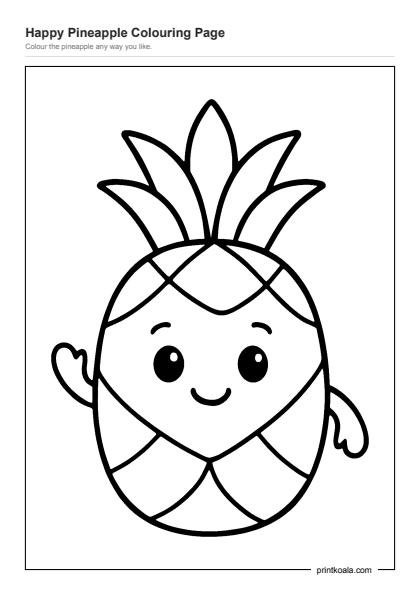
Happy Pineapple Coloring Page
Ages 2–515
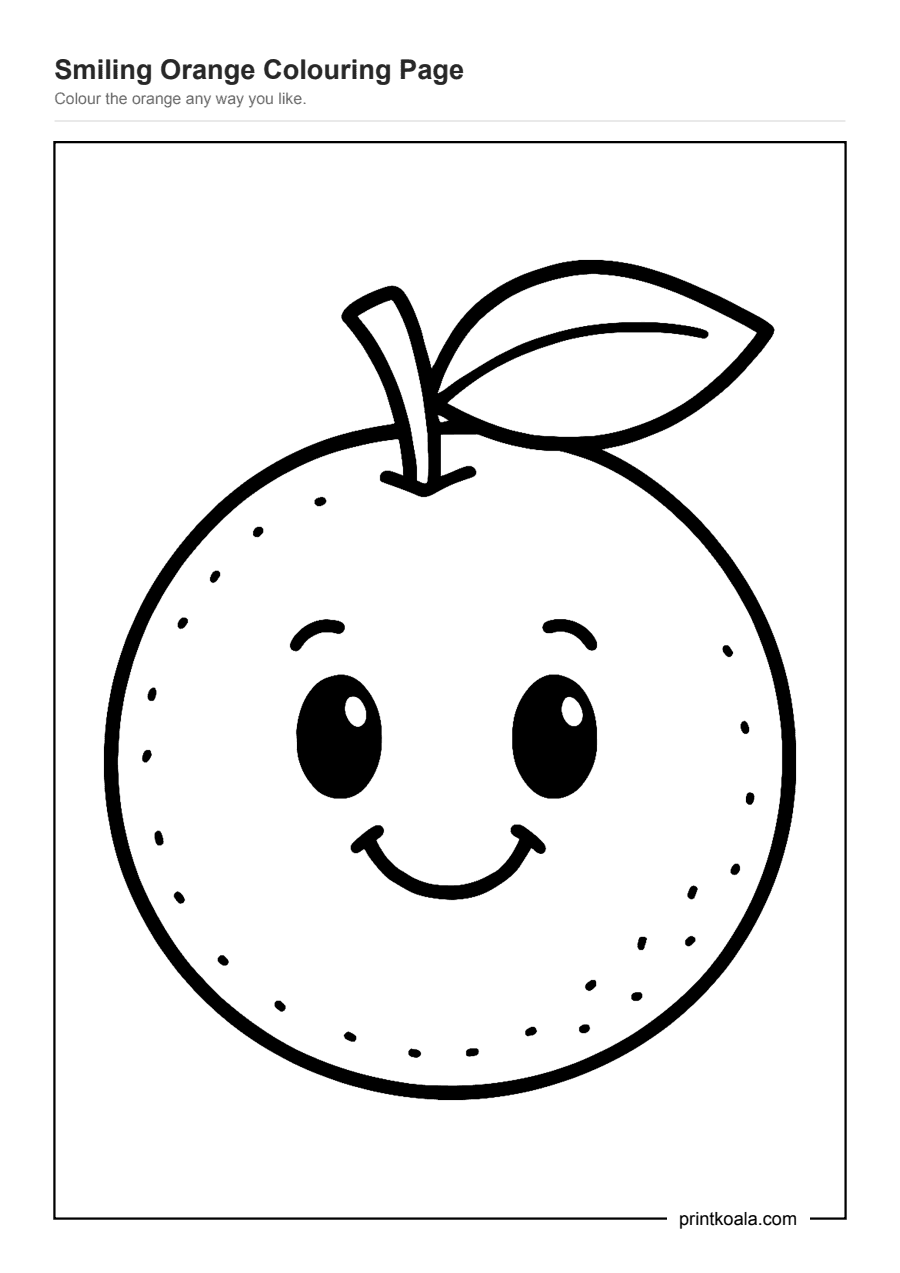
A single round orange with a happy face, one leaf on its stem, and a scatter of small dots round the edge for peel texture.
Free, no sign-up. Downloaded 16 times · A4 · Print at 100% scale
This sheet has one large orange filling most of the page, drawn with a friendly face: two oval eyes with a curved eyebrow over each, and a simple smiling mouth. A short stem sits on top, growing one broad leaf with a single vein line down the middle. Round the outer edge of the orange is a loose ring of small dots, standing in for the dimples in the peel, but the dots stay near the rim so they never crowd the middle of the fruit.
The body of the orange is one big open circle, which is the main event here: it is the kind of space a child can fill with a few confident strokes rather than careful dabbing, and it is the obvious place to start. The leaf gives a second, smaller area for a contrasting color, and the ring of dots gives little fingers something fiddlier to do once the big shape is done, without it being the whole task. The face stays plain enough that a child can talk about how the orange feels, happy, rather than getting stuck coloring tiny features.
Because nearly everything on the page is one large enclosed shape, this is an easy sheet, well suited to two and three year olds still building control, and calm enough for a four or five year old to finish quickly and move on to something else. It works well as a first-thing-in-the-morning page or a quick one between other activities, not a sheet that needs a long sitting.
Let your child color the orange itself first, in one go, then move to the leaf and stem. Save the small edge dots for last, as they take the steadiest hand. If the dots feel too fiddly, skip them, the page still works.