🍎 Fruits
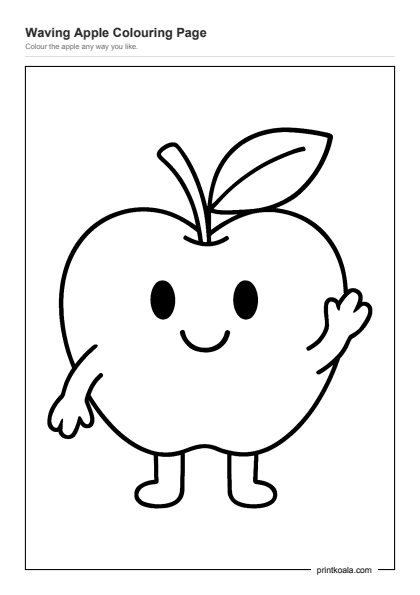
Waving Apple Coloring Page
Ages 2–421
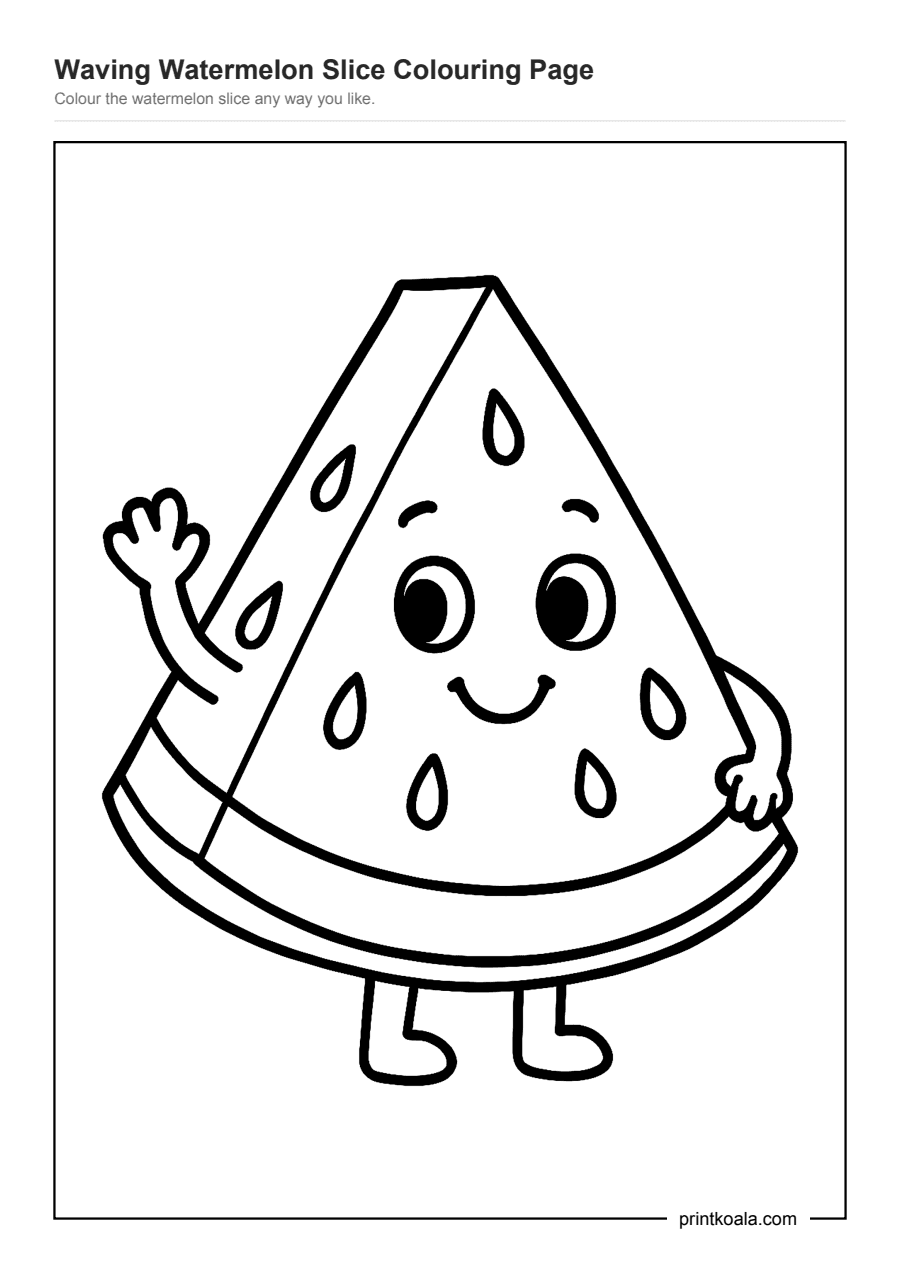
A cheerful watermelon slice stands on two feet and waves hello, with six small seeds scattered across its wide triangle of flesh.
Free, no sign-up. Downloaded 11 times · A4 · Print at 100% scale
This watermelon slice stands upright on two round feet, one arm raised in a wave and the other resting against its side. Its wide triangular body has a thin rind strip running down the left edge, where the cut side of the slice would be, and a curved double-lined rind band along the bottom. Six small teardrop-shaped seeds are scattered across the flesh, some near the top point and others lower down. A round-eyed, curly-browed face with a wide smile sits in the center of the triangle, looking straight out at whoever is coloring it.
Most of the page is one big triangle, so a child can pick up a pink or red crayon and cover it without worrying about staying inside fiddly lines. The curved rind band at the bottom and the six seeds are smaller jobs that ask for a bit more care with the crayon tip, and the waving hand, with its five spread fingers, gives some practice with a trickier shape than the rest of the page. It is an easy sheet to chat over while coloring too, asking where the watermelon is waving to or counting the seeds together.
Next to other fruit sheets in this set, this one sits on the easier end, since the seeds are few and spaced well apart rather than crowded together. It suits younger preschoolers who are coloring mostly in big strokes, while the seeds, fingers and rind band give older fours and fives a few smaller spots to aim for carefully.
Let your child color the big triangle first, then the bottom rind band, and save the six small seeds for last, since those need the steadiest hand. If the seeds go outside the lines, it will not spoil the page.