🍎 Fruits
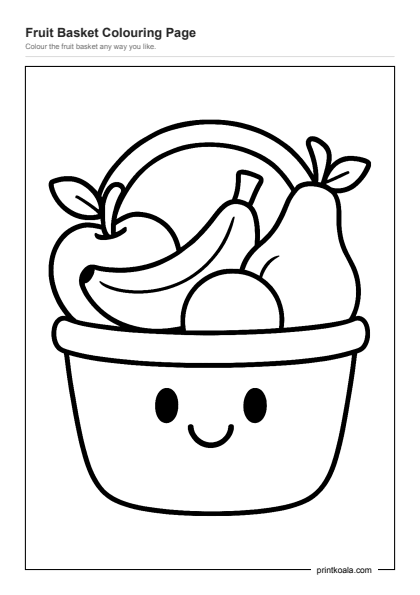
Fruit Basket Coloring Page
Ages 2–411
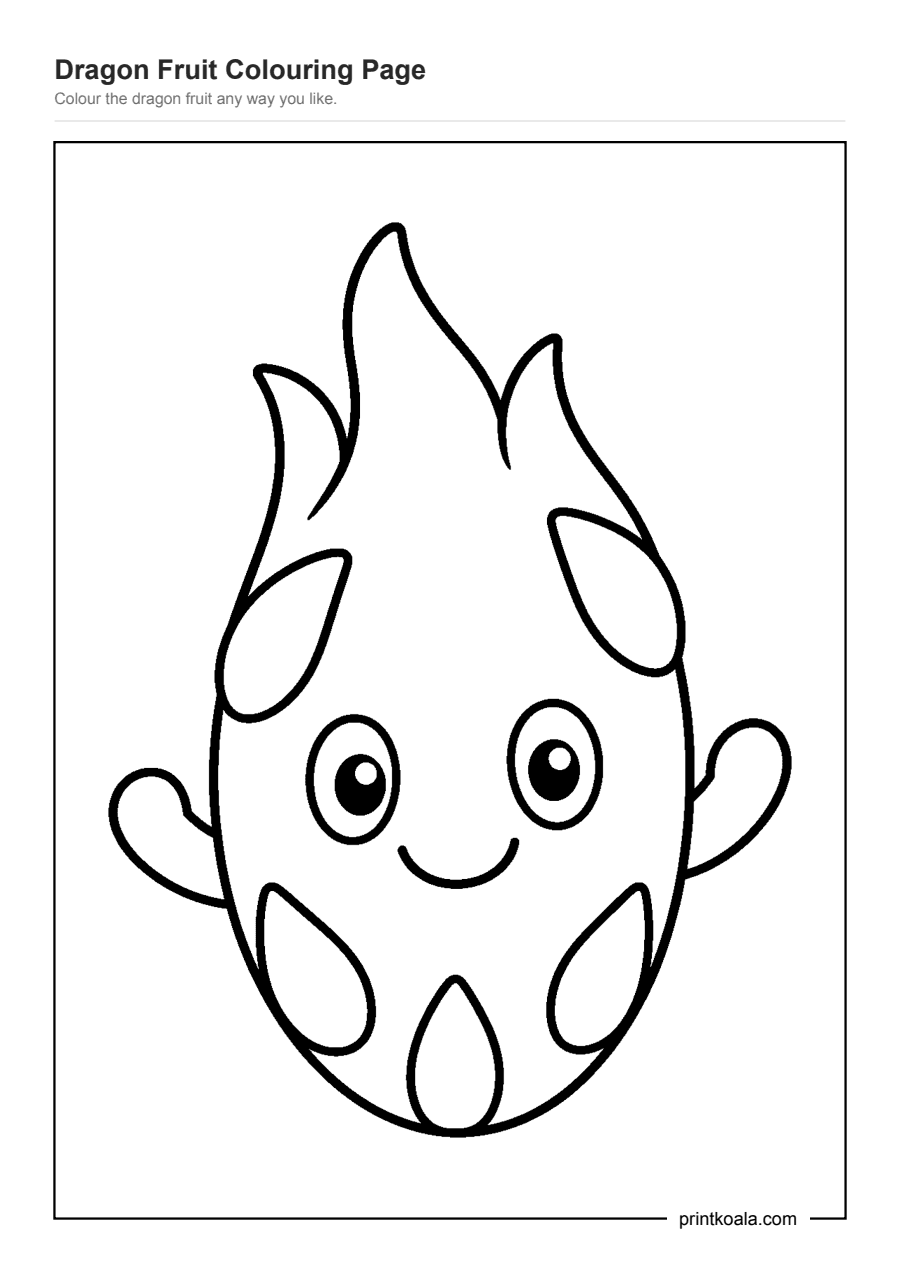
A smiling dragon fruit with flame-shaped leaves on top, two stubby arms, and seven teardrop marks scattered over its round body.
Free, no sign-up. Downloaded 6 times · A4 · Print at 100% scale
This dragon fruit has a face: two round eyes, each with a little white highlight dot, and a curved smile. On top sits a spiky, flame-shaped crown of leaves, with two smaller pointed leaves peeking out just below it on either side. Two short stubby arms stick out from the middle of the body, and dotted around the lower half of the fruit are five teardrop-shaped bract marks, plus one sitting right at the bottom center. The whole character stands on a plain white background with nothing else to color around it.
The big oval body is the main draw here, one wide, open space a child can fill in with pink or red without worrying about staying inside anything fiddly. The teardrop marks and leaves break that space up into smaller, separate pieces, so there's a natural excuse to swap colors partway through, maybe green for the leaves, yellow for the teardrops, and something bold for the body. The eyes are small enough to need a steadier hand, which makes a nice contrast to the rest of the page. It's also an easy one to talk about while coloring: ask what color a real dragon fruit is inside, or whether this one looks friendly or fierce.
This is a gentle sheet, closer to easy than tricky, with only the eyes asking for any real precision. The large rounded shapes and the character's simple, cheerful face make it a good fit for younger colorers who are just getting comfortable staying inside lines, while the handful of separate leaf and teardrop shapes give slightly older preschoolers something to plan out with more than one color.
Let your child start with the big body first, since it is the easiest part to color well. Save the eyes for last, when their hand has warmed up, and it is fine if the white highlight dots stay uncolored. Naming the leaves and teardrops out loud helps them decide which color goes where.