🐙 Ocean & Sea Creatures
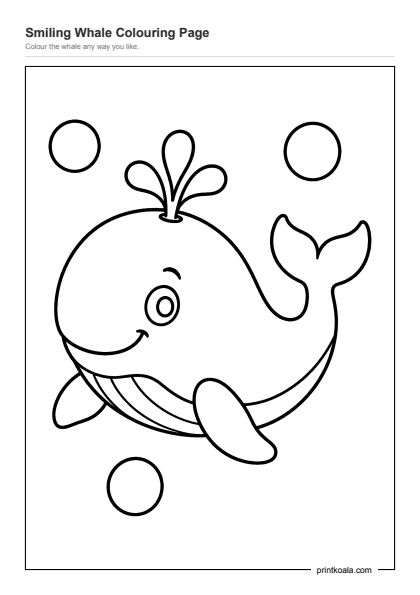
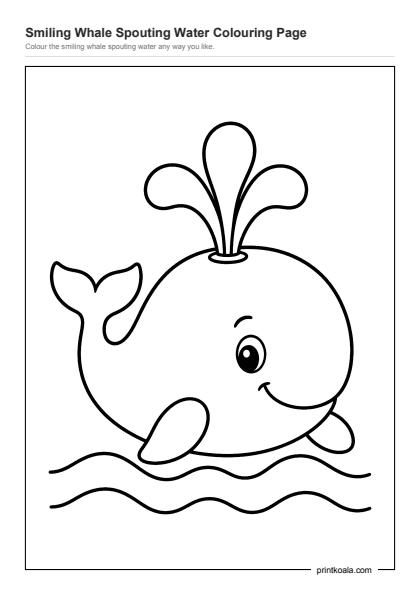
Smiling Whale Spouting Water Coloring Page
Ages 2–56
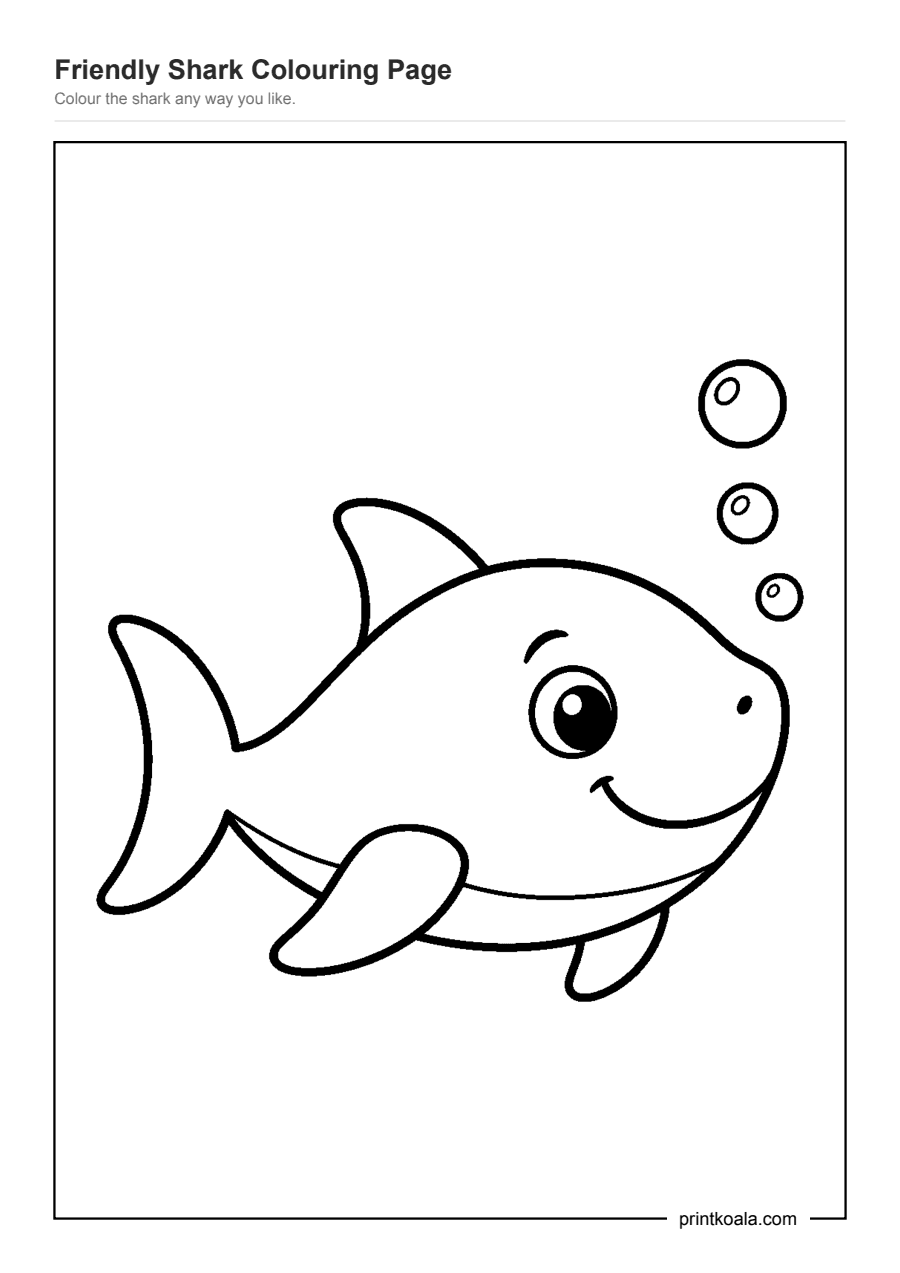
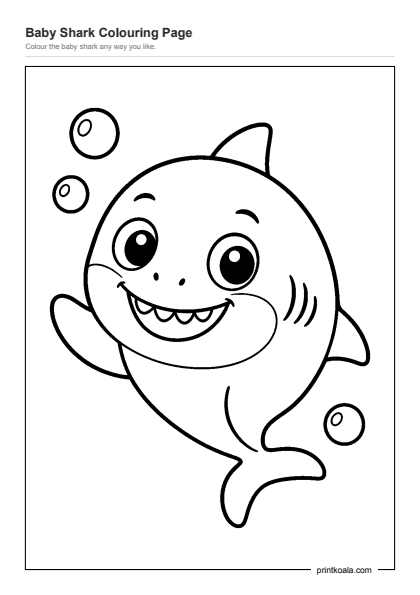
A round-bodied shark with one big eye and a toothless smile swims past three rising bubbles.
Free, no sign-up. Downloaded 9 times · A4 · Print at 100% scale
This shark has a plump, curved body, a tall triangular fin on its back, a wide side fin, a small fin underneath and a big split tail. Its face is friendly rather than fierce: one large eye with a curved eyebrow above it, a small dot for a nostril, and a wide smiling mouth with no teeth at all. To the upper right of the shark, three round bubbles drift upward in different sizes, each with a small white highlight inside. A single curved line along the shark's belly marks off its lighter underside from its back.
The body of the shark is where the pencil gets to relax. The fin, the tail and the rounded belly are all big open shapes, so a preschooler can color them in with one shade and not worry about staying inside a tiny line. The three bubbles are the opposite: small, neat circles that ask for a lighter touch, and they are a natural spot to talk about counting to three, or trying a different color for each one. The eye and smile are already simple enough that no coloring is needed there at all, which keeps the whole page from feeling fussy.
This is an easy sheet, better suited to younger colorers or anyone who wants a quick, satisfying page rather than a fiddly one. There is nothing here that will trip up small hands, and the friendly, tooth-free face means it works for children who find sharp-toothed sharks a bit much.
Let your child start with the big body and tail first, since mistakes there barely show. Save the three bubbles for last, as they need a steadier hand. If a line gets crossed, suggest coloring the bubble a darker shade to cover it rather than starting again.