🥕 Vegetables
Waving Tomato Coloring Page
Ages 2–48
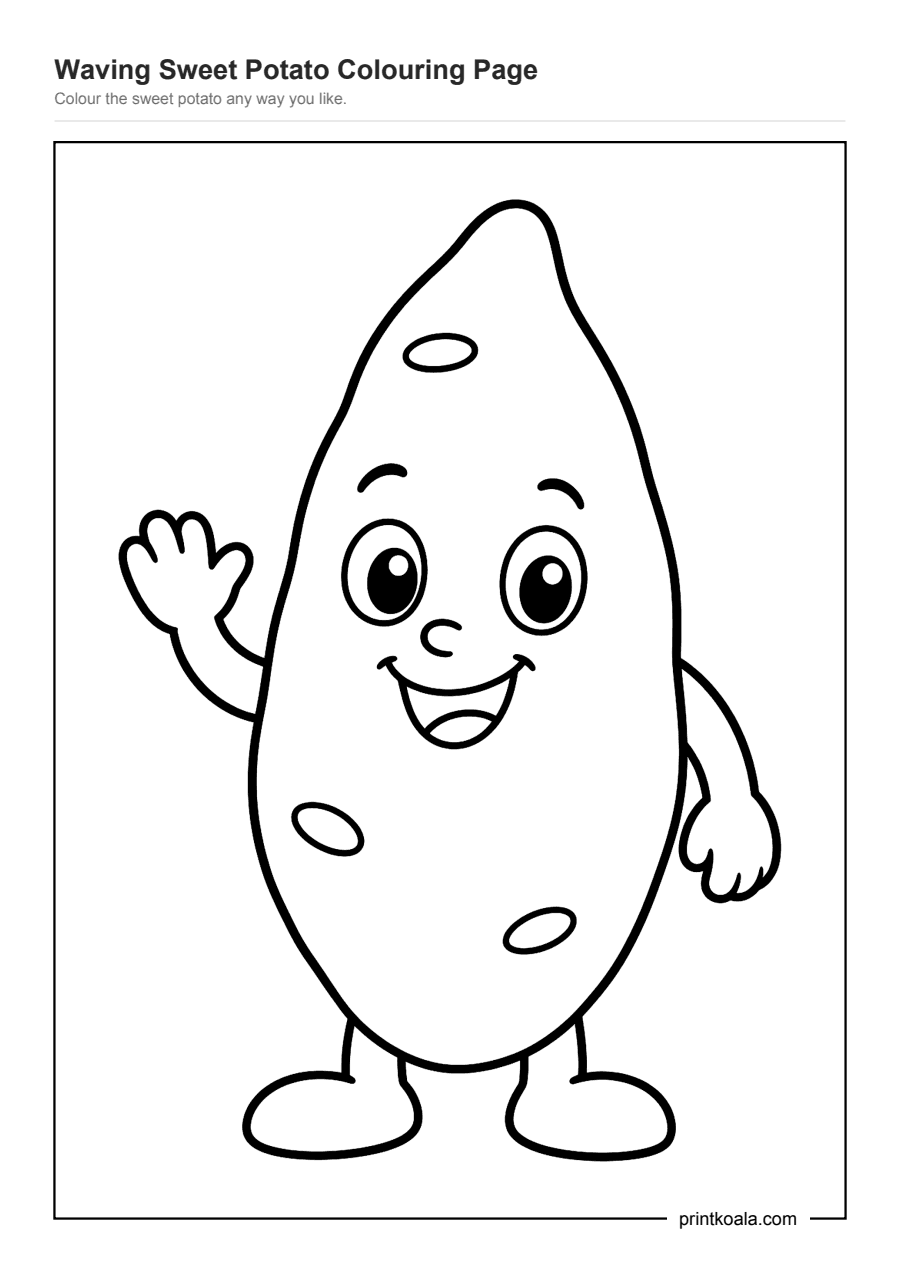
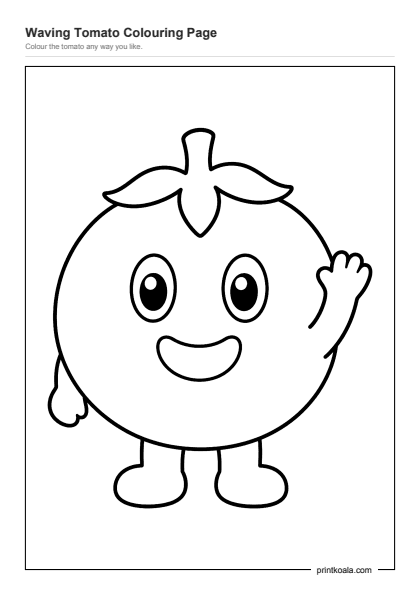
A tall, smiling sweet potato waves hello with one hand, standing on two little shoes with three oval skin spots to color.
Free, no sign-up. Downloaded 7 times · A4 · Print at 100% scale
This page is one big teardrop-shaped sweet potato, standing upright on two stubby feet. It has a cheerful face: round eyes with a highlight dot in each, curved eyebrows, a small rounded nose and a wide open smile. One arm is raised in a wave with the fingers spread out, and the other arm bends down and rests near its side. Dotted across the body are three plain oval spots, the kind of skin markings a real sweet potato has, sitting in the otherwise empty middle of the shape.
The body is one large, unbroken space, so a child can pick a single color and fill it in without hunting for edges to stop at, or add patches of a second color if they want something more decorative. The three spots and the two feet are small enough to invite a different color each, which is a gentle way to notice "same shape, different color" without turning it into a lesson. The face has enough separate pieces, eyes, eyebrows, nose, mouth, that little ones can name each part as they go, and the waving hand gives you something to talk about: is it saying hello or goodbye.
There is nothing fiddly here. No background objects, no crosshatching, no small gaps between lines. That makes it a good pick for a younger child still getting used to holding a crayon, or for the end of a session when hands are tired but a finished-looking page still feels good. Older preschoolers who like more detail may get through it quickly, but it works well as a warm-up or an easy first sheet in a sitting.
Let your child start with the big body first, since it is the easiest part to fill in without going over the lines. Save the eyes, spots and feet for last, when they can slow down for the smaller shapes. Ask them if the sweet potato is waving hello or goodbye.