🦁 Safari & Jungle Animals
Tiger Cub Sitting Coloring Page
Ages 2–59
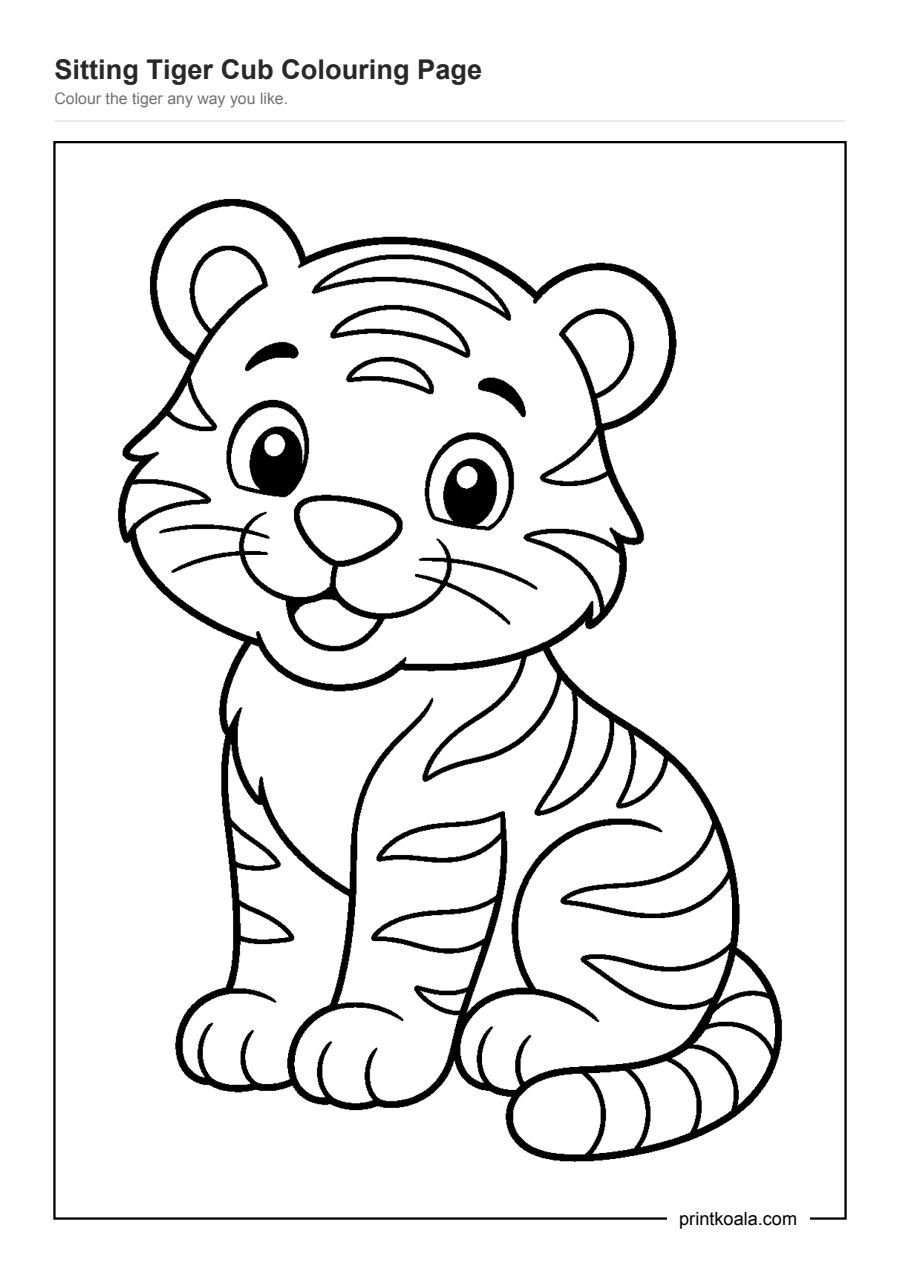
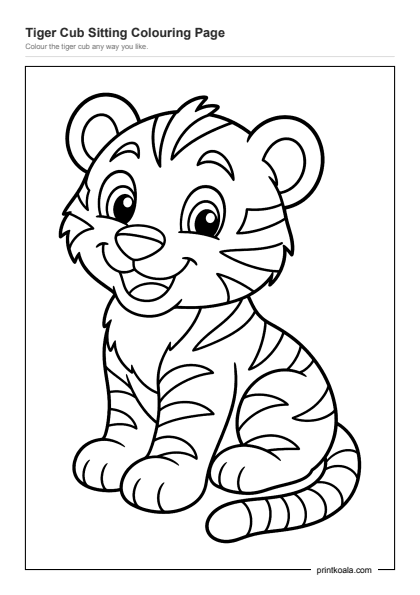
A round-faced tiger cub sits with wide eyes and an open mouth, its tail curled to the front, just a few thick stripes and no background.
Free, no sign-up. Downloaded 14 times · A4 · Print at 100% scale
This is a single tiger cub, sitting up and facing the front, with its head tipped slightly to one side. The face takes up most of the page: two big round eyes with heavy black pupils, curved eyebrow lines above them, a small rounded nose, and an open mouth showing a rounded tongue, giving the cub a cheerful, surprised look. Whisker lines fan out from both cheeks, and two rounded ears sit at the top of the head. The body is simple and rounded, with the front paws tucked together at the bottom of the page and the tail curling round to rest beside them, its tip marked with the same stripes as the body. There is no grass, jungle or background of any kind here, just the cub on plain white space, and the stripes are kept to a handful of thick, wavy shapes across the forehead, cheeks, shoulders, back and tail rather than the dozens a real tiger has.
That makes this a page of a few big jobs and a few small ones. The head and body give a child plenty of room to move a crayon in wide strokes without worrying about straying over a line every few seconds, which is where most of the coloring will happen. The smaller bits, the eyes, nose, paw pads and the narrow stripes, ask for a steadier hand and a bit more patience, so a child gets both kinds of practice on one sheet. Because the stripes repeat in shape, it is also a nice moment to pick one color, say orange, and keep using it for every stripe rather than choosing a new one each time. The open mouth and big eyes are worth pointing at and asking what the cub is feeling before the crayons come out.
Next to other tiger pages that add jungle leaves, rocks or a second animal, this one is on the easier side, with clean outlines, large closed spaces and nothing tucked into a corner to trip up small hands. It suits toddlers and younger preschoolers who are still building control, and a five-year-old will likely finish it in one sitting without needing a break. If your child is after more of a challenge, save this one for a quicker session and look for a page with more background detail instead.
Start on the face, it is the biggest draw for little ones, then work down to the body and stripes. Let your child pick one color for all the stripes rather than switching each time. If they scribble past a line, just move on to the next shape.