🦁 Safari & Jungle Animals
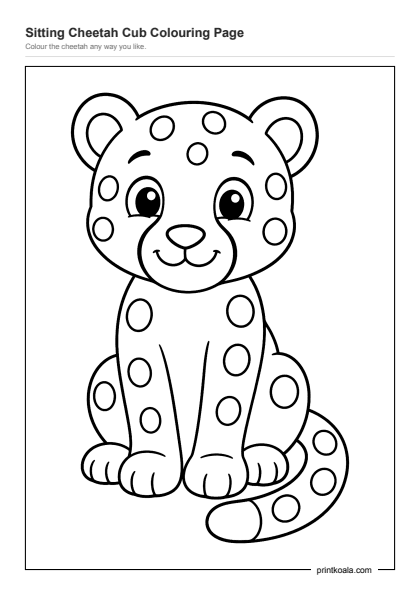
Sitting Cheetah Cub Coloring Page
Ages 2–59
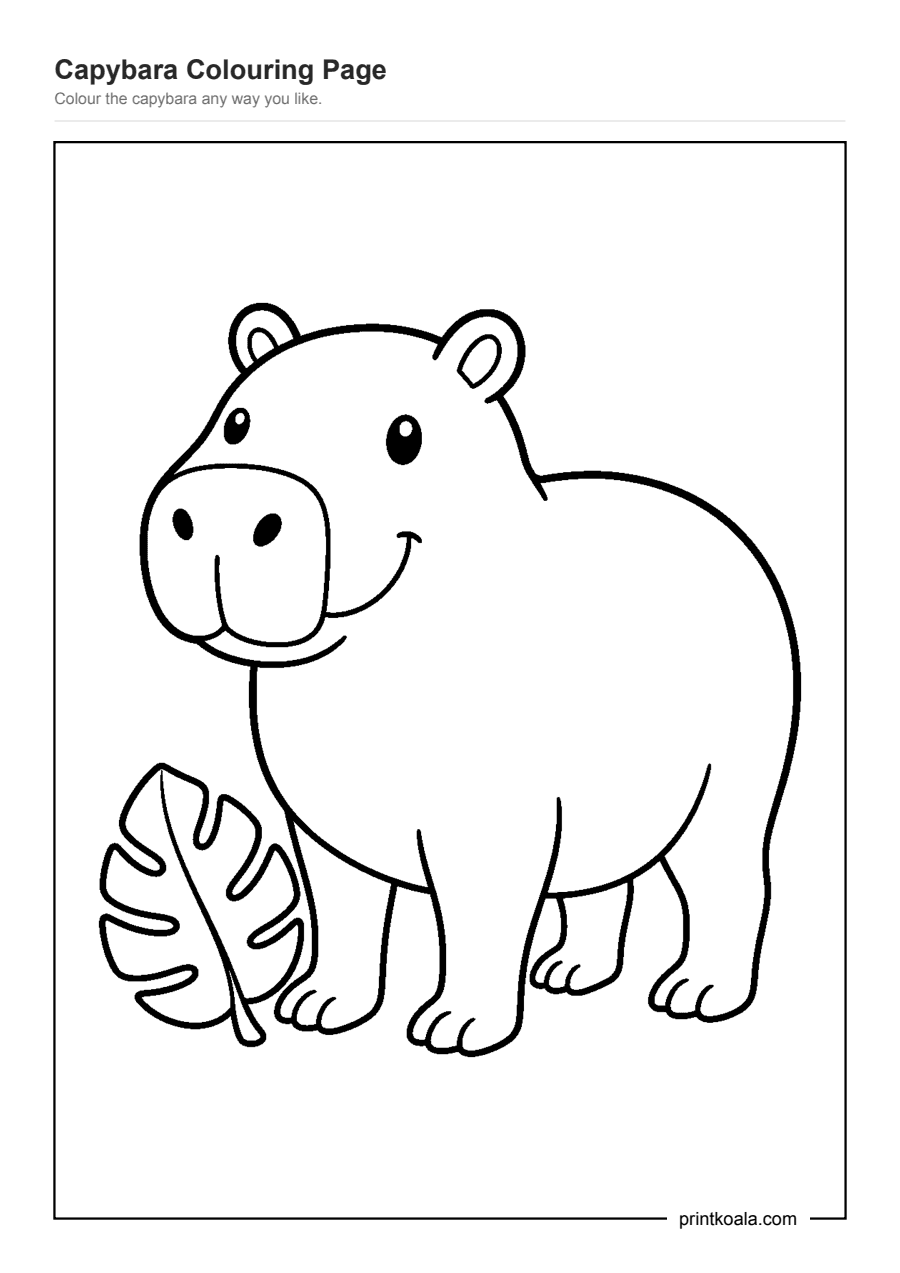
A big, round capybara stands beside a single oversized jagged-edged leaf, with plenty of open space for crayons.
Free, no sign-up. Downloaded 7 times · A4 · Print at 100% scale
This page shows one capybara standing side-on, facing left, with its whole body drawn as one large rounded shape. Its head has two small rounded ears, two round eyes with bright highlight dots, a wide oval snout with two nostrils, and a small curved smile. Four sturdy legs end in little clawed feet planted on the ground. Next to the front legs sits a single big tropical leaf with deep jagged notches along its edges, the only other thing on the page.
There is nothing fiddly here. The capybara's body, head and legs are all big closed shapes, so a child can color most of the animal in broad crayon strokes without worrying about staying inside tiny lines. The leaf is the trickiest part, because its notched edges are narrower than the rest of the drawing, which makes it a good spot to slow down and use a pencil grip. It is also a nice thing to talk about while coloring: capybaras are the biggest rodents in the world and like water, so brown, tan or gray are all fair choices for the body.
Because the shapes are so large and there are so few of them, this is one of the easier sheets in the jungle animals set. It suits toddlers who are still coloring in big scribbles as much as preschoolers who are starting to stay inside the lines, and it will not take long to finish, which helps if attention is short that day.
Let your child color the big body first, since it is the easiest shape, and save the notched leaf for last when their hand is warmed up. If they color outside the leaf's edges, that is fine, it still reads as a leaf.