🦁 Safari & Jungle Animals
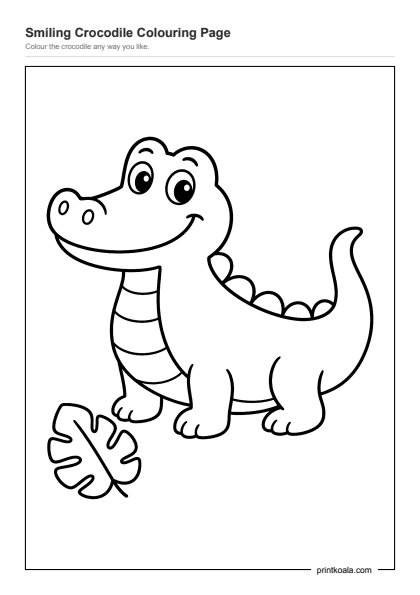
Smiling Crocodile Coloring Page
Ages 3–59
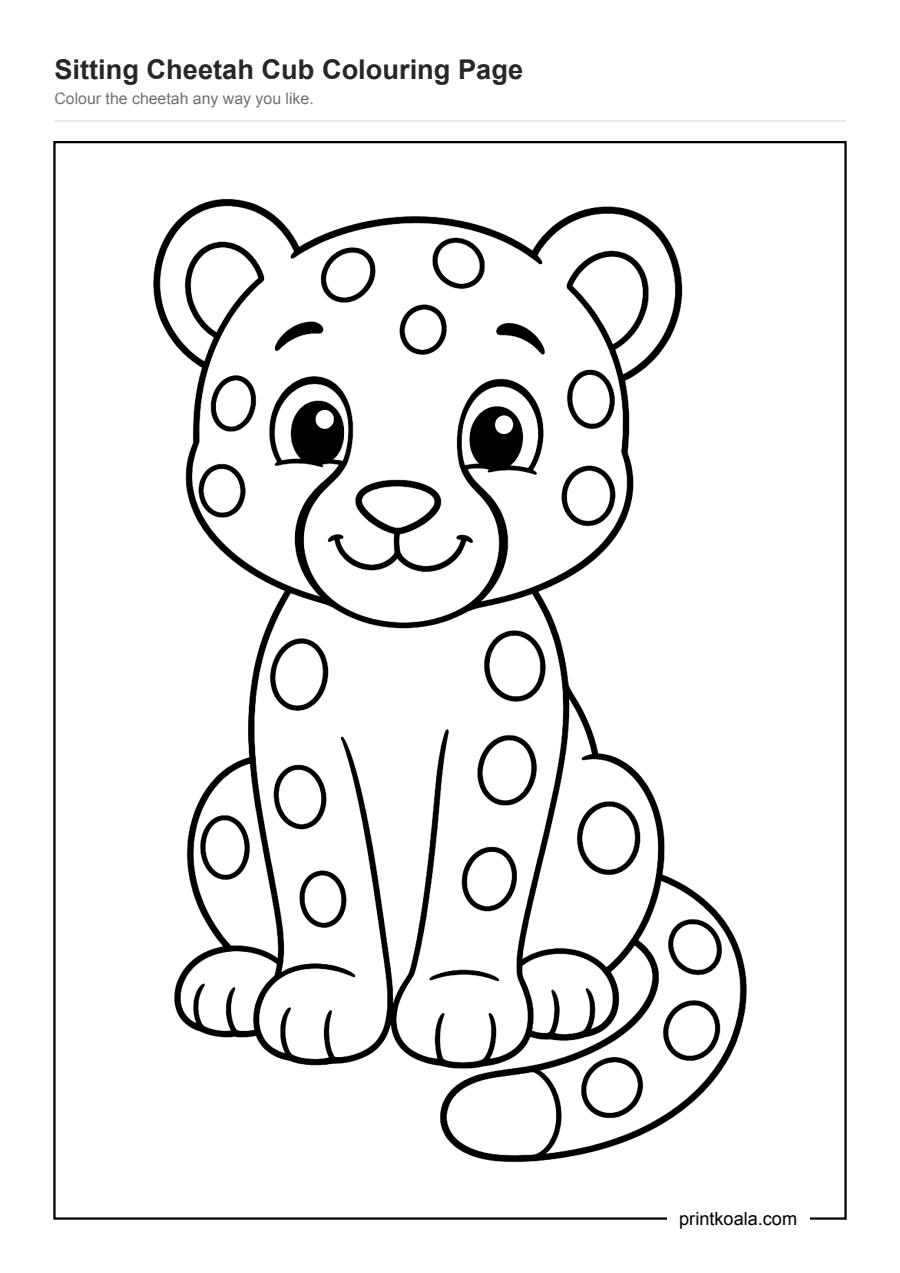
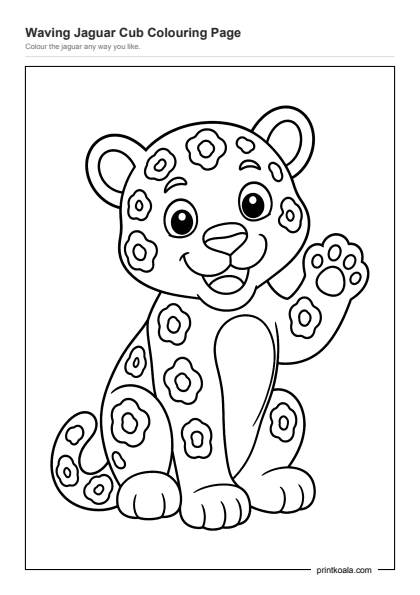
A round-headed cheetah cub sits facing forward with its paws together, big spots dotted across its head, body and long curled tail.
Free, no sign-up. Downloaded 9 times · A4 · Print at 100% scale
This cheetah cub sits square to the viewer, front paws pressed together on the ground, head tipped slightly and mouth curved into a simple smile. Its face has two big round eyes with a bright highlight in each, small curved eyebrows, a rounded nose and soft cheek fur bumps on either side. Spots cover the page: three sit across the top of the head, one on each cheek, and a run of larger ones down the chest and sides of the body. The tail curls out from behind the cub and sweeps around to the front, carrying its own line of spots right to the tip.
What makes this one worth printing is the mix of scale. The head, ears and body are broad, open shapes a young child can fill in a few confident strokes, and the spots are drawn big and round rather than small and fiddly, so there is no need for a fine-tipped pencil. The tail gives a longer, winding shape to chase with color, which is a nice change of pace after the rounder body shapes. The only close work is the short toe lines on each paw, small enough to skip entirely if a child would rather keep those solid.
This is an easy sheet next to most animal coloring pages, since almost everything on it is a large, closed shape with no tiny gaps to work around. It suits younger preschoolers just getting the hang of staying inside lines, and older fours and fives can use it to practice switching between two or three colors for the coat and spots without the page turning into a chore.
Start with the big head and body shapes so your child gets some early wins, then save the curling tail for last since it takes the steadiest hand. If the paw toe lines prove fiddly, coloring the whole paw one solid shade works just as well.