🦁 Safari & Jungle Animals
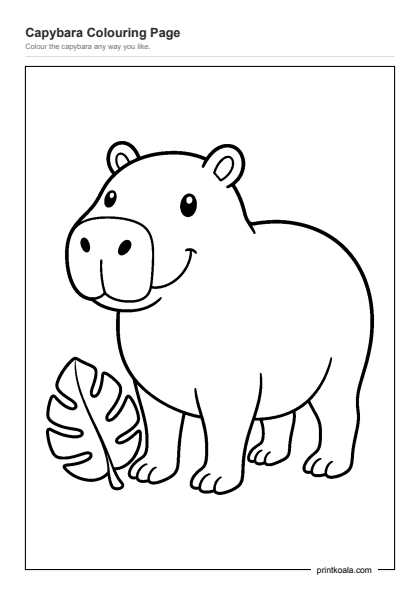
Capybara Coloring Page
Ages 2–57
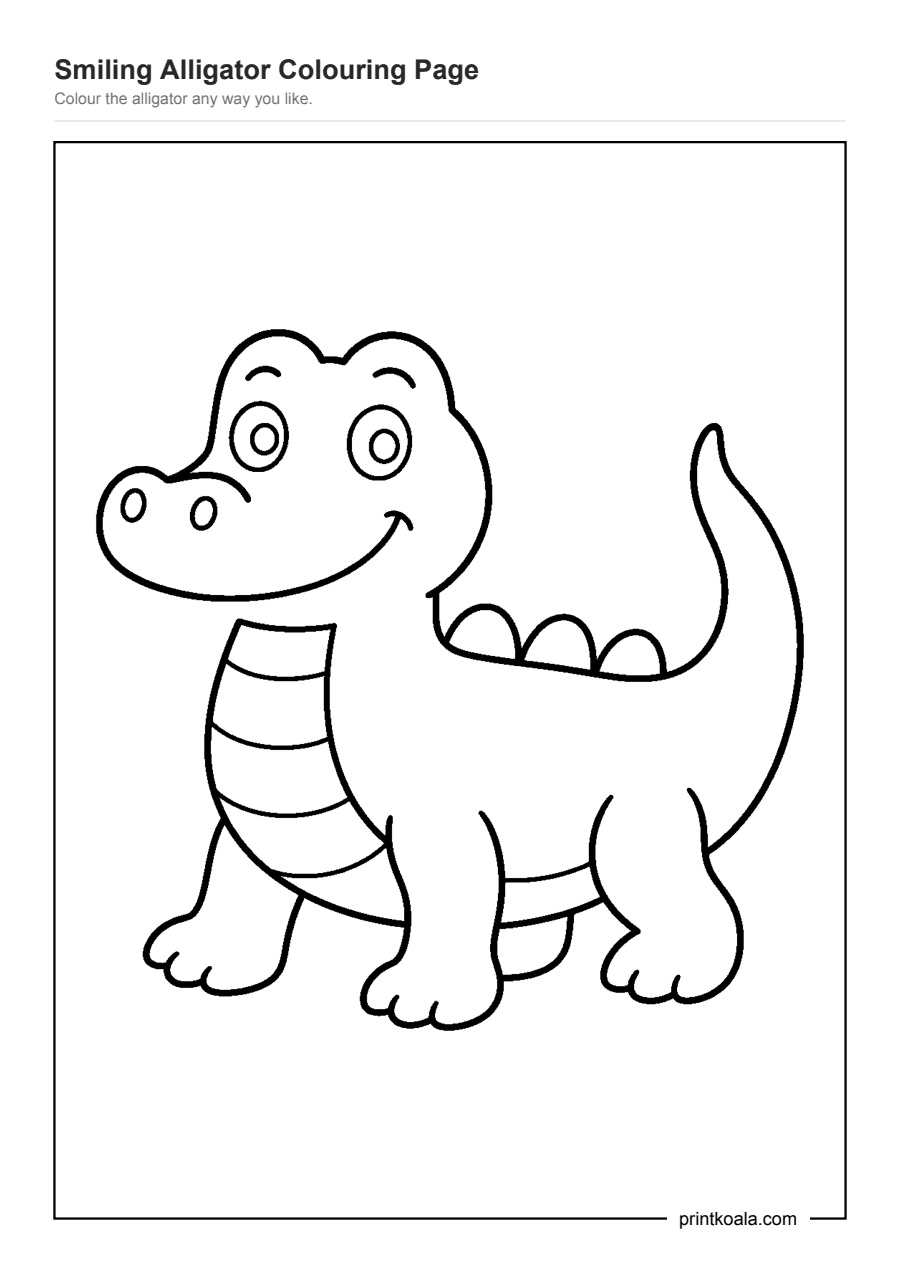
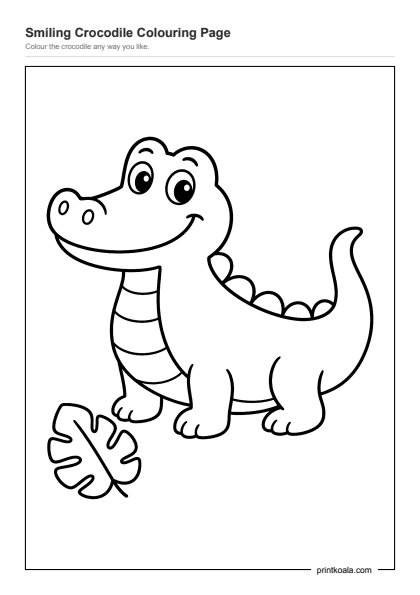
A round, standing alligator with big bulging eyes, a striped neck and three bumps along its curled-up tail.
Free, no sign-up. Downloaded 9 times · A4 · Print at 100% scale
This alligator stands on all four short legs, head turned slightly to one side with a wide, curling smile. Its eyes are two big circles with smaller circles inside for pupils, sitting above a bumpy snout with two round nostrils. A thin arched line over each eye gives it raised eyebrows, which is most of why it reads as friendly rather than toothy. The tail sweeps up behind the body and curls over like a wave, and where it meets the back there are three neat rounded scale bumps in a row. Down the front of the neck and chest runs a set of curved horizontal stripes, and each of the four feet ends in a little cluster of rounded toes.
There is plenty here for a young child to get through without it turning into a chore. The body, tail and legs are large, open, single shapes, good for a first pass with a chunky crayon and little risk of scribbling outside a line that matters. The striped neck and the three tail bumps are the fiddly bits, small enough to ask for a bit more care, and different enough from the plain belly that a child can choose to make them a contrasting color on purpose. The two eyes and two nostrils are small circles worth pointing out before they start, since they are easy to miss or fill in solid by accident.
It sits on the easier side of the animal pages in this set: no background clutter, no overlapping objects, just one alligator broken into a manageable number of parts. That makes it a good fit for a preschooler coloring mostly by themselves, and a fair page to hand to a three-year-old who still finds smaller stripes tricky, since skipping them entirely still leaves a perfectly good picture.
Start with the big body and tail so your child gets some early wins, then move to the neck stripes and tail bumps last since those need a steadier hand. If the stripes get skipped or colored over, that is fine, the picture still works.