🦁 Safari & Jungle Animals
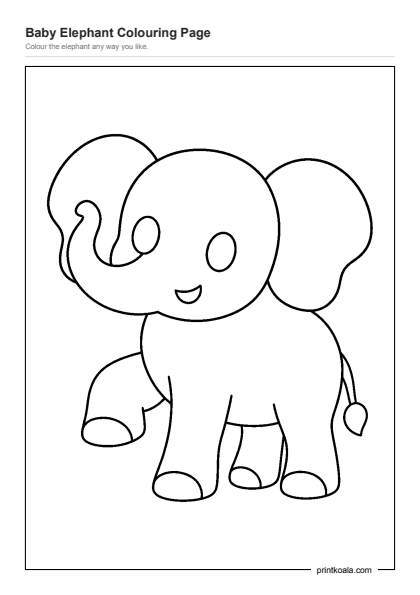
Baby Elephant Coloring Page
Ages 2–59
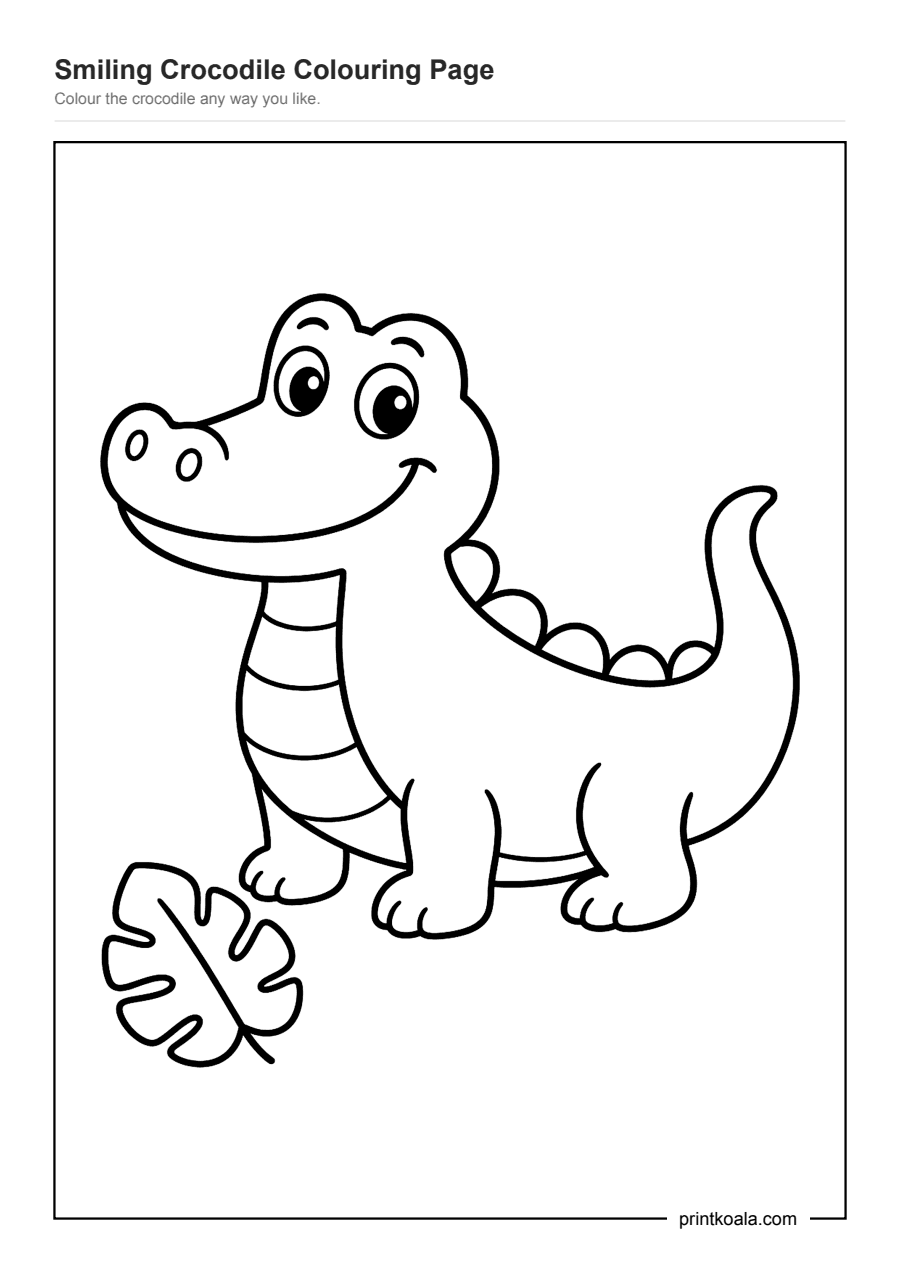
A round, grinning crocodile with a striped neck, a row of bumps down its back and a curled-up tail, standing beside a single jungle leaf.
Free, no sign-up. Downloaded 9 times · A4 · Print at 100% scale
This crocodile stands side-on with all four stubby legs planted on the ground, its head turned to face you with a wide closed-mouth smile and two big round eyes. The tip of its snout carries two small nostril bumps. Down its neck run five curved stripes like rings, and along its back sits a row of six rounded dome shapes leading into a long tail that curls right up and back over itself. By its front feet lies one broad tropical leaf with jagged, lobed edges resting on the ground.
Most of the page is one large, open shape: the belly, the tail and the head are all big curves a young child can fill without worrying about lines. The neck stripes and the row of back bumps are smaller and separate, so a child who wants to slow down can give each one its own color, or count them as they go. The leaf offers a different kind of shape again, with its lobes and slit, which is good for a child ready to work with something a bit fiddlier than a plain oval. It is an easy page to talk over too: how many bumps are on its back, why the tail curls the way it does, what color a crocodile should really be.
Because the body is made of big, friendly curves with no sharp teeth or spikes to worry about, this sheet sits on the easier side of the crocodile pages we offer. The striped neck and back bumps add just enough small detail to hold the interest of an older preschooler without overwhelming a younger one who is happy to color the big shapes and leave the rest plain. It suits a first attempt at a jungle animal, and works equally well as a quick, low-pressure page for a child who just wants something pleasant to fill in.
Let your child start with the big belly or tail, the easiest shapes, before moving to the striped neck and back bumps. If the stripes feel too fiddly, coloring them all one color is fine. Ask them to count the back bumps as a break from coloring.