🔤 Alphabet & Letters
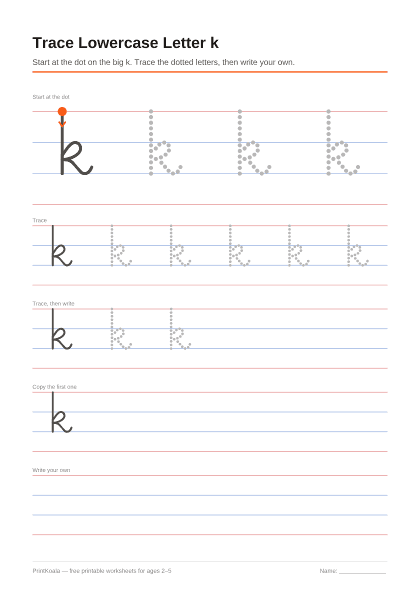
Trace Lowercase Letter k
Ages 4–5
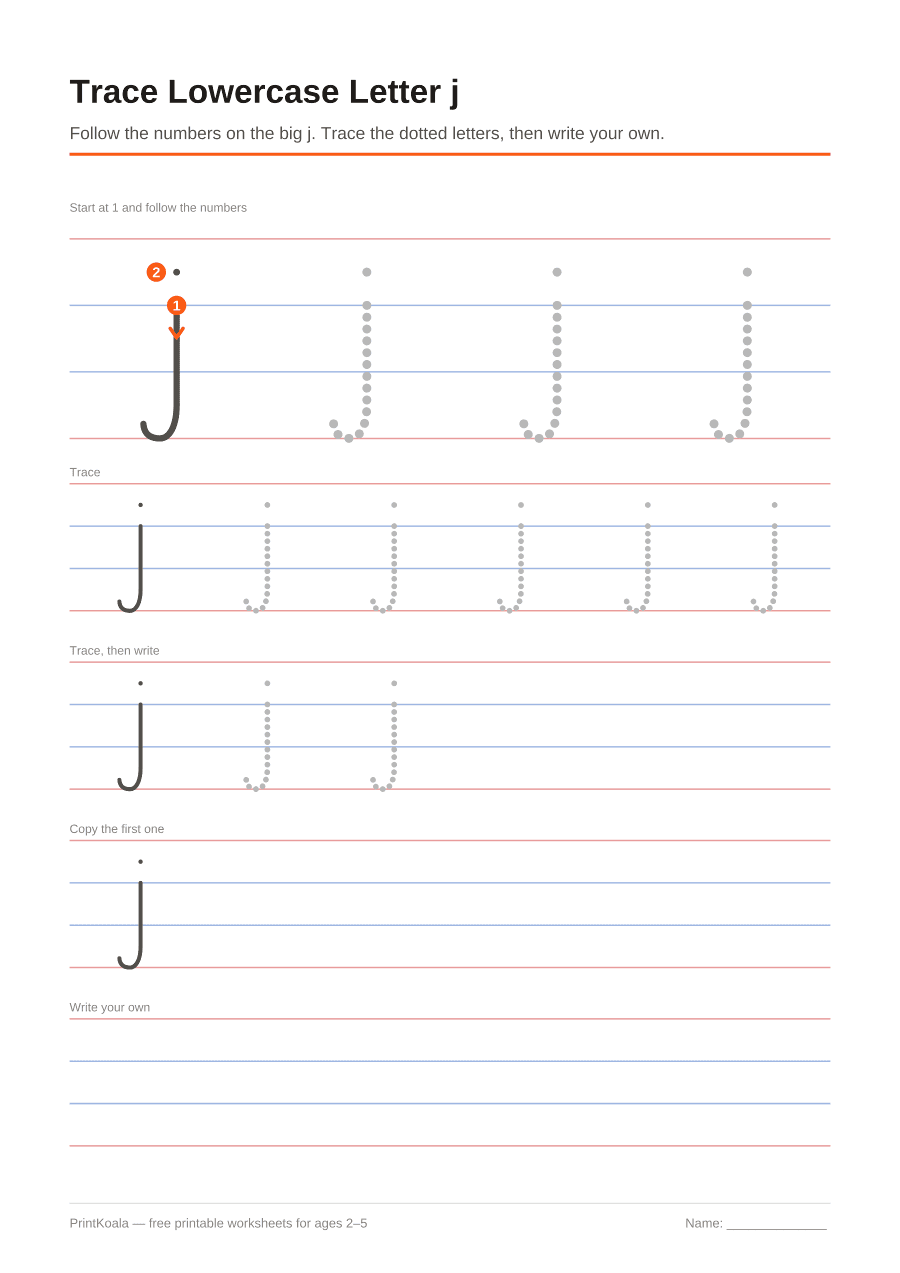
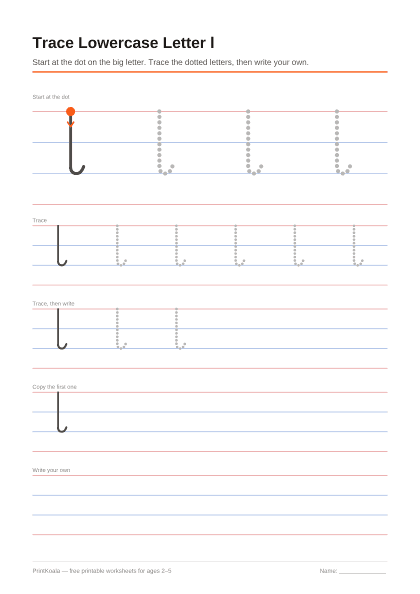
Lowercase j with a page to itself: a line from the middle line down through the baseline to a small hook on the bottom line, then a dot, numbered 1 and 2.
Free, no sign-up. A4 · Print at 100% scale
Small j hangs below the baseline. On the model, dot 1 is on the middle line, where i starts too, and the arrow under it points down. The line runs straight through the baseline and turns into a small, low hook to the left on the bottom line. The pencil then lifts for the dot, marked 2, which goes above the line, halfway up to the top line.
Watch the hook. When it turns to the right the letter comes out backward, one of the most common reversals at four and five, and it usually fades without fuss. The other slip is a line that stops on the baseline. Unlike i, j has no flick here, so it looks just as it does in plain print. The dot comes last, as on i, so it can sit straight above a line that is already there.
Tell your child the hook curls back toward the letters already written. Words for j are short ones: jam, jug and jump. If the dots become a game, do the long stroke of every j in a row first and add the dots afterward.
If your child knows capital J, write both on scrap paper. The capital starts on the top line and stands on the baseline, while small j starts on the middle line and hangs its hook under the baseline.