🦁 Safari & Jungle Animals
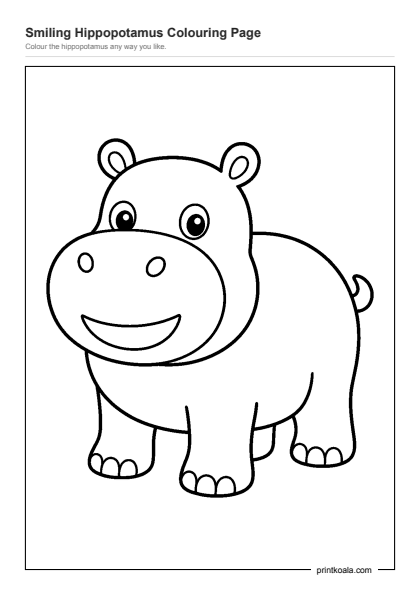
Smiling Hippopotamus Coloring Page
Ages 2–45
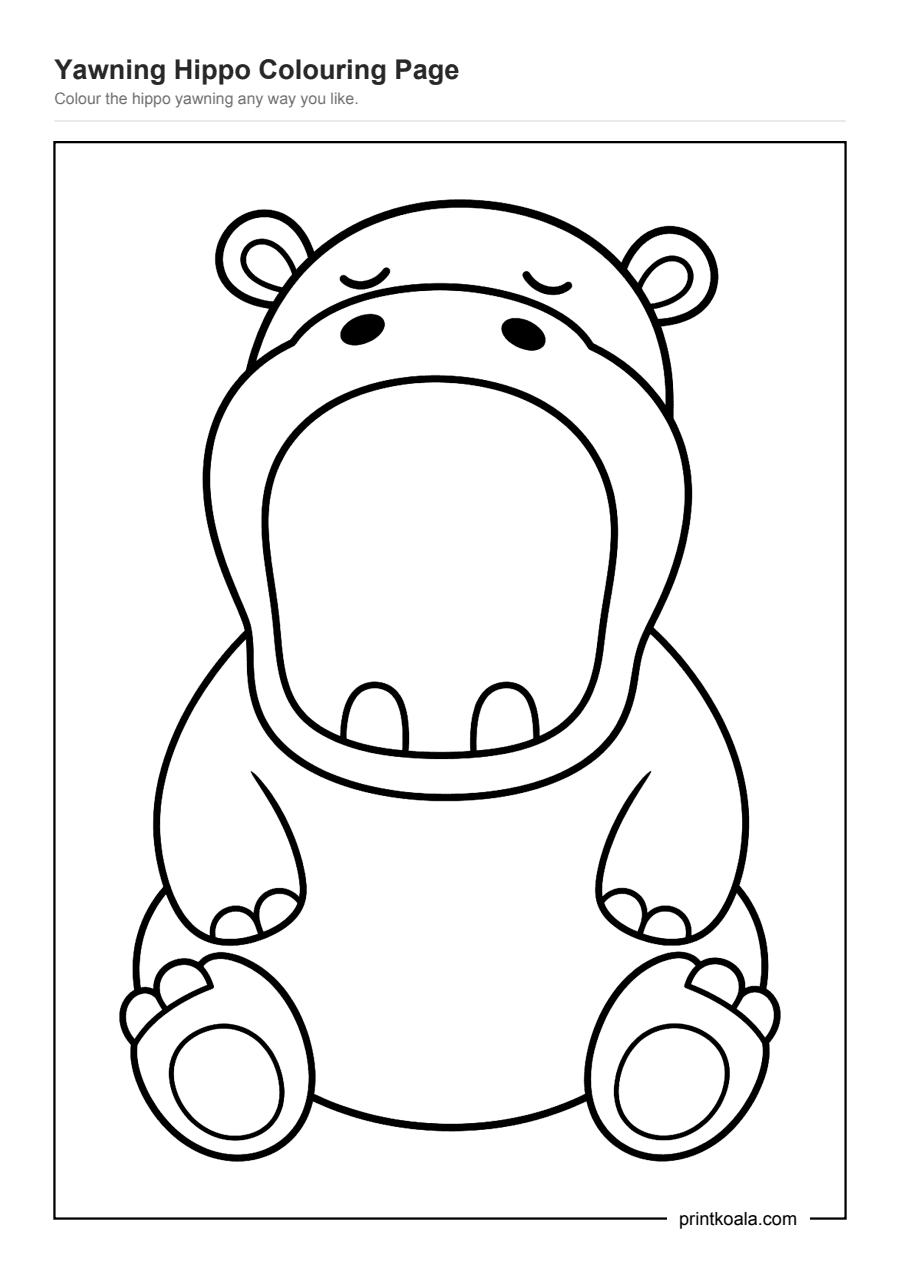
A round, sleepy hippo sits facing forward with its mouth stretched wide open in a big yawn.
Free, no sign-up. Downloaded 8 times · A4 · Print at 100% scale
This hippo sits square to the page with its eyes closed in a sleepy squint and its mouth open in a huge yawn that takes up most of the face. Two small teeth peek up from the bottom of the mouth, and the wide open space inside it is the biggest area on the sheet. Two round ears sit at the top of the head, two nostrils sit just above the yawn, and the plump body curves down into two front legs with toes, ending in two round feet planted at the bottom, each with a paw pad circle in the middle.
The big open mouth and the rounded belly give a young child plenty of room to color without worrying about staying inside tiny lines, which makes this a good confidence builder. The smaller bits, like the paw pad circles, the two teeth, and the nostrils, are still there for a child who wants to slow down and pick out a different color for each part. There is nothing else going on in the background, so all the attention stays on the hippo itself, which makes it an easy one to talk about: is it tired, is it hungry, is it about to roar.
Because the shapes are large and rounded with no fussy fur or texture lines, this sheet sits on the easier end of the sheets in this category. It suits a toddler who is still working on staying inside the lines, and it also works fine for an older preschooler who just wants a quick, satisfying page to finish in one sitting.
Let your child start with the wide open mouth since it is the easiest space to fill, then work outward to the ears and feet. If the crayon slips over a line, it barely shows on shapes this big, so there is no need to correct it.