🦁 Safari & Jungle Animals
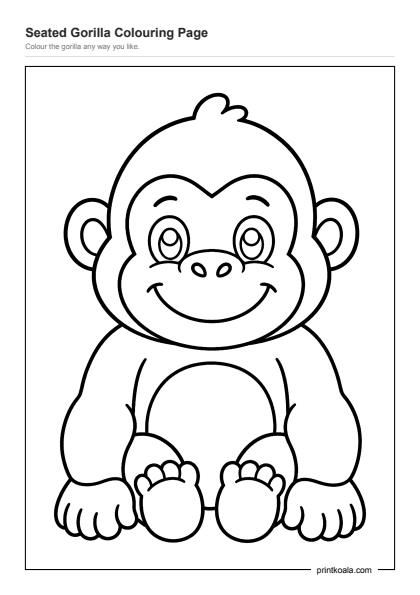
Seated Gorilla Coloring Page
Ages 2–47
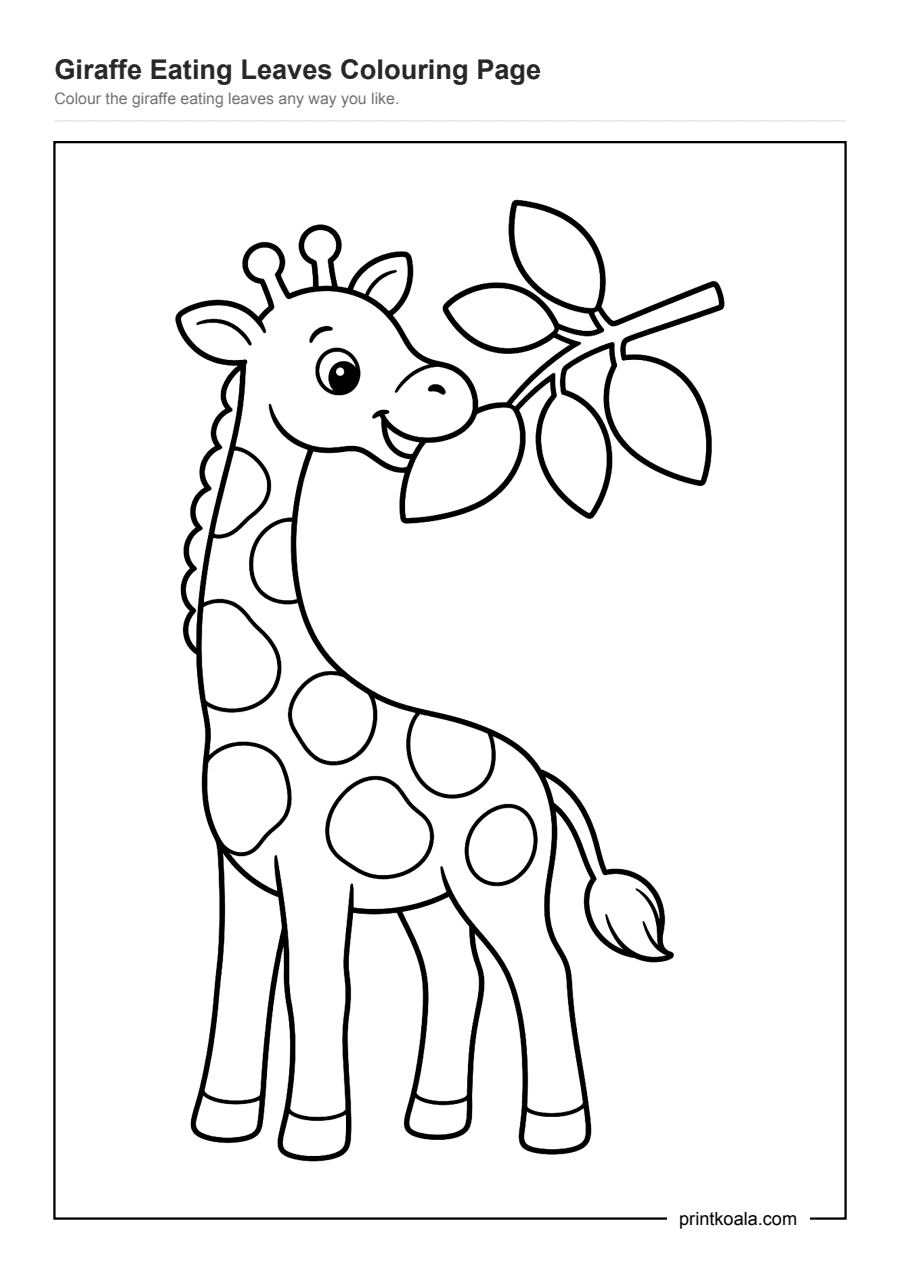
A smiling giraffe stretches its neck to nibble leaves from a branch, its body covered in big rounded patches.
Free, no sign-up. Downloaded 18 times · A4 · Print at 100% scale
This giraffe stands on all four legs with its head turned toward a leafy branch, mouth open and biting into one of the leaves. It has two knobbly ossicones on top of its head, small rounded ears, a big friendly eye, and a row of little bumps running down the back of its neck like a mane. Its long neck and body are covered in large, irregular patches, spaced well apart so none of them are fiddly to fill in. A slim curled tail with a tufted end sits behind its back legs, and each of the four legs ends in a plain hoof with a simple band above it.
There is nothing else on the page. No trees, no ground line, no sun in the corner, just the giraffe and its branch of leaves on white space, which means small hands are not being asked to hunt for tiny background bits. The neck, body, and legs give plenty of room for one long crayon stroke at a time, while the patches offer a chance to try two or three colors and see how they sit next to each other. The leaves are smaller and closer together than anything else on the page, so they are a natural place to slow down after the big open shapes.
This is a gentler page than most in the safari set, thanks to its wide-open patches and lack of scenery, but the cluster of leaves and the two ossicones do ask for a steadier hand than a page with no small parts at all. It suits a child who has done a few coloring sheets already and is ready for one picture that mixes easy and slightly fiddly work together.
Suggest starting with the neck and body since those big patches are the easiest wins. Save the leaf branch for last, as its smaller shapes take more care. If a patch color goes outside the line, turn it into a shadow by coloring the space just outside too.