🦁 Safari & Jungle Animals
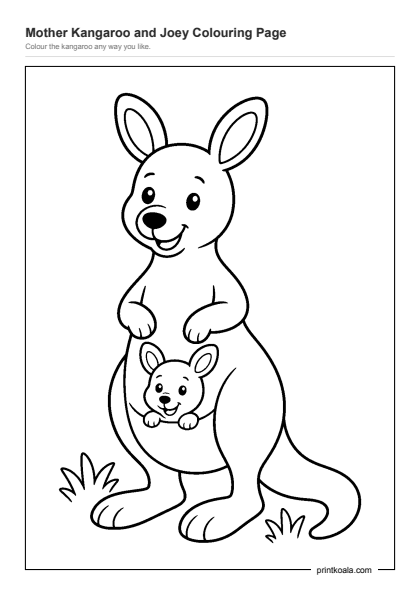
Mother Kangaroo and Joey Coloring Page
Ages 2–512
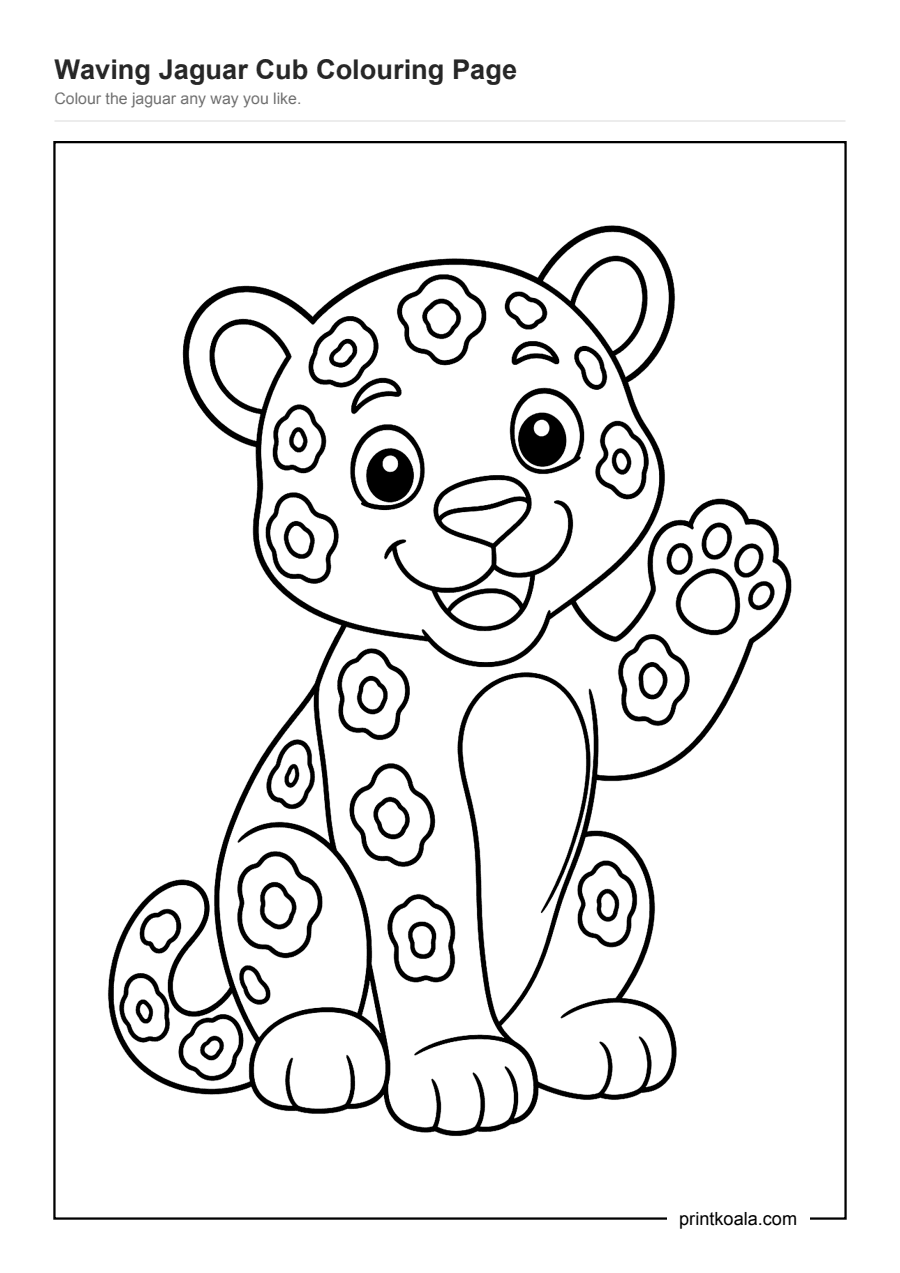
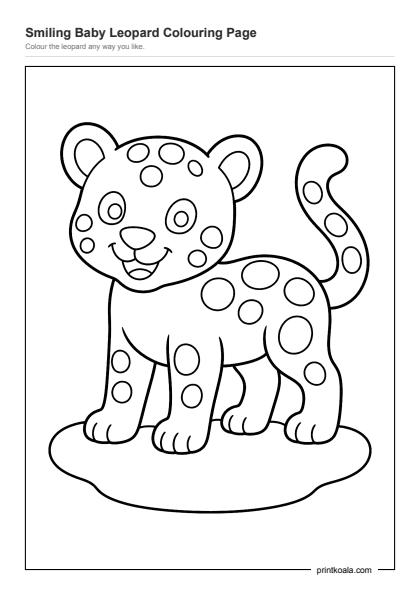
A round-eared jaguar cub sits and waves one paw, its body dotted with big flower-shaped spots to color.
Free, no sign-up. Downloaded 12 times · A4 · Print at 100% scale
This jaguar is drawn as a chubby, big-headed cub sitting back on its haunches, tail curled around its front paws. One front paw is lifted in a wave, showing four rounded paw pads. The face has two big round eyes, a small notched nose, and an open smiling mouth with a curl of tongue. Rosette-style spots, drawn as flower shapes with a ring in the middle, are scattered across the head, back, legs and the long curled tail. The belly and chest are left as one large plain curve with no spots at all.
That plain belly and the wide cheeks give a child a big, easy space to start with before they move on to the trickier bits. The spots are the real activity here: each one is a small ring inside a flower outline, so a child can pick a different color for the outer petals and the inner ring, or just fill each spot in one go and count them as they go. The paw pads, the two ears, and the open mouth are the other small shapes worth a second color, and the raised paw gives you something to talk about while coloring, like where the jaguar might be waving to.
There are more spots here than on a plain safari-animal outline, so little ones who rush through solid shapes will slow down for this one, but none of the spots are so small that a preschool hand will struggle to stay inside them. It suits a three or four year old who already has some coloring pages under their belt and is ready for a page with more going on than a single big outline.
Start with the plain belly and cheeks so the page feels quick and easy, then let your child work spot by spot around the body and tail. If the ring inside a spot gets missed, that is fine, the flower shape still reads once colored.