🐣 Baby Animals
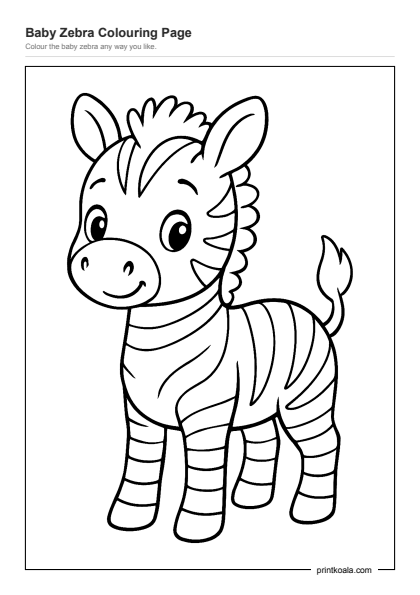
Baby Zebra Coloring Page
Ages 2–58
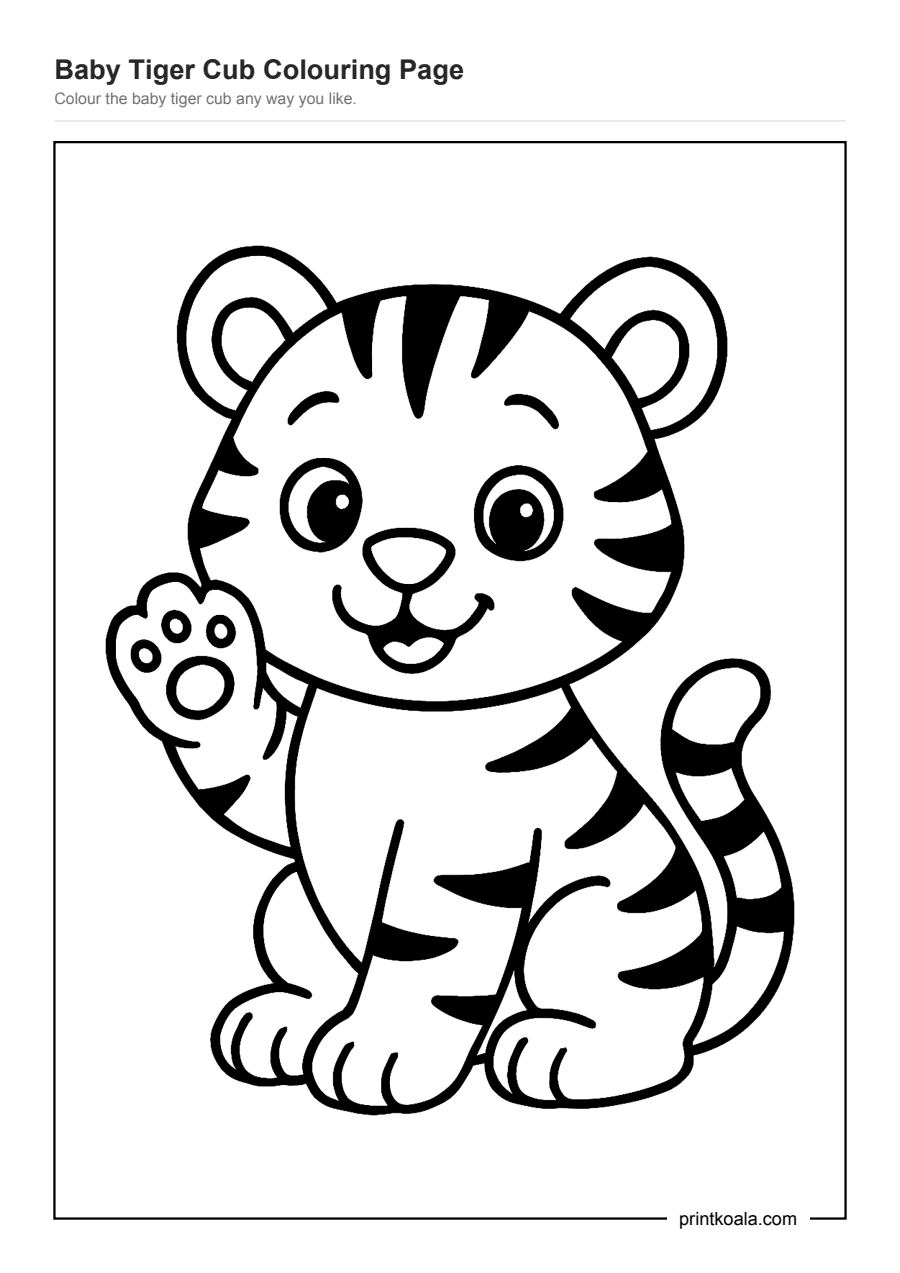
A round-bellied tiger cub sits and waves one striped paw, with big eyes and a gap-toothed smile to color in.
Free, no sign-up. Downloaded 5 times · A4 · Print at 100% scale
This cub sits back on its haunches with one front paw lifted in a wave, four small toe pads and a rounded palm pad all outlined and ready for color. Its head is large and round, with two floppy ears, thick stripes running down the forehead, and stripe marks framing both big eyes, which each have a small round highlight left white. The nose is a simple rounded triangle, and the mouth is open in a smile with a little tongue showing. The body is one big rounded shape with a wide open belly, two more paws planted on the ground below, and a curled tail banded with stripes that loops up beside the back leg.
The picture gives a child two very different jobs. The belly, head, and ears are large, closed, uninterrupted spaces where a chunky crayon can move freely without much steering. The stripes are the opposite: narrow, angled bands that need a steadier hand to keep inside, plus small fiddly bits like the four toe pads on the raised paw and the two round eye highlights, which are easy to talk through together before starting. It is a good page for naming parts as you go: the waving paw, the ears, the curled tail.
Because the stripes take some care but the overall shape is forgiving, this sits in the middle for difficulty, a step up from an all-round animal outline but well within reach for a preschooler who has colored a few pages before. It suits a child who is ready to try staying inside narrow lines but who would still be discouraged by a page made entirely of them.
Let your child start with the big belly and head first, then move to the trickier stripes and tail once their crayon grip has settled. If the stripes feel fussy, one solid color for all of them is fine too.