🦊 Forest & Woodland Animals
Bobcat Coloring Page
Ages 2–59
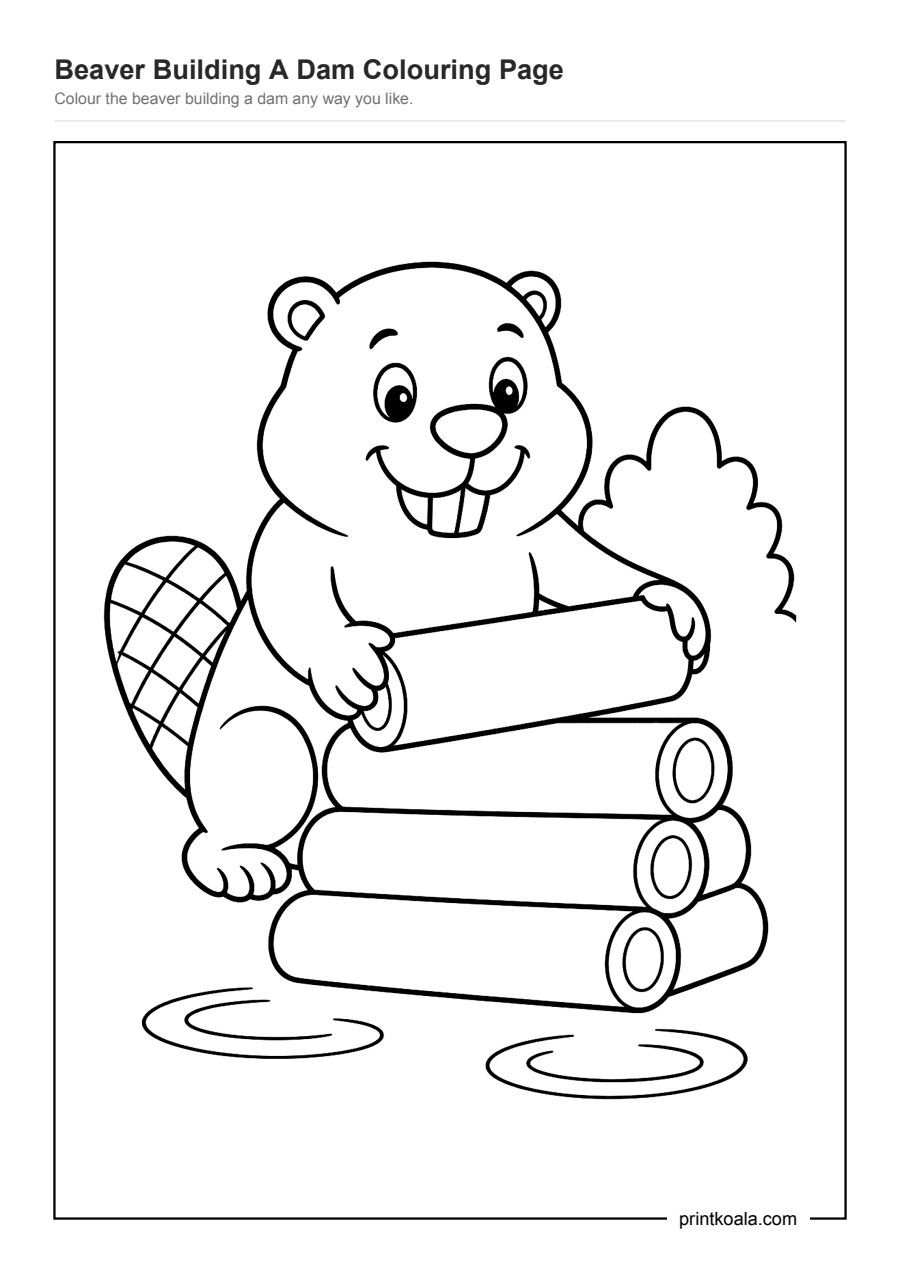
A grinning beaver stacks a fourth log onto its dam while ripples spread across the water below.
Free, no sign-up. Downloaded 11 times · A4 · Print at 100% scale
This beaver is caught mid-task, holding one log up with both paws and lowering it onto a stack of three already in place. You can see the round cut end of each log, marked with a ring, and the beaver's big flat tail behind it, covered in a criss-cross pattern like real beaver skin. It has a wide, toothy grin, two big front teeth, round ears and a small bush poking up behind it. Underneath the log pile, two sets of rippled lines show the water the dam sits in.
There is a good mix here for small hands. The beaver's body and tail are large, rounded spaces that color in fast and make a child feel like they have finished something big. The logs are simpler still, just four long ovals with a circle at one end, so a preschooler can work down the stack one log at a time and pick a different color for each if they like. The crosshatched tail and the ring patterns on the log ends are the fiddly bits, good for a child who wants a bit more of a challenge once the big shapes are done. It is also a natural page to talk over while coloring, why beavers pile up logs like this, and what a dam is for.
Against other sheets in the woodland set, this one sits in the middle. It is not as open as a single big animal shape, but nothing on the page is small or twisted enough to frustrate a three or four year old. It suits a child who has colored a few simple pages already and is ready for something with a few more parts to keep track of.
Let your child start with the beaver's body and tail, the biggest shapes, before moving to the four logs. Ask them to guess why the beaver is stacking logs in water. If the tail crosshatching feels fiddly, skip it and come back last.