🦊 Forest & Woodland Animals
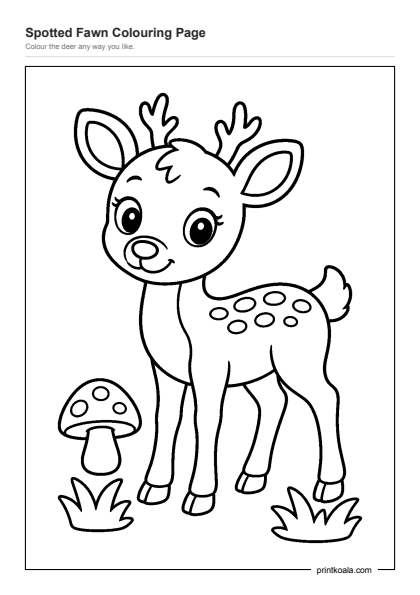
Spotted Fawn Coloring Page
Ages 2–513
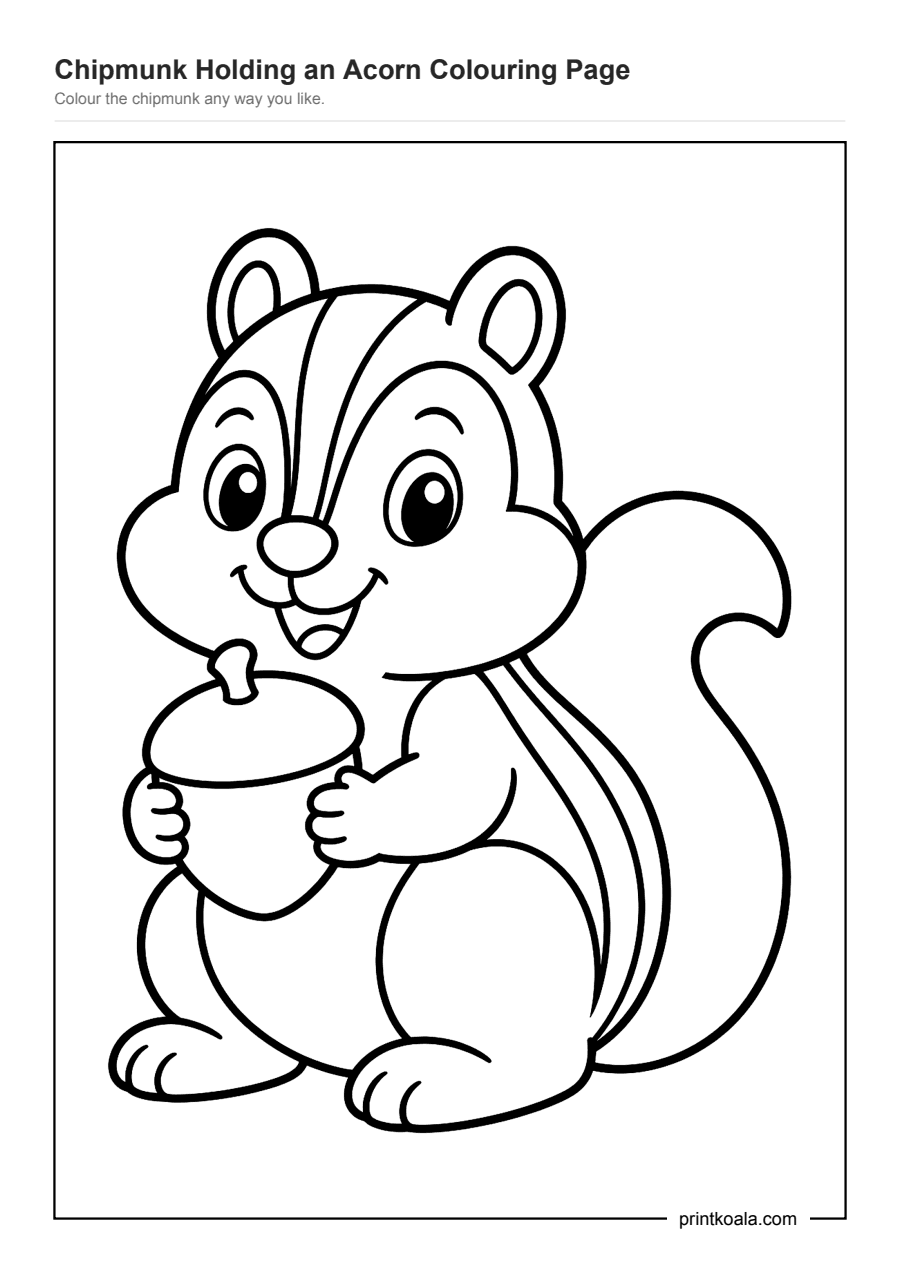
A round-bodied chipmunk sits hugging a giant acorn in both paws, with a striped head, a striped back and one big curled tail.
Free, no sign-up. Downloaded 10 times · A4 · Print at 100% scale
This chipmunk sits up on its haunches, front paws wrapped around an acorn nearly as big as its own head. The acorn has its own little cap and stem to color separately from the smooth nut below. The chipmunk's face takes up most of the page: two large round eyes with white highlight dots, a small oval nose, and a wide open mouth with a tongue poking out in a happy grin. One bold stripe runs down the middle of its head, and two more stripes run down its back, so there are three striped areas in all to fill. Behind it, one large bushy tail curls up and over in a big smooth loop, and two front feet peek out at the bottom of the page.
The page mixes big and small work on purpose. The belly, the tail and the acorn's body are wide, closed shapes a preschooler can color in a few confident strokes without worrying about the crayon skipping outside the lines. The stripes, the ear insides, the acorn cap and the little tongue are much smaller and ask for slower, more careful strokes. That contrast gives a child a reason to switch pace across the page, and the acorn itself is a natural thing to talk about while coloring — what chipmunks eat, why the cap is a different color from the nut, whether the tail should match the stripes or stand out on its own.
There's nothing tricky about the pose or the linework here, so this suits toddlers just starting with crayons as well as older preschoolers who want to add more colors and detail. A two-year-old can happily scribble the big tail and belly and call it done; a five-year-old can go further and keep every stripe and the acorn cap a separate, deliberate color. Either way it holds up as a page worth printing.
Let your child start with the big tail and belly first, since those are the easiest shapes to fill confidently. Save the acorn cap, ears and tiny tongue for last, when their hand has warmed up. Ask them why they picked each color for the stripes.