🐫 Desert & Grassland Animals
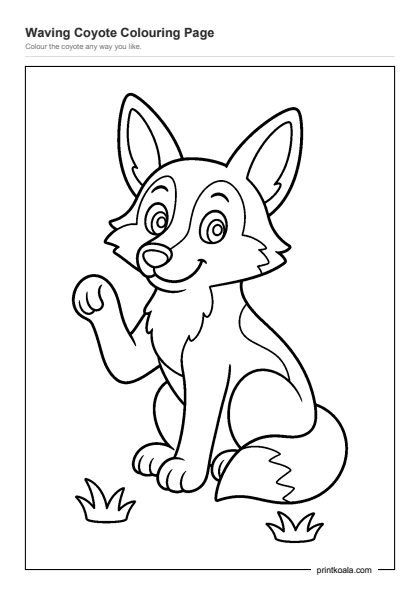
Waving Coyote Coloring Page
Ages 3–56
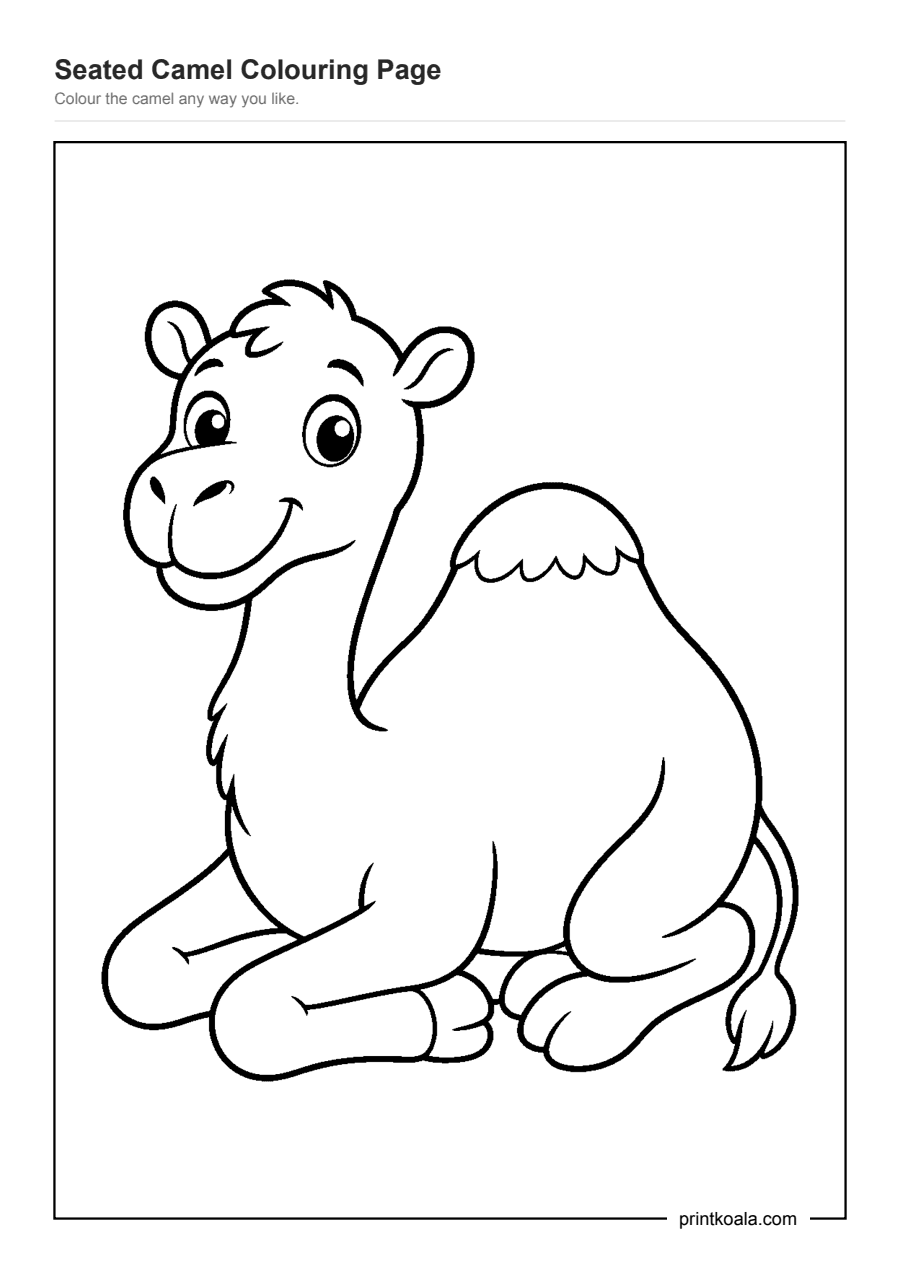
A smiling camel sits with its legs tucked under it and one big scalloped-edge hump for coloring.
Free, no sign-up. Downloaded 8 times · A4 · Print at 100% scale
This camel is sitting down, not standing, with all four legs folded underneath its body the way real camels rest. Its head turns towards you with big round eyes, a soft smile, two small ears and a little tuft of fur sticking up between them. The neck and chest are drawn with a shaggy, wavy fur line, and behind the head sits one large hump with a scalloped top edge, like a row of soft bumps. A curled tail with a tufted tip pokes out from the back leg. There is no background, no saddle and no scenery, just the camel filling the page.
That single hump and the broad body give a child one big, uninterrupted space to sweep a crayon across without worrying about staying inside tiny lines. The folded legs and the fur along the neck are smaller, more textured patches, so the page moves from easy to a little trickier without ever getting fiddly. It is a good page for talking about why camels sit like this, and for noticing the tuft of hair on its head or the curl in its tail.
There is nothing crowded here and no background clutter to fill in, so it suits a child who is still building the patience to finish a whole page. Older preschoolers can use it to practice keeping color inside the eyes, ears and hump ridges, which are the smallest shapes on the sheet.
Let your child start with the hump and body, the biggest space, before moving to the smaller ears, eyes and legs. If the crayon slips over a line, that's fine, camels come in patchy colors in real life too.