🐫 Desert & Grassland Animals
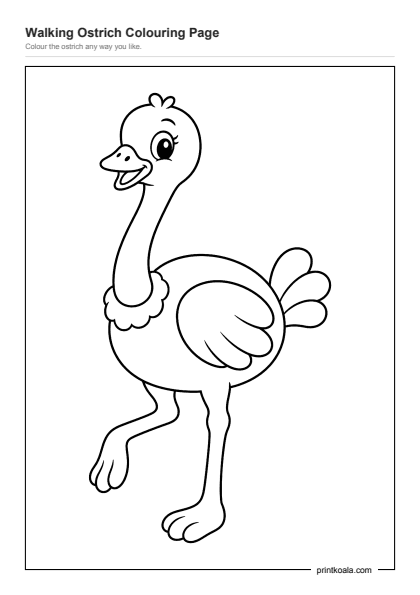
Walking Ostrich Coloring Page
Ages 2–57
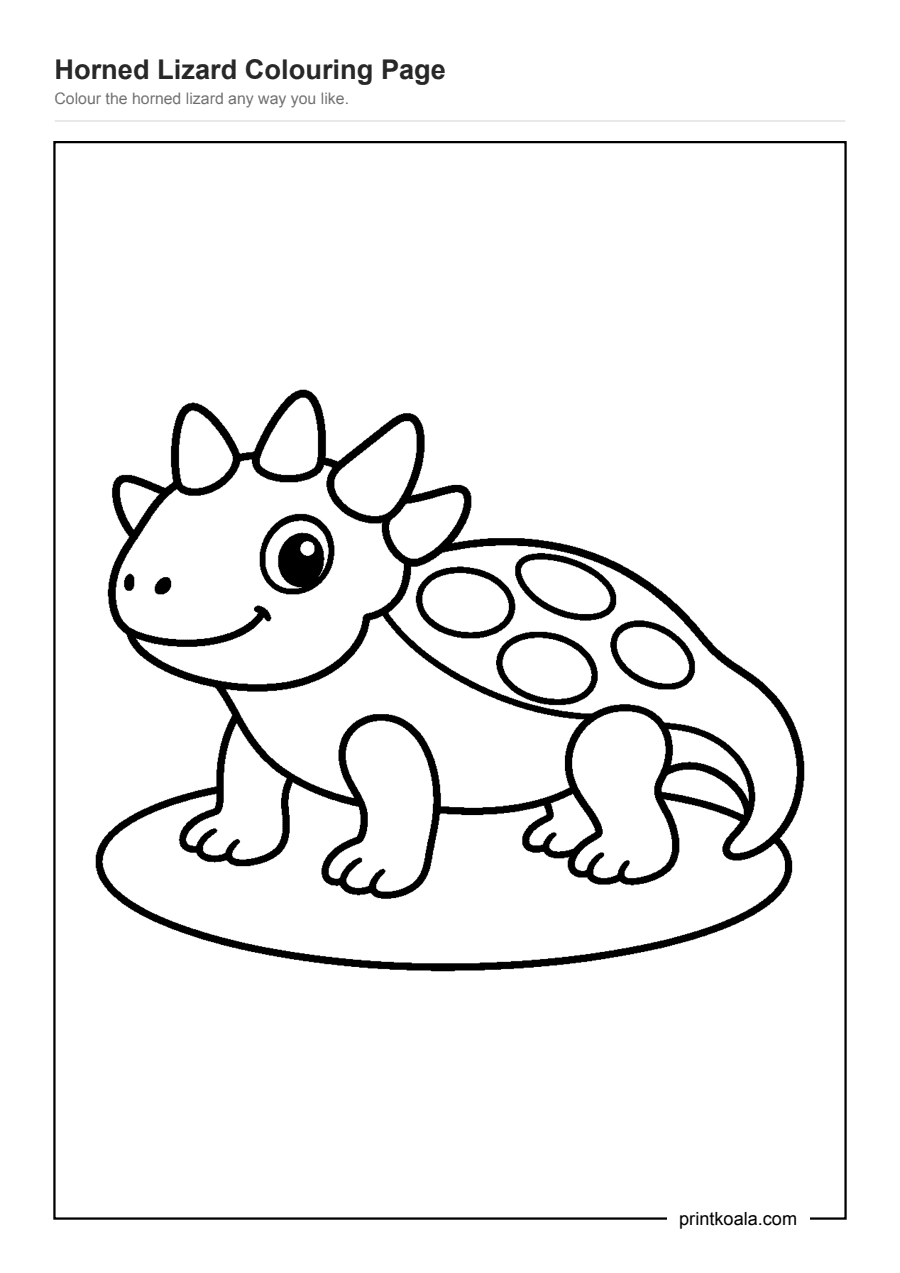
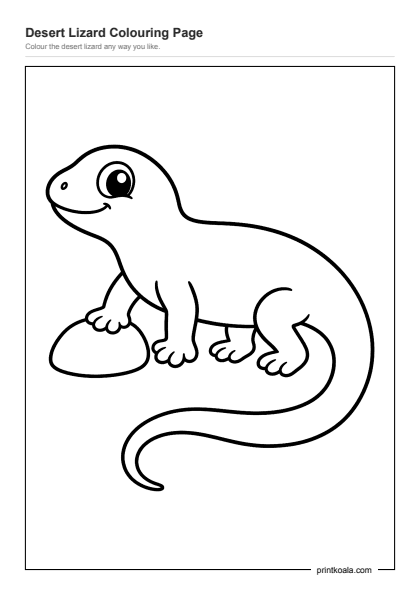
A smiling horned lizard with five blunt head spikes and six oval scales on its back, standing on a rounded rock.
Free, no sign-up. Downloaded 7 times · A4 · Print at 100% scale
This horned lizard stands on all four legs on a simple rounded rock, looking out at the viewer with one big round eye and a curved smile. A row of five blunt horns runs from its nose back over its head, getting a little smaller toward the back. Its wide, rounded back is covered with six large oval scales set out in two neat rows, and a short tail curls round to one side with two curved lines marking its segments. Each of the four stubby legs ends in a paw with clearly drawn toes.
The body, the rock and most of the horns are big open shapes, so a child can color them in with a few confident strokes and one crayon at a time. The six oval scales on the back are the part that invites more thought: they sit close together, so it is worth deciding early on whether every scale gets its own color or whether they alternate between two. The horns and the toes are narrower and will need a steadier hand and a bit more patience to keep inside the lines.
Because the lizard's face and body are large and forgiving, this sheet suits younger preschoolers working on basic control, while the horns, tail lines and back scales give slightly older children something fiddlier to aim for. It sits at a moderate level of difficulty rather than the very easiest sheets in this category, mainly because of those small enclosed areas around the head and feet.
Start with the big body and rock so your child gets some early wins, then move to the row of horns last since they are the fiddliest part. If the horns go outside the lines, that is fine, it still reads as a lizard.