🐫 Desert & Grassland Animals
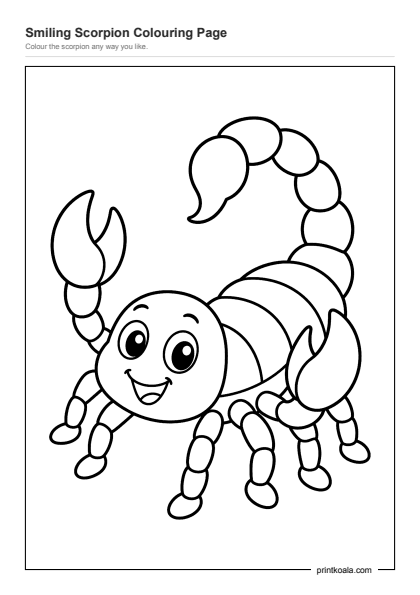
Smiling Scorpion Coloring Page
Ages 2–59
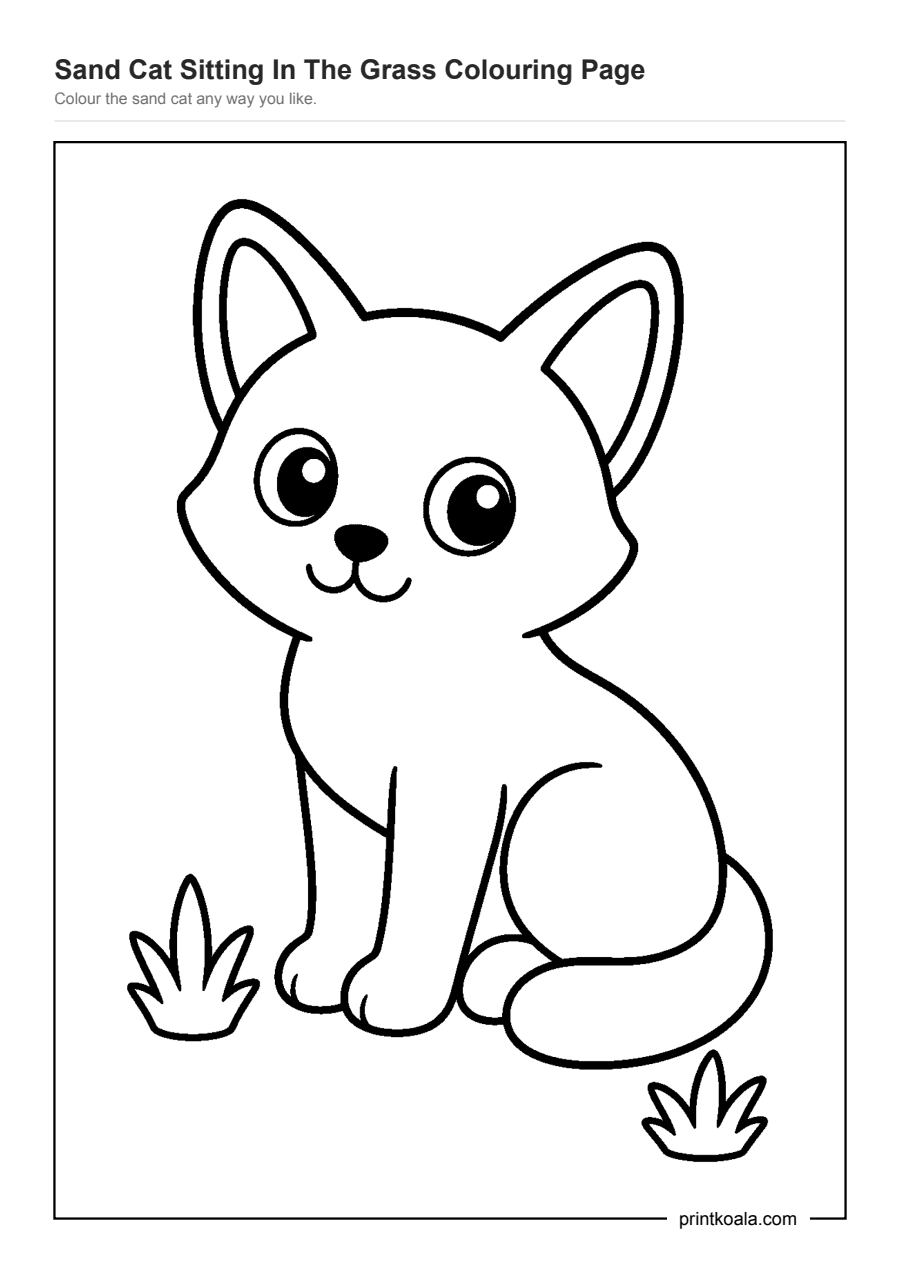
A big-eared sand cat sits facing forward with paws together and its tail curled round its side, with two small tufts of grass nearby.
Free, no sign-up. Downloaded 7 times · A4 · Print at 100% scale
This sand cat sits square to the page, front paws lined up neatly together, head tilted just slightly. The ears are the star of the drawing, drawn large and pointed with a simple triangle of inner shading, and the round eyes each have a single white highlight dot. A small nose and a soft curved smile finish the face. The tail sweeps out from behind the body and curls forward along the cat's right side, and two spiky little tufts of grass sit at the bottom corners of the page, one on each side, marking out the sand cat's desert home without adding any clutter.
What makes this one worth printing is how much of the page is open space. The body, head and ears are all large, closed shapes with nothing crossing through them, so a child can move a crayon in big strokes without worrying about staying inside tight lines. The two ear interiors, two eyes and the curled tail give a handful of smaller spots for more careful work, which is a nice contrast once the big areas are done. It is an easy page to talk over too: how many ears, where the tail goes, why the grass is so small next to such a big cat.
Compared with busier animal sheets in this category, this one is on the gentle end. There is one animal, one simple setting, and no background scene to fill in, so it will not wear out a short attention span. It suits a child who is still building confidence with a crayon and wants to finish something in one sitting, while the small ear and eye details give slightly older preschoolers something to slow down for.
Let your child start with the big body and head first, since those are the easiest shapes to fill. Save the small ear triangles, eyes and grass tufts for last, when their hand is warmed up. If a line gets crossed, just keep going, the bold black outline hides small slips.