🐫 Desert & Grassland Animals
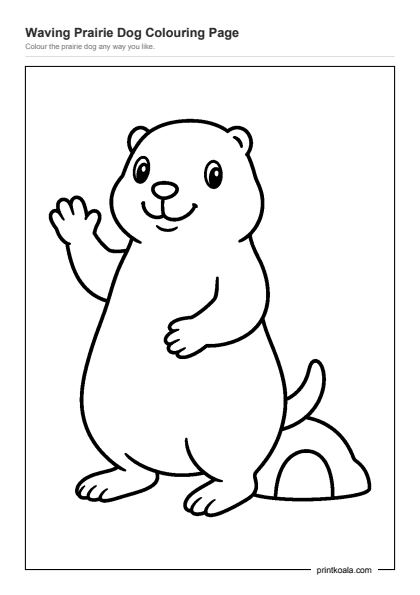
Waving Prairie Dog Coloring Page
Ages 2–56
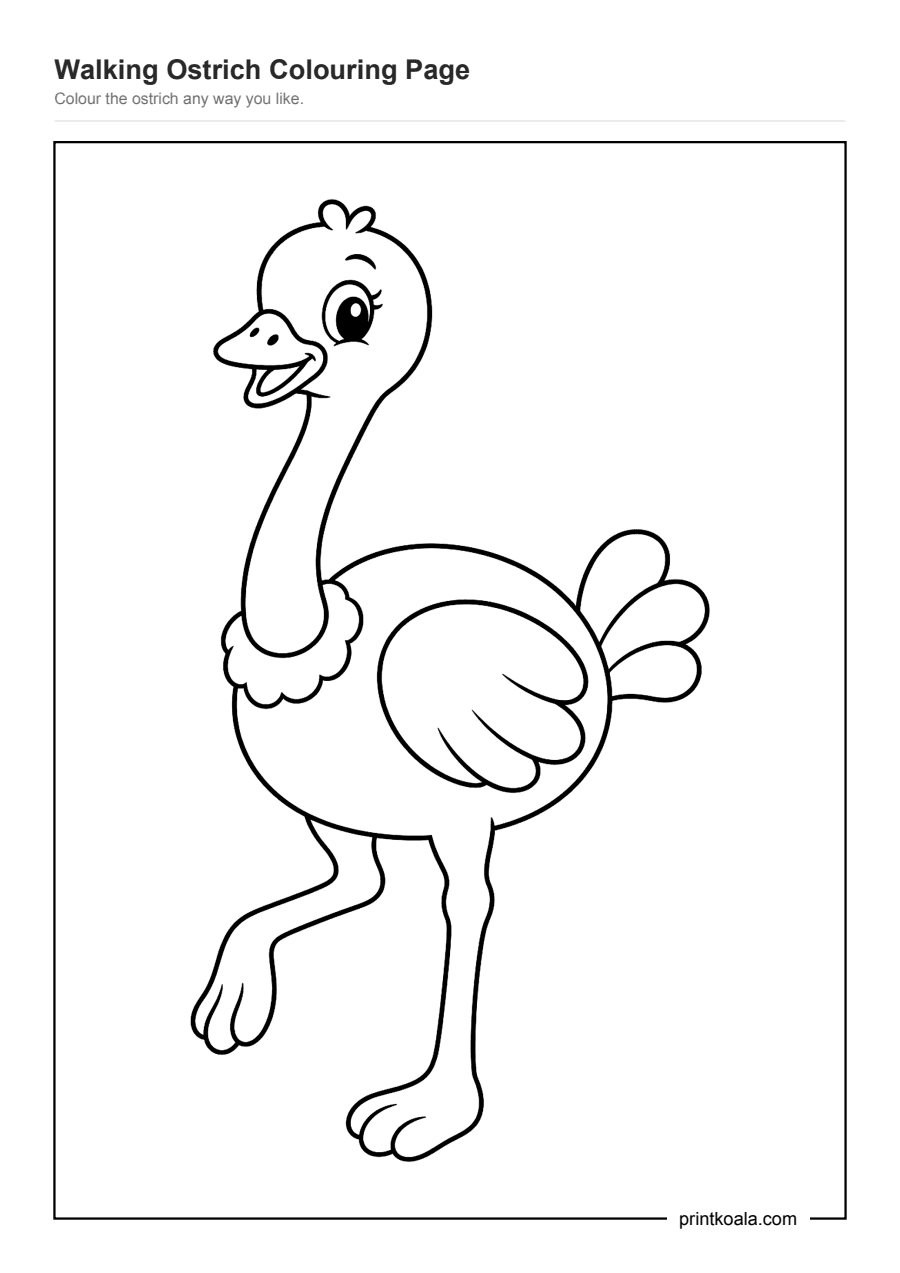
A smiling ostrich strides forward on one lifted leg, with a big round body, a fluffy neck collar and a cluster of tail feathers to color.
Free, no sign-up. Downloaded 7 times · A4 · Print at 100% scale
This ostrich is caught mid-step, one long leg lifted with its toes curled up, the other planted flat on the ground. Its neck curves up in a long S-shape to a small smiling head with a tiny tuft of feathers on top and a fringe of lashes over one eye. Where the neck meets the body there is a fluffy ruff, drawn as a scalloped collar, and the round body carries one large wing feather shape plus a cluster of shorter feathers fanning out at the tail.
Most of this page is open space. The body is one big oval a child can fill in with a single color without worrying about staying inside anything fussy, and the same goes for the neck and legs. The harder bits are small and few: the scalloped collar, the tuft on the head, and the feather cluster at the tail, which give a reason to pick up a second or third color without turning the page into a hunt for tiny gaps. The lifted foot is the one bit of personality in the drawing, and it is worth pointing out to a child before they start, since it is easy to miss at a glance.
There is nothing tricky about the linework here, so this suits a younger child working on their first few coloring sheets, as well as an older toddler who wants something quick to finish in one sitting. It is not a page that teaches anything beyond coloring itself, and it does not need to.
Start with the big body oval since it is the easiest area, then move to the neck and legs before tackling the smaller collar and tail feathers. If a child colors over the outlines, do not worry about it: this page is about big, confident strokes, not staying inside every line.