🐫 Desert & Grassland Animals
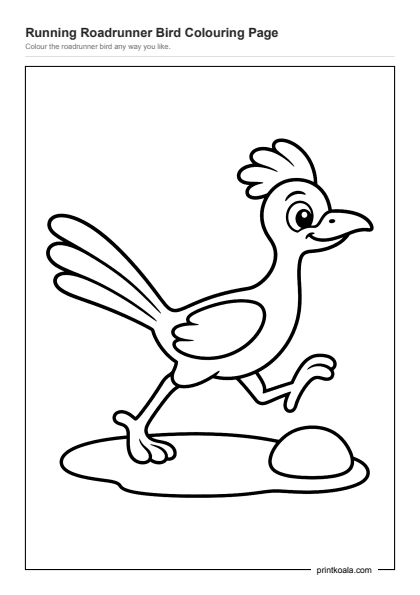
Running Roadrunner Bird Coloring Page
Ages 2–54
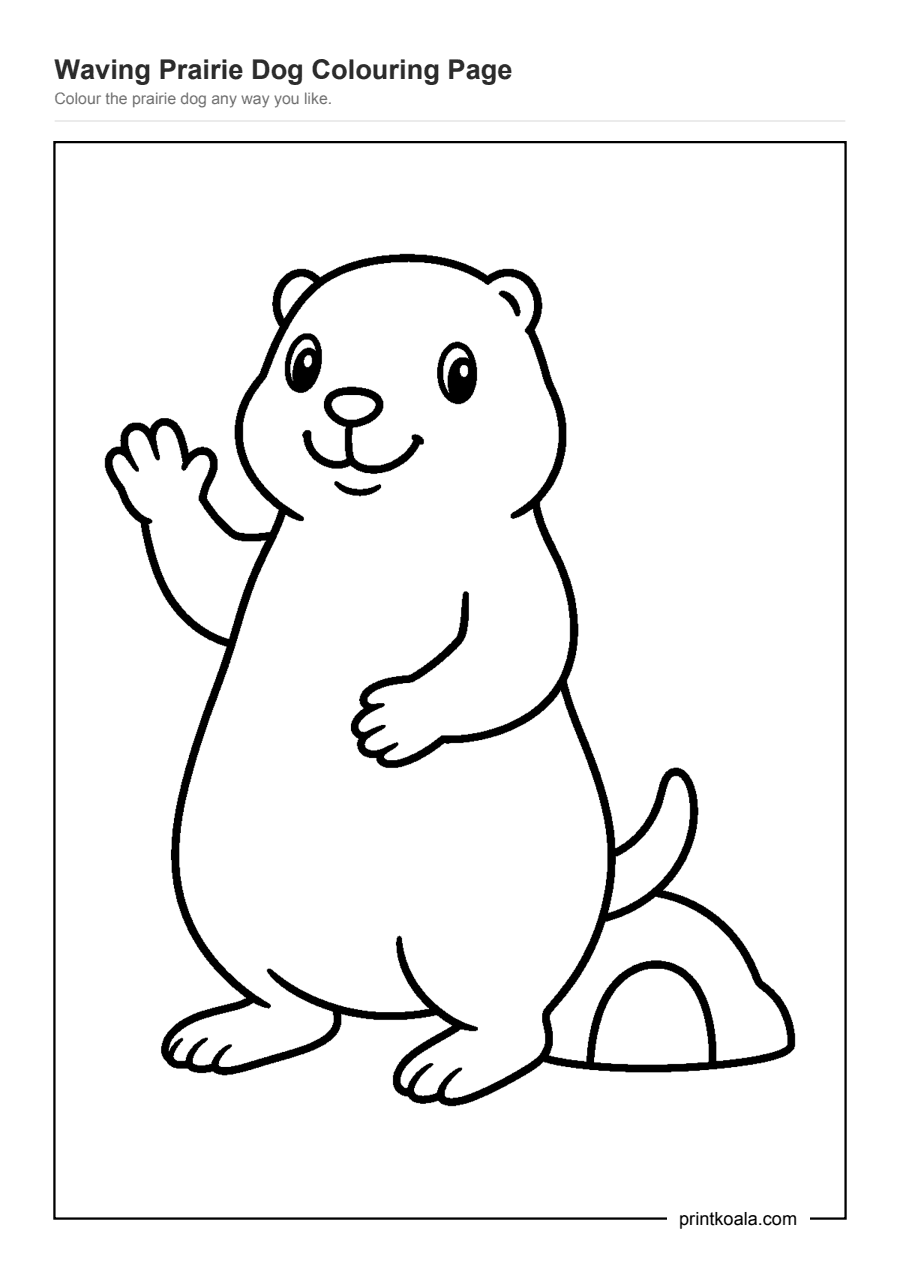
A round-bodied prairie dog stands by its burrow, one paw raised in a wave and the other resting on its tummy.
Free, no sign-up. Downloaded 6 times · A4 · Print at 100% scale
This prairie dog stands up tall on its back legs, the pose it uses to keep watch over the colony. One front paw is raised high with all five fingers spread out in a wave, while the other paw rests flat against its round belly. Its head is simple and friendly: two oval eyes with dark pupils, two small rounded ears, a tiny nose, and a mouth curved into a smile. Behind its feet sits a low burrow mound with an arched hole cut into it, and a short curled tail pokes out just above the entrance.
The big win here is the body. The chest, tummy and legs form one large unbroken shape, so a child can sweep a crayon across it without worrying about staying inside tight lines. The raised paw, ears and burrow hole are smaller and will need a bit more care, which makes a nice contrast in the same picture: big lazy strokes for the body, slower work for the fingers and the arch of the mound. There is also a natural reason to talk about it while coloring, since prairie dogs stand up like this to watch for danger and duck into holes like the one drawn here.
It sits on the easier side of what we offer, with only one figure, no background clutter and no fine fur texture to fill in. That makes it a good pick for a child coloring mostly alone, or a first attempt for a younger sibling still building up control. Older preschoolers who like more of a challenge might finish it quickly and want a busier page next time.
Let your child color the big belly and legs first, then move to the smaller waving paw, ears and burrow hole. If the fingers feel fiddly, a thick crayon on its side works better than a fine tip.