🐫 Desert & Grassland Animals
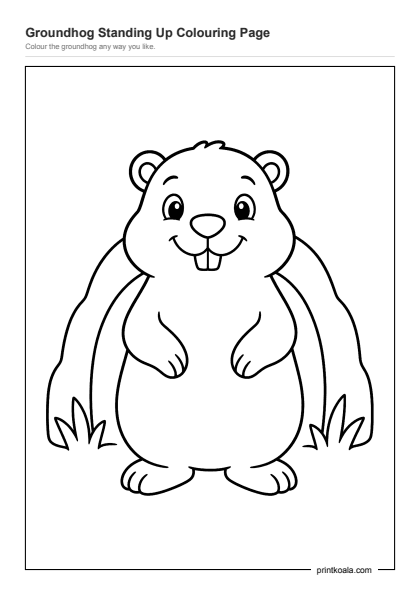
Groundhog Standing Up Coloring Page
Ages 2–48
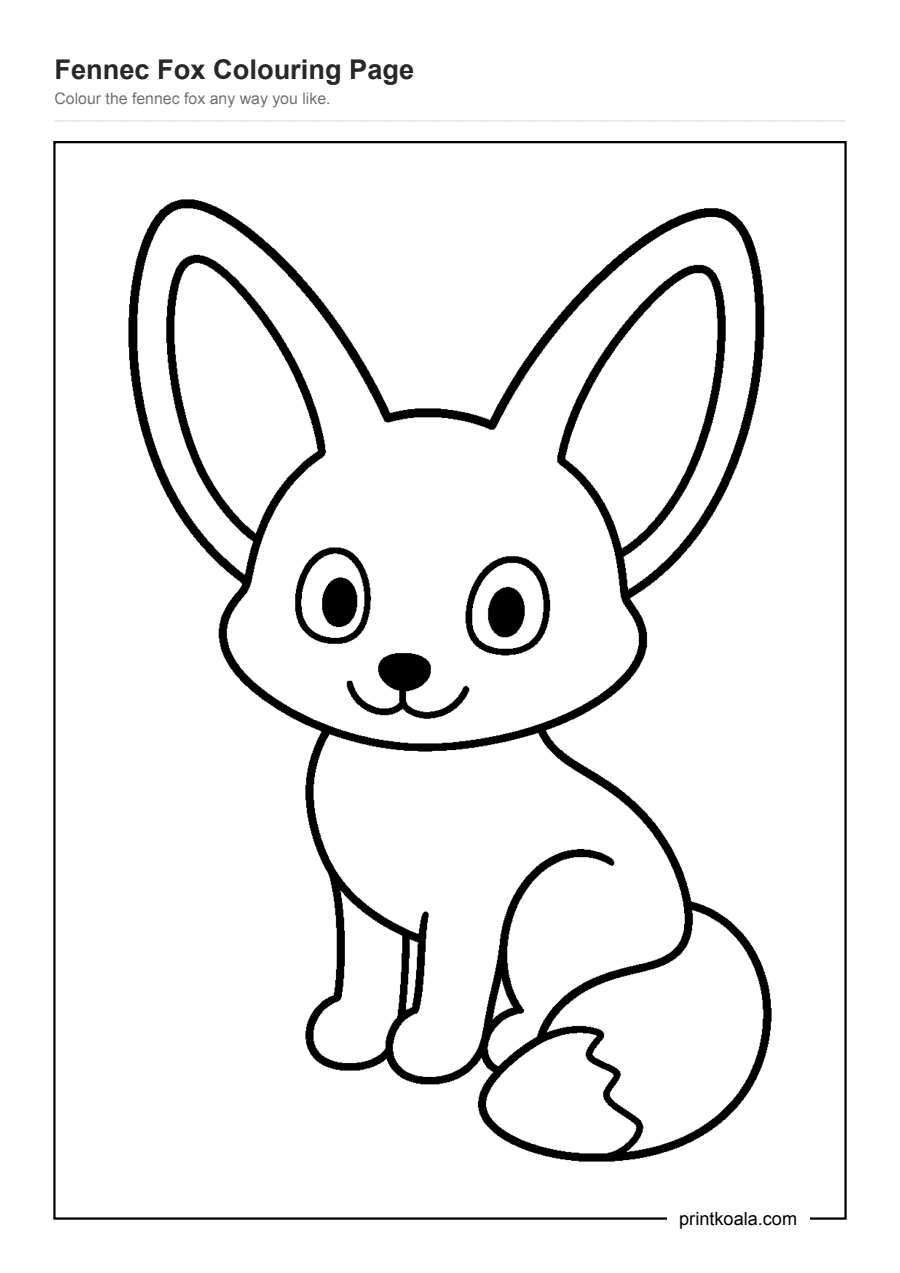
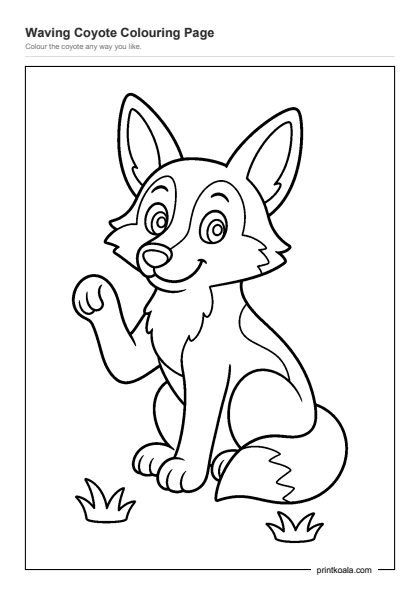
A sitting fennec fox with two huge ears and a big curled tail, drawn in bold, simple outlines.
Free, no sign-up. Downloaded 7 times · A4 · Print at 100% scale
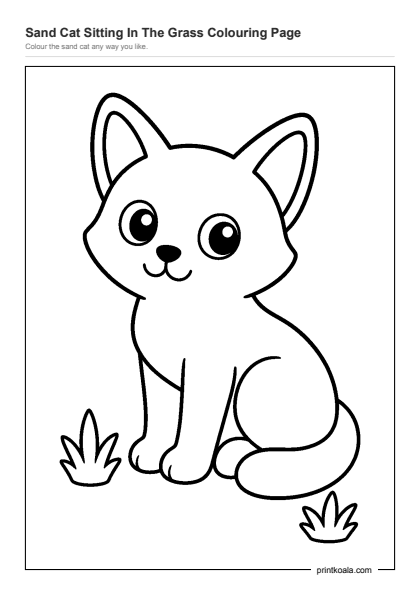
This fennec fox sits facing forward, front paws planted on the ground, with its two oversized ears standing straight up above a round head. Each ear has an inner line running through it, so there are two ear-shapes to color rather than one solid triangle. The face keeps to the basics: two round eyes with a white highlight dot, a small black nose, and a simple curved smile, with no whiskers or fur lines to fuss over. Behind the fox, its tail curls forward in one big loop, ending in a jagged, zigzag edge that stands out from the smooth body outline. There is nothing else on the page: no bushes, no sand dunes, no sun, just the fox on plain white.
What makes this one worth printing is the size of the spaces. The ears, the body and the tail are all large, closed-off shapes a young child can fill without much steering, which is rare for an animal known for its ears. The only part that asks for more care is the jagged tip of the tail, where the fur-texture zigzag breaks the shape into smaller bits. A child coloring this page can happily make the ears one color, the body another, and the tail a third, and talk about why a desert fox might need such big ears while they go.
Because the outlines are thick and the face has so little detail, this sits at the easy end of the shelf. It is a good pick for a child who is still learning to stay inside the lines, or for a first sitting with crayons, and it also works as a quick page for an older toddler who wants to finish something in one go.
Start with the two ears since they are the biggest, simplest shapes. If the tail's zigzag tip gets messy, let it stay messy: a scribbled fur tip still reads as fur. Ask which color a desert fox's coat might really be.