🦁 Safari & Jungle Animals
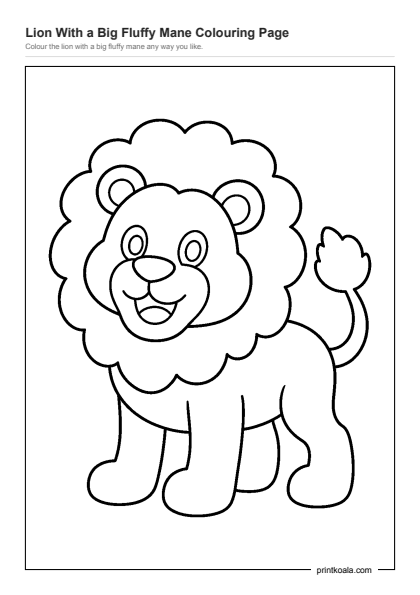
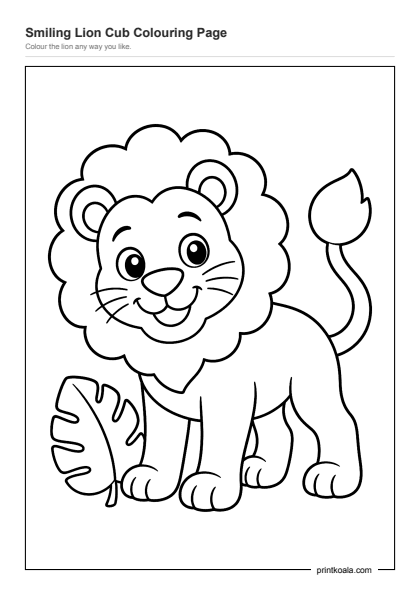
Smiling Lion Cub Coloring Page
Ages 2–511
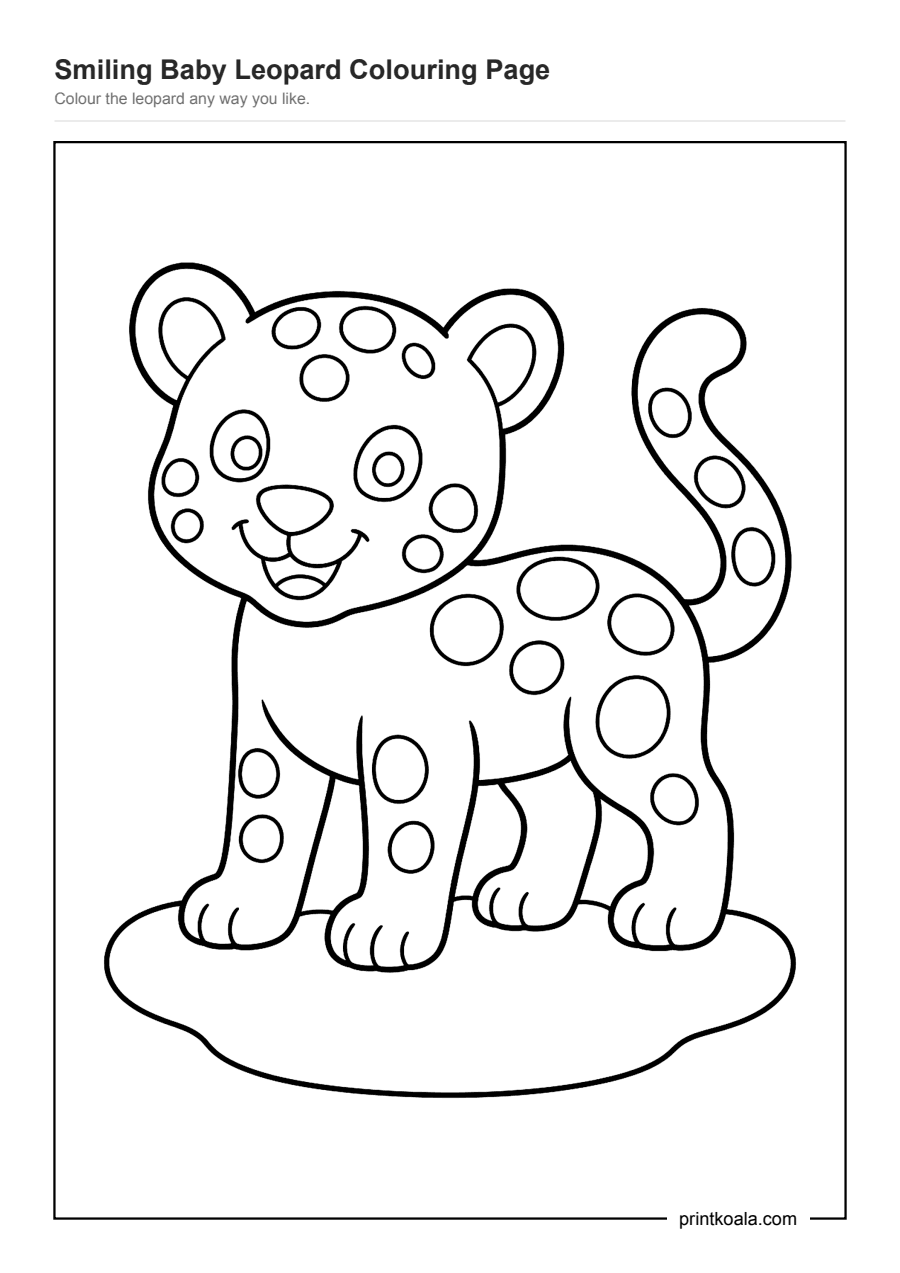
A round-faced baby leopard stands on a grassy patch, grinning, with its tail curled up like a question mark behind it.
Free, no sign-up. Downloaded 8 times · A4 · Print at 100% scale
This leopard is drawn as a cub, not a fierce cat. It stands on all four legs facing left, head turned slightly towards you, with a big open smile and two wide eyes. Its tail curls up and over in a loop above its back, and it stands on a plain rounded patch of ground with no bushes or trees behind it. Spots are scattered across its face, body, legs and tail, but they are drawn as simple ovals and circles, generously sized and spaced well apart, not the dozens of tiny flecks a real leopard has.
That spacing is what makes this sheet pleasant rather than fiddly. A child can fill each spot with one color and the ground patch with another, and still have the four legs and rounded body as large open shapes to practice steady strokes on. The face invites a chat too, since the big smile and round ears give it a friendly, almost puppyish look that is easy to talk about while coloring. Nothing here is small enough to cause frustration, and there is no background clutter competing for attention.
Next to other jungle animal sheets in this set, this one sits on the easy end. The outlines are thick and closed, the spots are few and generously drawn, and the pose is simple and still. It suits a child just starting to color inside lines, or one who wants something quick to finish and be proud of, rather than a page that takes real concentration.
Start with the body and legs first, since they are the biggest shapes. Save the spots for last so a wobbly line inside them still looks neat. If a spot gets messy, color it in fully rather than trying to erase, since a solid spot still reads well from a distance.