🦁 Safari & Jungle Animals
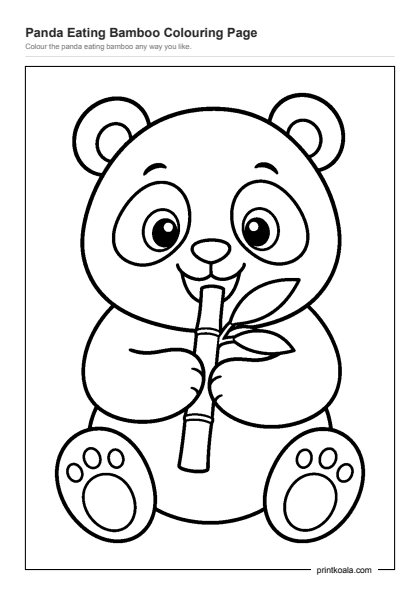
Panda Eating Bamboo Coloring Page
Ages 3–59
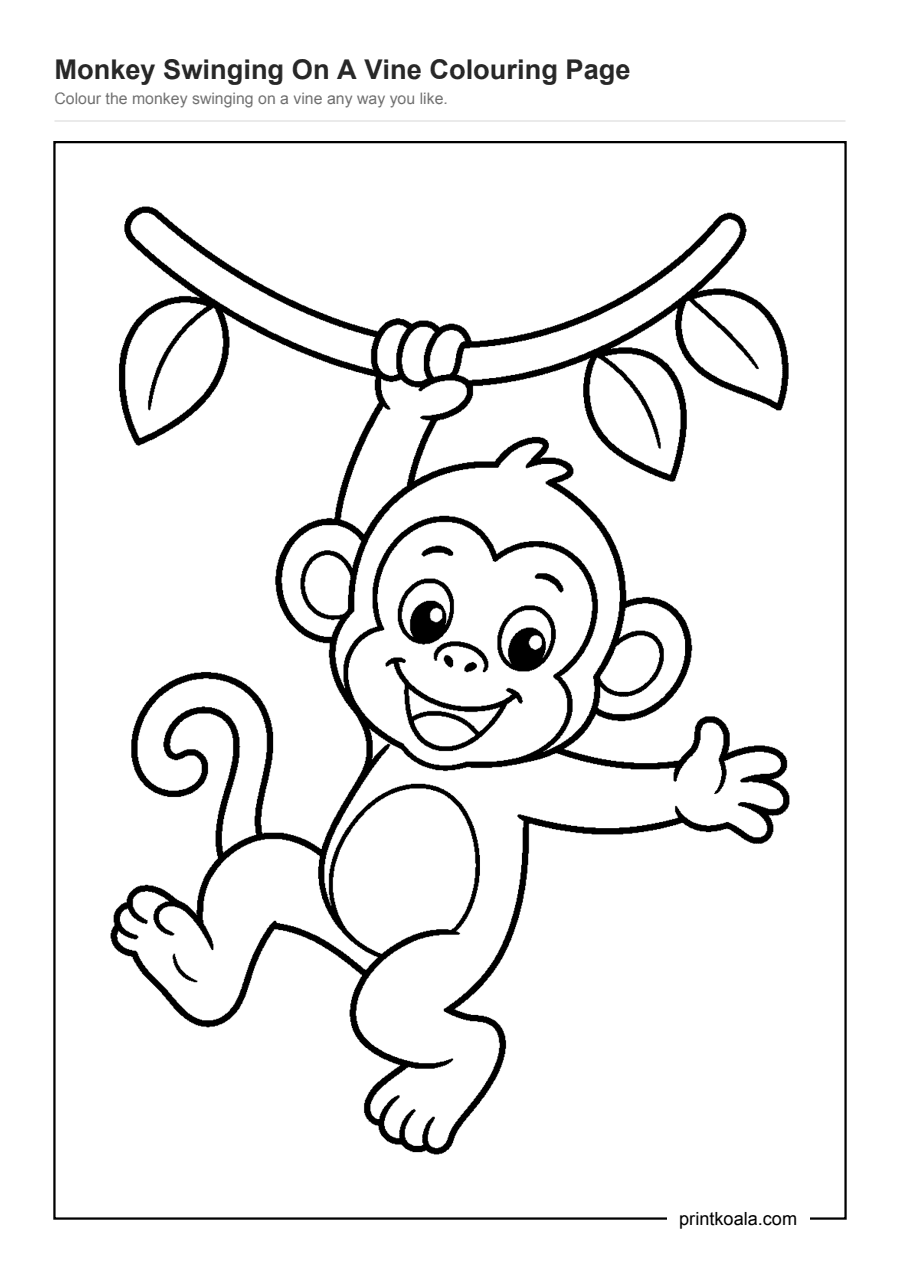
A grinning monkey hangs by one paw from a curved, leafy vine, its tail curled below and its other arm flung wide.
Free, no sign-up. Downloaded 15 times · A4 · Print at 100% scale
This monkey is caught mid-swing, gripping a curved vine with one hand while its other arm stretches out to the side, fingers spread wide. Its two bent legs and spread toes suggest it is kicking through the air, and its long tail curls into a loose spiral underneath. The face is simple and friendly: two big round eyes, a small nose, two tufts of hair standing up, two large round ears, and an open, smiling mouth. Five leaves are dotted along the vine, and that is the whole scene — no background jungle, no extra creatures, just the monkey and its branch.
What makes this one worth printing is the mix of shapes on offer. The head and the round belly are big, open spaces a young child can fill in a few confident strokes, which is satisfying when a pencil skill is still developing. The five vine leaves and the monkey's spread fingers and toes are smaller and separate from each other, so a child gets practice stopping at a line without the pressure of a busy scene. It is also an easy one to talk about while coloring: how many leaves are on the vine, why the tail is curled up, whether the monkey is about to let go.
Compared with other jungle sheets in this set, this is on the easier end — the pose is active but the shapes stay large and uncluttered, and there is nothing fiddly like fur texture or patterned background to fight with. It suits a child who is just getting comfortable holding crayons inside lines, and it is a good middle step for a slightly older child before moving on to busier scenes with more animals or scenery.
Let your child start with the big belly and head, since those are the easiest wins and build confidence early. Save the five small leaves and the spread fingers and toes for last, and don't fuss over neat edges there — this sheet works fine even if those small bits go a bit outside the lines.