☂️ Everyday Objects
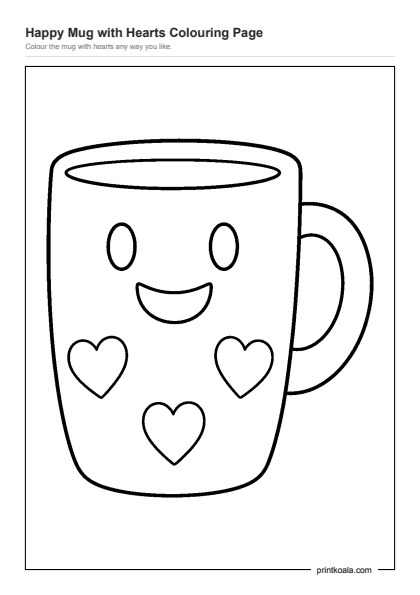
Happy Mug with Hearts Coloring Page
Ages 2–56
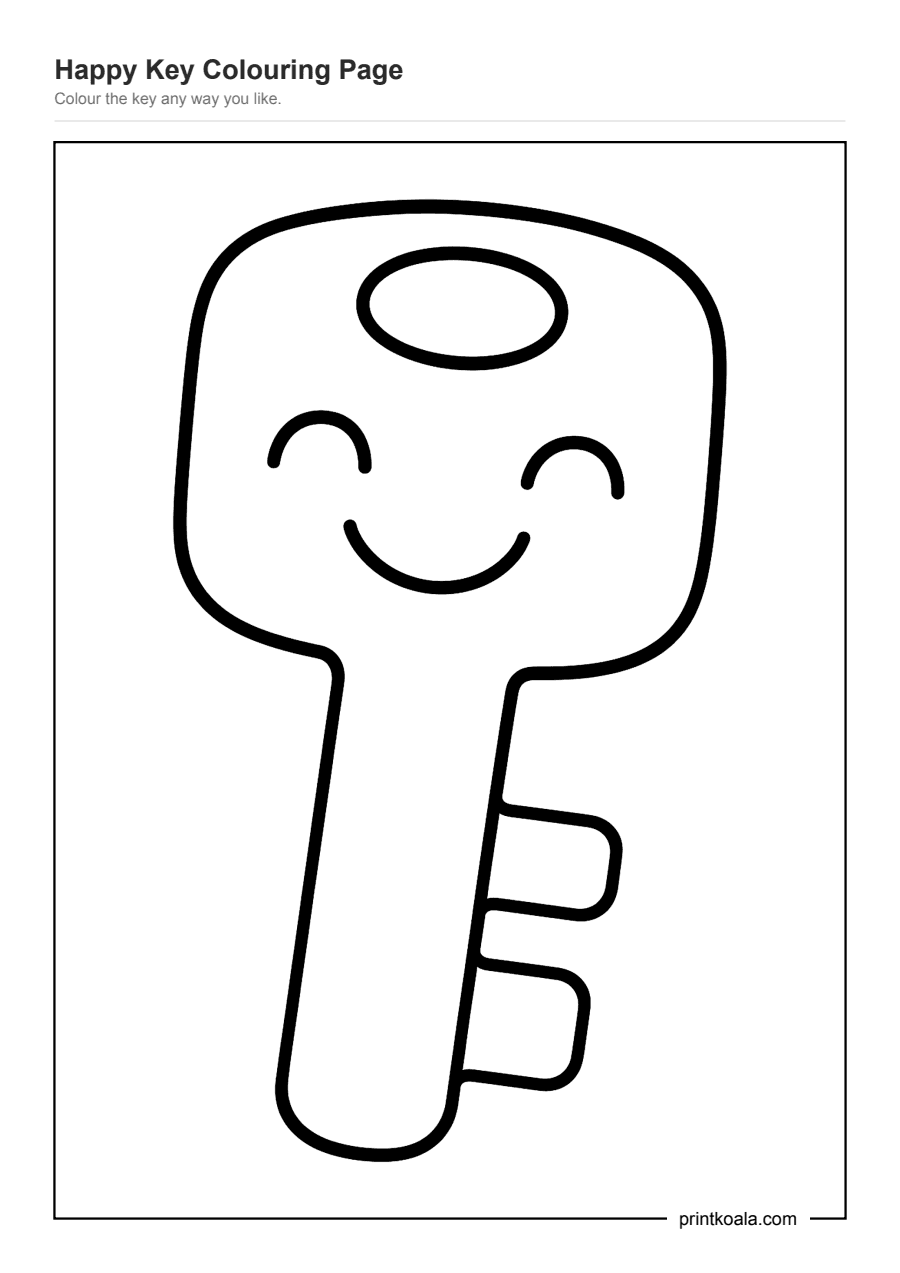
A big smiling key with closed happy eyes, an oval keyring hole, and two chunky teeth along its shaft.
Free, no sign-up. Downloaded 7 times · A4 · Print at 100% scale
This page is one large key, drawn front-on and filling most of the sheet. The rounded head sits at the top with a small oval hole punched near the center, the kind a keyring would loop through. Underneath, two curved closed eyes and a wide curved smile give the key a cheerful face. The shaft runs straight down from the head and ends in two square teeth that step out to the right, the only part of the drawing with any real detail.
Almost everything here is one big open shape, so most of the work is filling large spaces without worrying about tight corners. The head alone is enough space for a child to practice going back and forth without lifting the crayon too often, and the shaft gives a long narrow strip that rewards a steadier hand. The oval hole and the two teeth are the only small enclosed bits, so a child can choose one color for the whole key or switch colors to make the hole and teeth stand out. It is also an easy page to talk about while coloring: has your child ever turned a key in a door, and what do they think this key opens.
There is nothing fiddly here and no background to fill in, which makes it one of the calmer sheets in the Everyday Objects set. It suits younger preschoolers who are still building confidence with a crayon, and it works well as a quick warm-up page before something more detailed.
Let your child start with the big head, since it is the easiest space to fill. If the small oval hole feels fiddly, it is fine to skip it or leave it white, no need to fix a wobbly line.