🐧 Arctic & Polar Animals
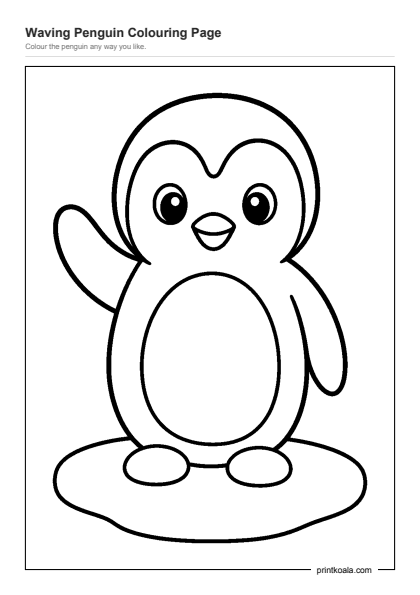
Waving Penguin Coloring Page
Ages 2–46
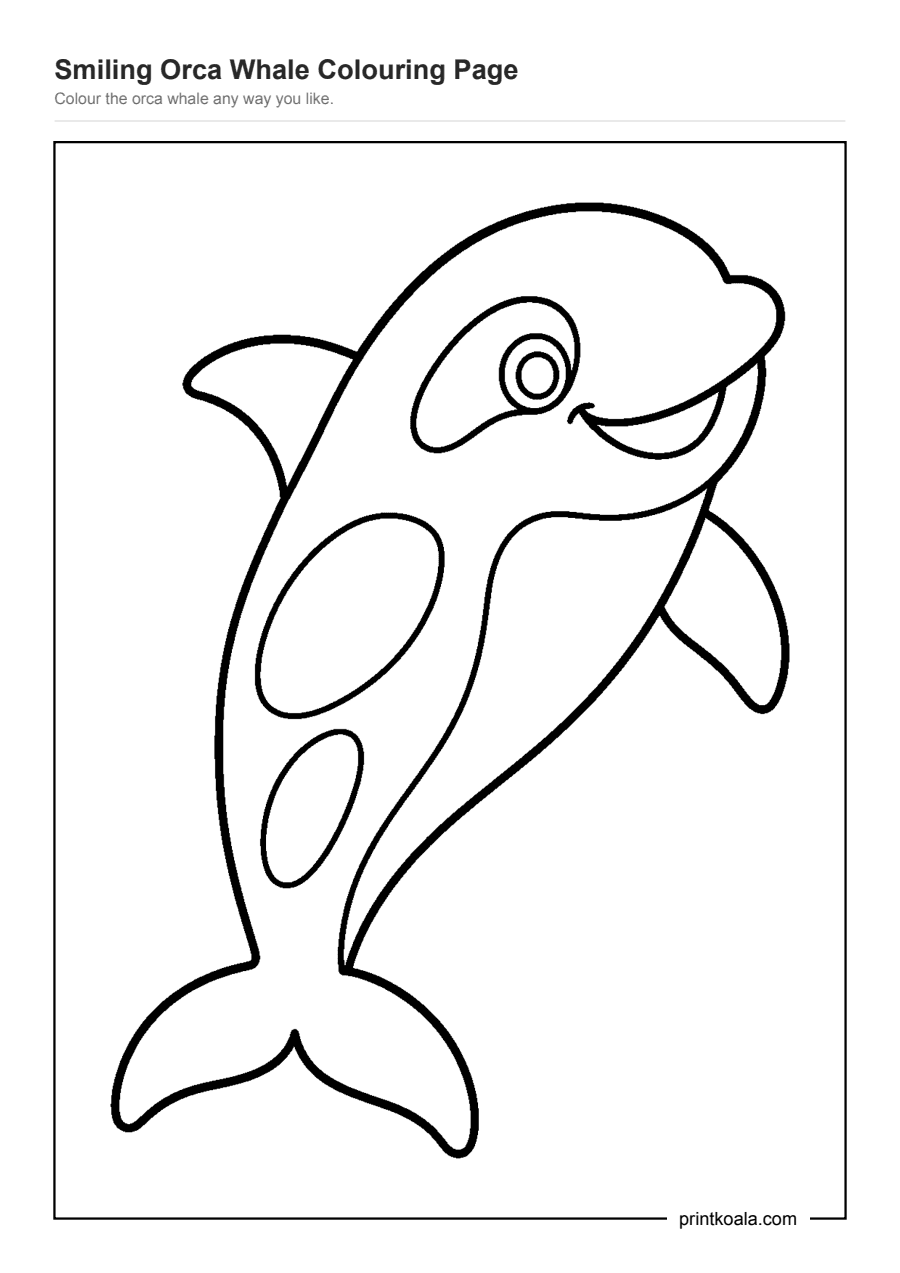
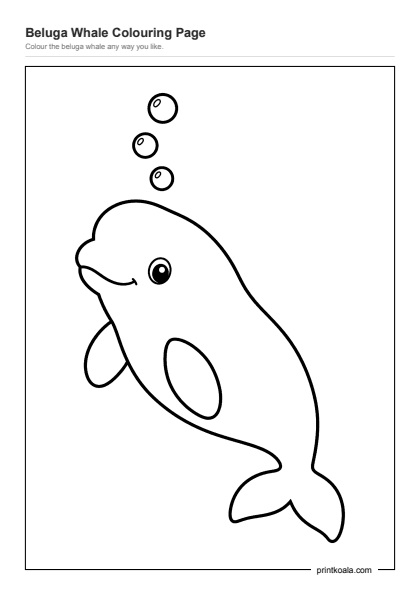
A single orca swims diagonally across the page, its two big oval body patches and round eye patch ready to fill in.
Free, no sign-up. Downloaded 10 times · A4 · Print at 100% scale
This page shows one orca whale, drawn nose-up as if gliding through water, though no waves or bubbles are drawn in around it — just the whale on a plain white background. Its mouth curves into a gentle smile, and its eye sits inside a rounded patch near the top of the head. Down the body there are two large oval patches, one bigger patch sitting mid-body and a smaller one below it near the tail, both separated from the dark back by a long curving line. A small dorsal fin rises off the back, one pectoral fin sticks out to the side, and the tail fin splits into two wide lobes at the bottom.
The two oval patches and the wide back are the kind of large, closed-in shapes a young child can color without straying over an edge every few seconds, which makes this a good confidence-builder. The eye patch and pupil ring are smaller and ask for a steadier hand, so a child can practice both scales in one sitting. Because the whole animal is one continuous shape, there's also a natural conversation starter: talking about which parts of an orca are dark and which are white, and why the tail and fins are separate pieces.
There's only one whale and no background clutter to fill in, so the whole page can be finished in one short sitting. The mix of a few big spaces and a couple of fiddlier ones (the eye, the fin tips) puts this in the middle of the difficulty range — easy enough for a three-year-old to enjoy, with just enough small detail to hold a four or five-year-old's interest too.
Let your child start with the two big oval patches on the body — they're the easiest wins. Save the eye and pupil ring for last, since that's the smallest space. If the crayon slips outside a line, just call it part of the ocean and move on.