🐧 Arctic & Polar Animals
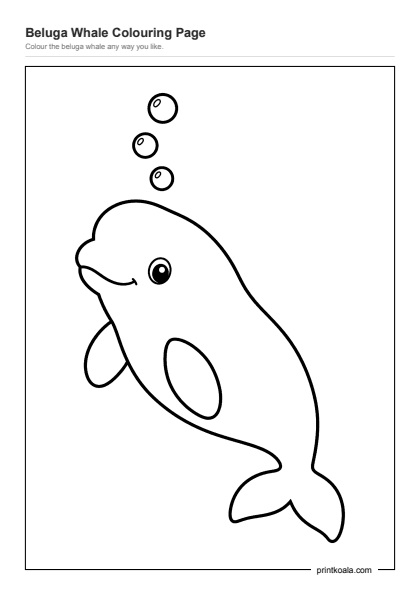
Beluga Whale Coloring Page
Ages 2–48
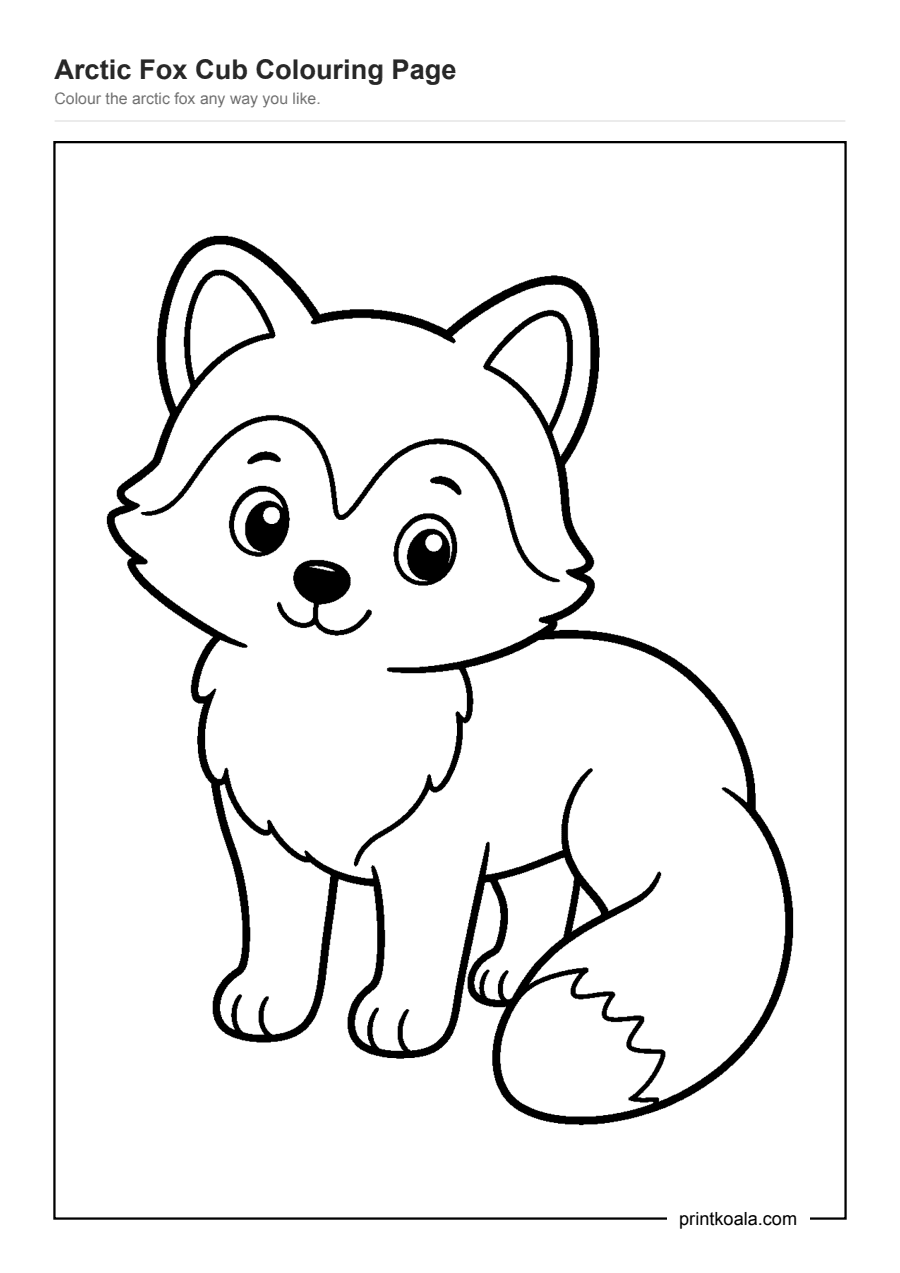
A round-faced fox cub sits with its big fluffy tail curled by its back paws, ready for coloring.
Free, no sign-up. Downloaded 6 times · A4 · Print at 100% scale
This page shows a single arctic fox cub sitting up on all four paws, head turned slightly towards the viewer with a small closed smile. The face is built from big simple shapes: two tall pointed ears, two large round eyes with a white highlight dot already left blank, and a small black nose. A soft V-shaped marking runs down the forehead between the eyes, and a fluffy ruff puffs out around the chest with a scalloped, uneven edge. The tail is the biggest feature on the page, thick and curled forward past the back legs, with a zigzag pattern at the tip standing in for the fur texture. There is no background, snow or other props, just the fox on its own.
What makes this one worth printing is the size of the spaces. The body, head, ears and tail are all large, separate areas, so a child can color the whole fox without hunting for tiny gaps or staying inside fiddly lines. The only areas that ask for more care are the ear insides, the eye highlights and the zigzag tail tip, which are small enough to prompt a bit of slowing down without being frustrating. It is also a good page for talking about how a fox that lives somewhere cold and snowy might use white or pale gray fur to blend in, since the drawing leaves that color choice completely open.
Because the shapes are so simple and there is barely any background to fill in, this sits on the easy end of the difficulty range and works well as a first attempt at coloring an animal for younger children, or as a quick, low-pressure page for a preschooler who wants to finish something in one sitting.
Let your child start with the tail or body first, since those big spaces build confidence. Save the small ear insides and eye highlights for last, and it is fine to leave the highlight dots white.