🐧 Arctic & Polar Animals
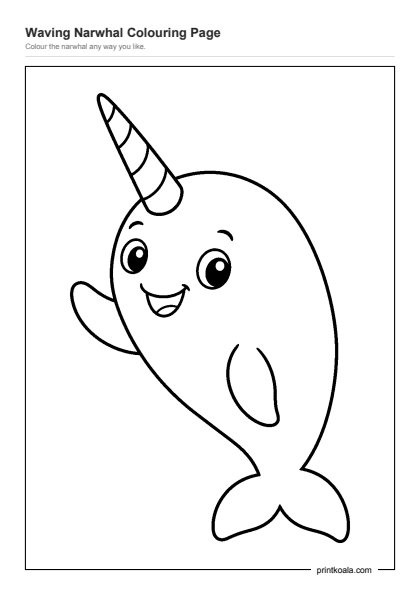
Waving Narwhal Coloring Page
Ages 2–56
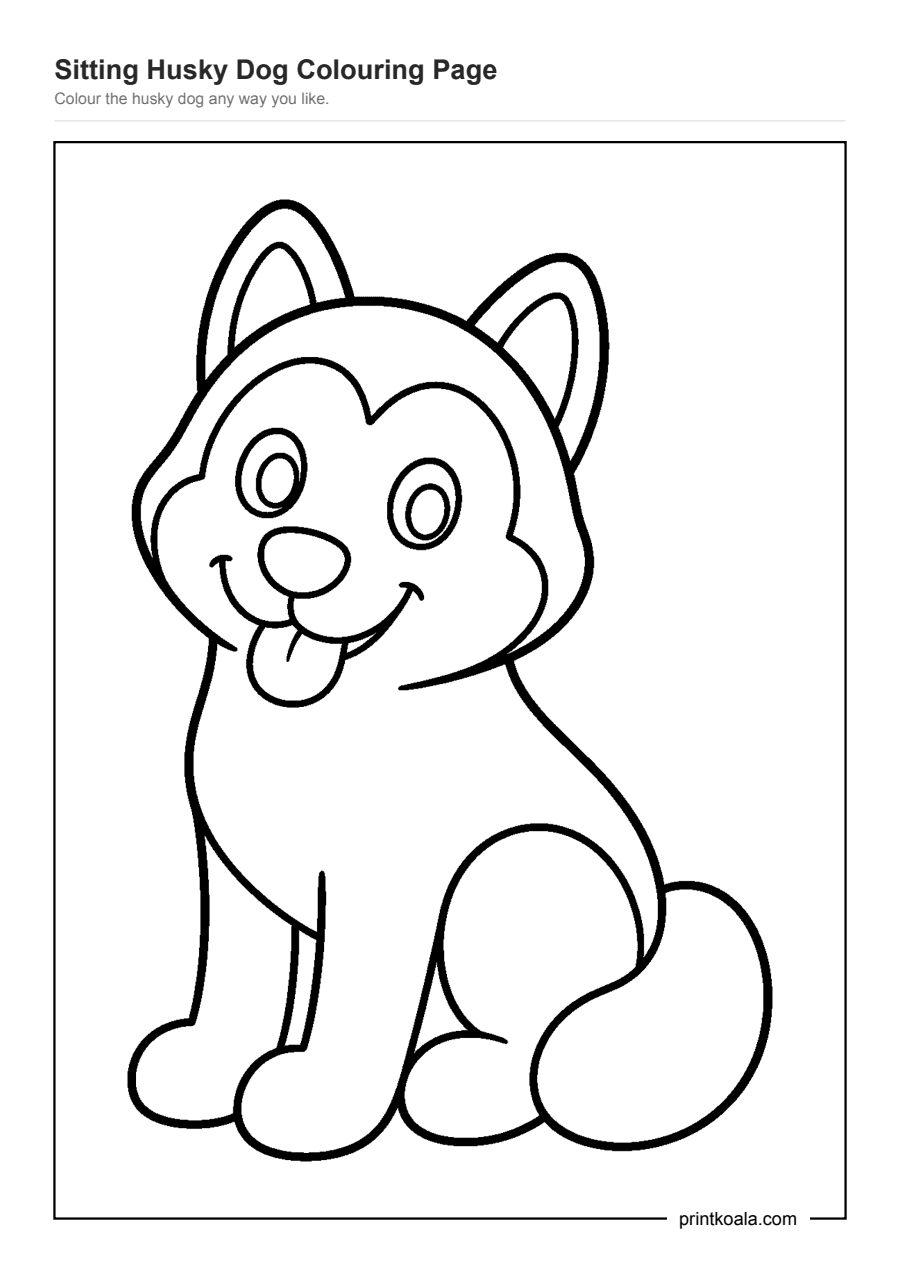
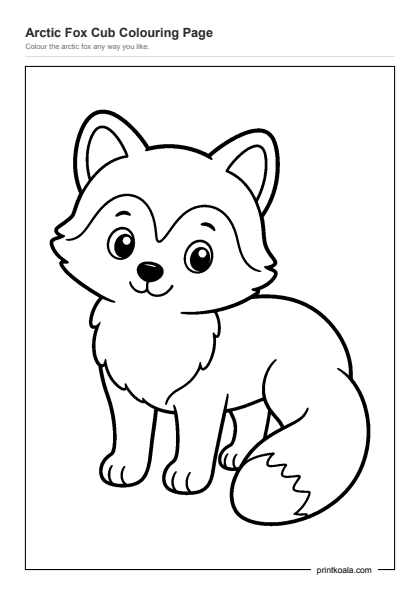
A husky sits with its tongue out and one big curled tail, both ears pricked up and ready to color.
Free, no sign-up. Downloaded 6 times · A4 · Print at 100% scale
This husky is sitting square on its haunches, head tipped slightly and mouth open in a happy pant, tongue hanging out. Both ears stand up tall and pointed, and the fur around its face is drawn as a soft rounded mask shape rather than lots of little lines. Two big round eyes sit above a small oval nose, and the body curves down into two front paws planted on the ground and a large fluffy tail curled up against its hip. There is no background, no collar and no other characters, just the dog on the page.
What makes this one worth printing is the size of the spaces. The face mask, the body, the tail and each paw are all wide, closed shapes, so a child can get the crayon moving in big strokes without constantly stopping to change direction round tight corners. The eyes and nose are small enough to ask for a bit more care if a child wants to try them, but skipping them and going straight for the ears or tail loses nothing. It also gives a parent an easy way in for chatting: ask what color huskies really are, or why the tongue is out.
This is one of the easier sheets in the arctic animals set, closer to a first coloring page than a detailed one. The plain background and thick outlines make it forgiving of wobbly lines, so it suits toddlers and younger preschoolers best, while a five-year-old could still enjoy it as a quick, relaxed page rather than a challenge.
Let your child start with the big tail or body first to build confidence, then move to the face last since the eyes and nose are the fiddliest parts. If the tongue or nose go outside the lines, it will not spoil the drawing, so there is no need to correct it.