🐧 Arctic & Polar Animals
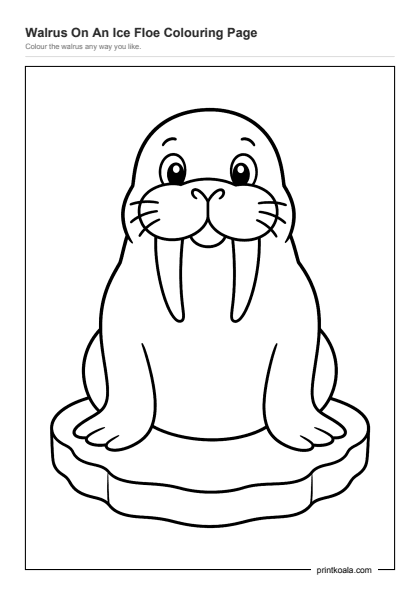
Walrus on an Ice Floe Coloring Page
Ages 2–56
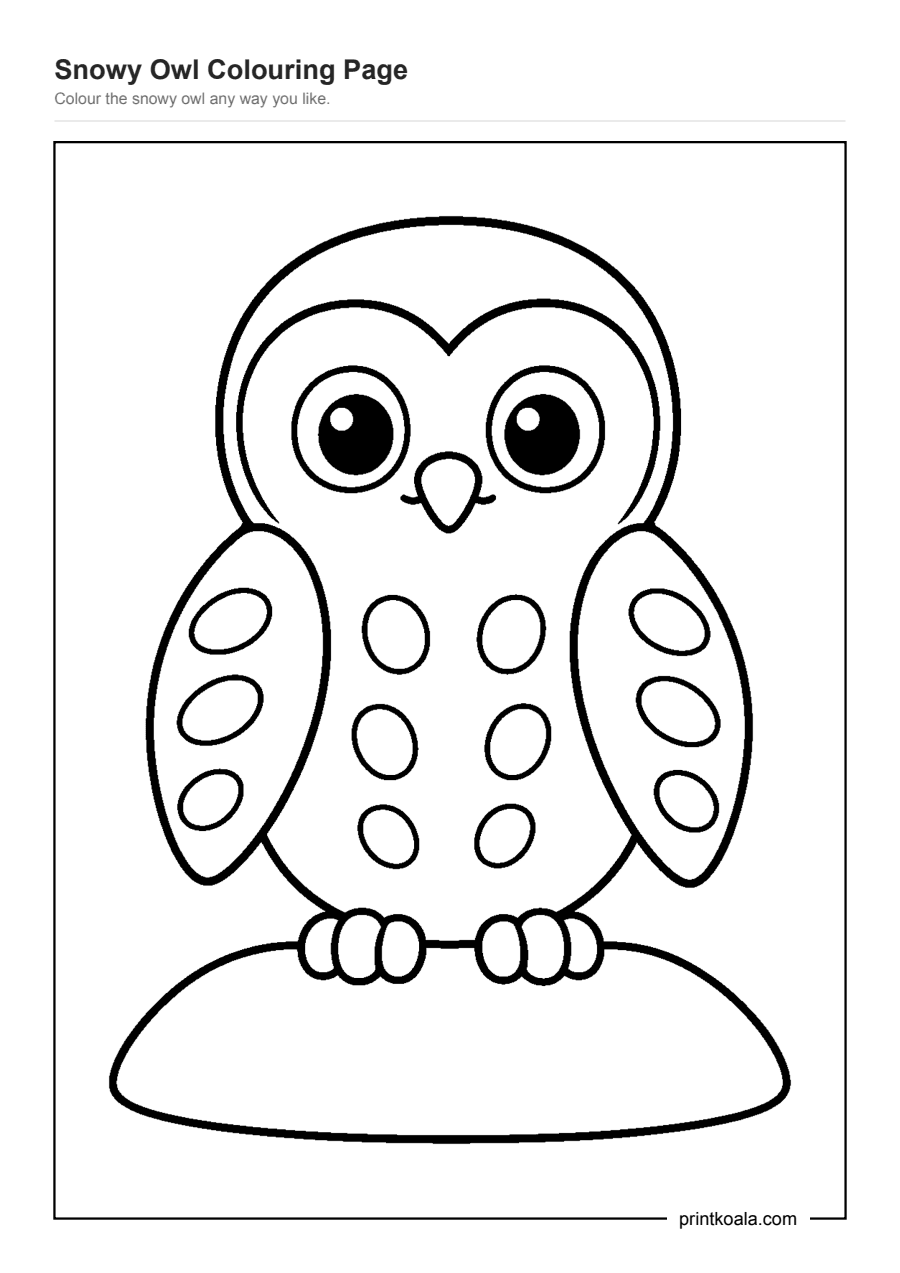
A round, front-facing snowy owl with big eyes, six oval belly markings and three feather ovals on each wing, perched on a snow mound.
Free, no sign-up. Downloaded 6 times · A4 · Print at 100% scale
This owl sits still and faces forward, so there is no tricky angle to work around. Its head is one big rounded shape topped with a heart-shaped brow line, and two large round eyes sit in the middle with a tiny triangle beak between them. The body is a single plump oval, and each broad wing carries three oval feather markings, six in total, while the chest has six more ovals arranged in two neat columns. Small toes grip the edge of a simple rounded snow mound underneath, which is the only nod to the Arctic setting.
What makes this one worth printing is the mix of scale. The head, body and wings are big enough for a young child to fill in with a crayon without worrying about staying inside a tight line, but the twelve oval markings give slightly older hands something smaller and rounder to practice on, whether that means picking one color for all of them or turning it into a spot-the-difference game between the two wings. The eyes are a natural place to start, since the pupil and the white highlight dot are already marked out and easy to leave uncolored or pick out in a different shade.
There is nothing fussy about the linework here, no crosshatching or background clutter, so it suits a child who is still building confidence with a crayon as much as one who wants to sit longer over the smaller ovals. It works well as a first attempt at a page with a bit of pattern to it, without tipping into anything that needs real precision.
Start with the two big wings and the body, since those areas forgive wobbly strokes. Save the twelve small ovals and the eyes for last, and let your child choose one color for all the markings or a different one for each, whichever holds their attention longer.