🐧 Arctic & Polar Animals
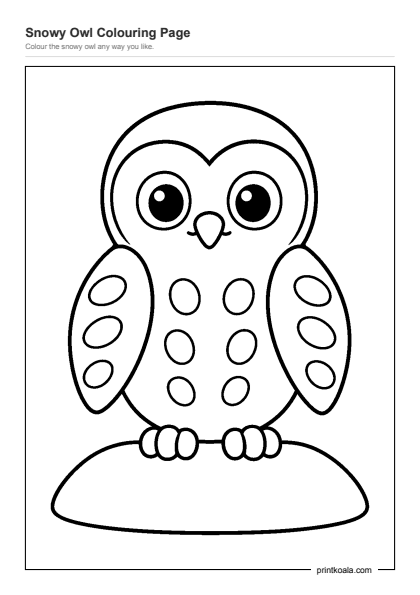
Snowy Owl Coloring Page
Ages 2–56
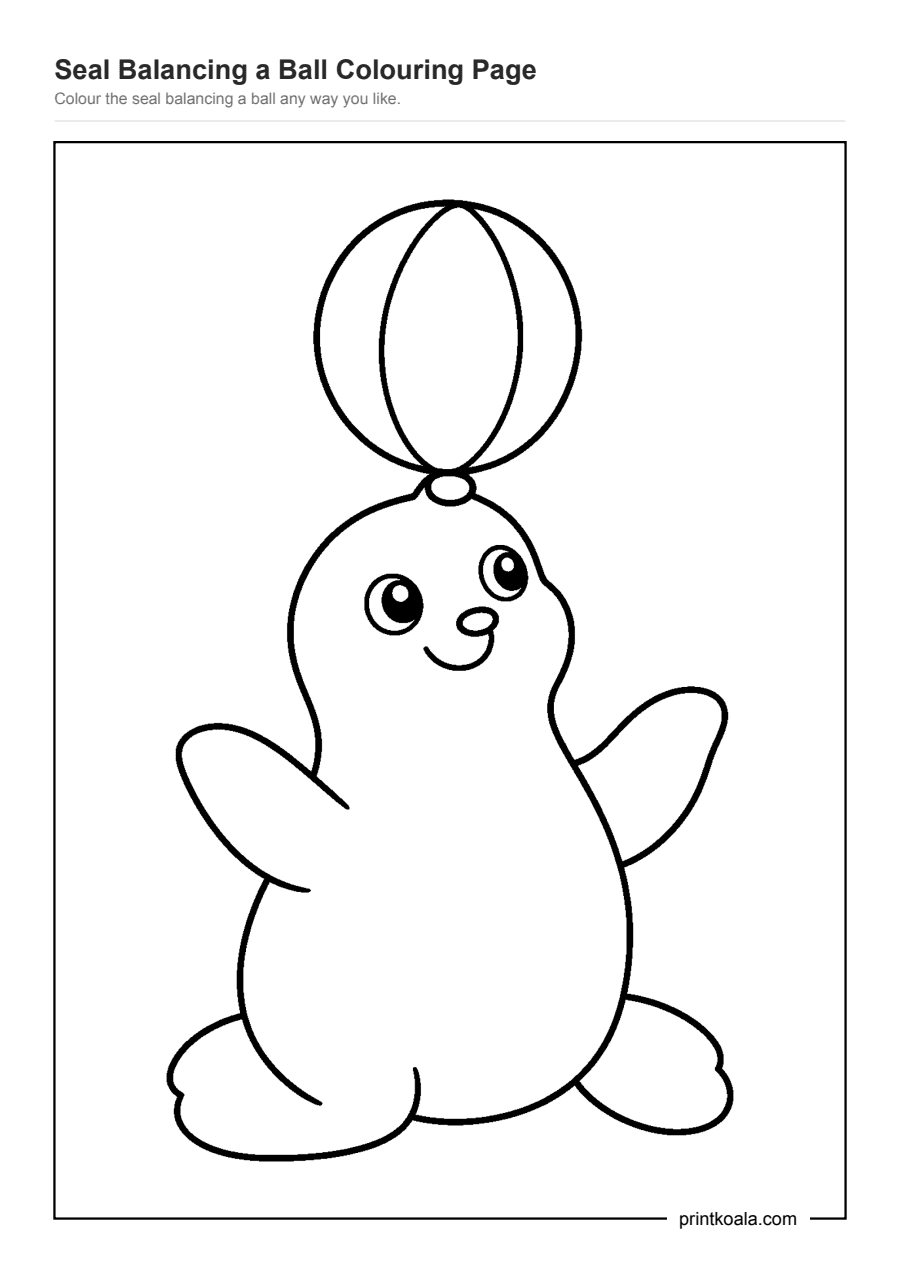
A round, smiling seal balances a striped beach ball on its nose, flippers spread wide for balance.
Free, no sign-up. Downloaded 10 times · A4 · Print at 100% scale
This seal sits back on its rear flippers with its two front flippers stretched out to the sides, as if it is holding its balance mid-trick. A beach ball rests right on the tip of its nose, drawn with a few curved lines splitting it into panels. The face is simple: two large round eyes with a small shine in each, a little rounded nose, and a curved smiling mouth. There is no background, snow, or water on the page, so the whole picture is just the seal and its ball.
The body is one big, unbroken curve, which gives a young child a large, forgiving space to fill in without worrying about staying inside tight lines. The flippers add some shape to work around but stay broad and simple, nothing fiddly. The ball is the one part that asks for a bit more care, since its panels are narrower, and a child may want to give each panel its own color, which is a nice moment to talk about which color goes where and to count the panels as they go.
This is an easy sheet compared with most animal coloring pages, thanks to the large body and open flipper shapes. The ball brings just enough detail to keep an older toddler or a four or five year old interested without making the page frustrating for a two or three year old. It suits a child who wants something they can finish in one sitting and feel proud of straight away.
Let your child color the big seal body first, since it is the easiest part, and save the striped ball for last once their hand is warmed up. If the ball panels feel too fiddly, it is perfectly fine to color the whole ball as one solid color instead.