🦊 Forest & Woodland Animals
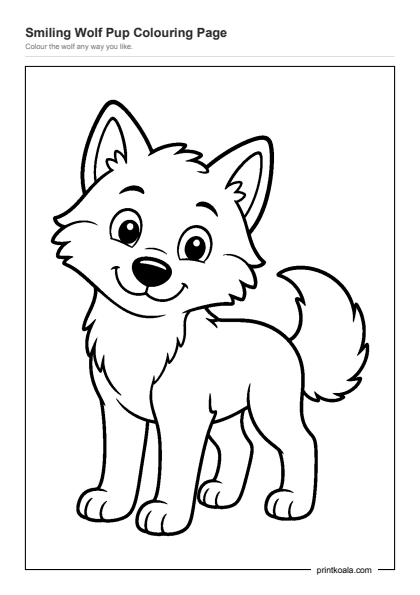
Smiling Wolf Pup Coloring Page
Ages 3–59
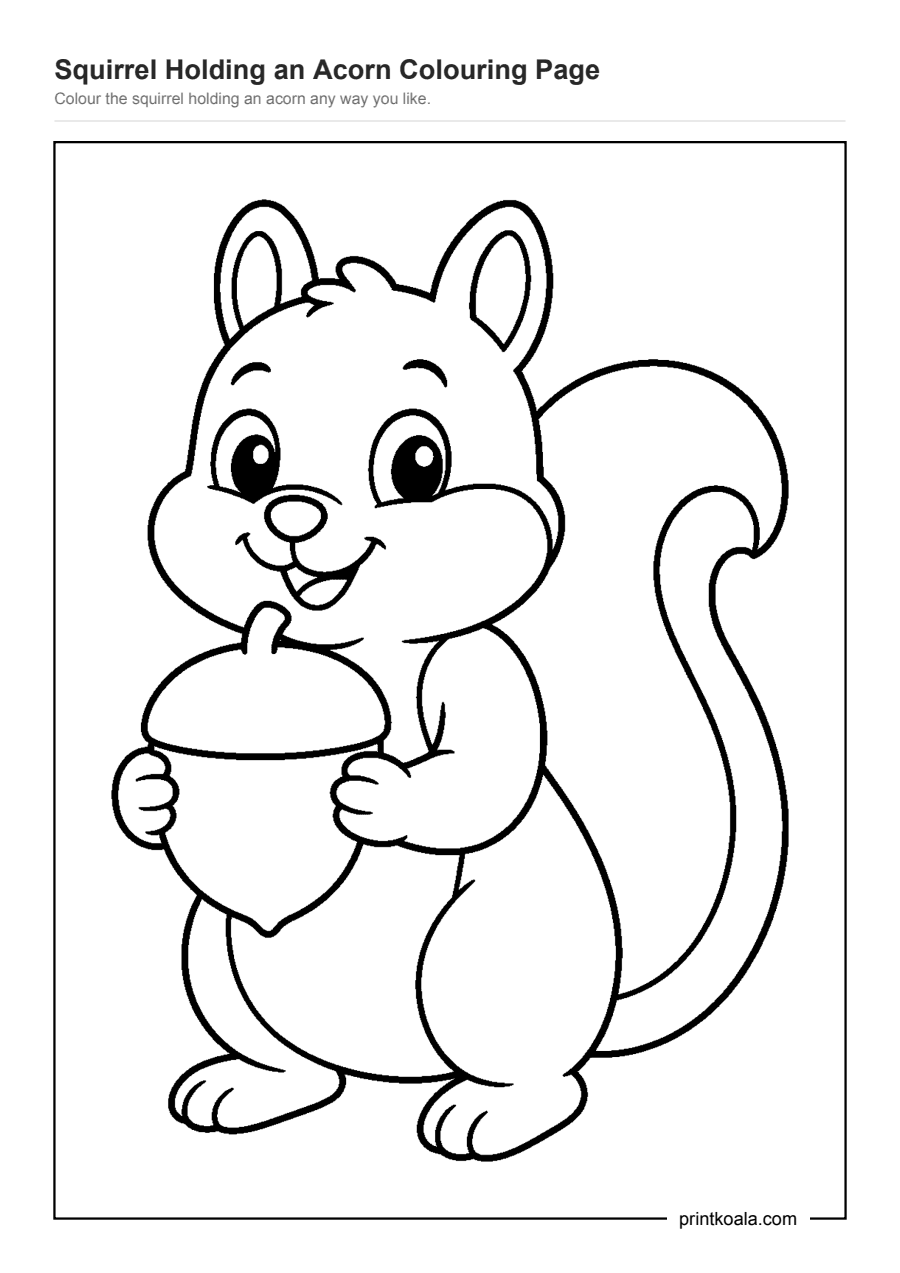
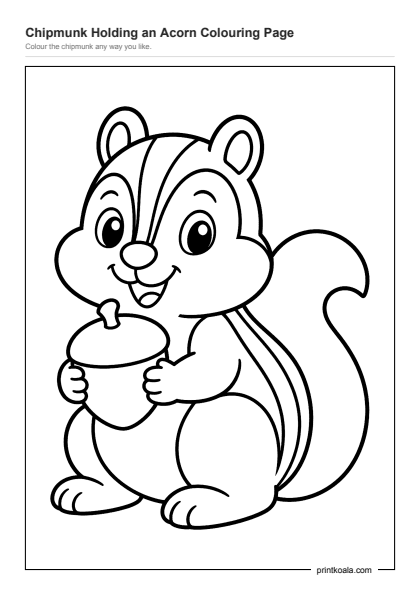
A chubby squirrel stands on two feet, grinning as it cradles a giant acorn in both paws, its bushy tail curled up behind it.
Free, no sign-up. Downloaded 8 times · A4 · Print at 100% scale
This squirrel stands upright on two round feet, holding an acorn that is nearly as big as its own belly. Both paws wrap around the acorn's shell, and its mouth is open in a happy smile with its tongue showing. A little tuft of fur sticks up between two pointed ears, and its tail sweeps up from behind in one big curled swirl that fills most of the right side of the page. The acorn itself has two parts to find: the ridged cap on top and the smooth pointed shell underneath, joined by a small curved stem.
There is nothing small to fight with here except the paws, the toes on each foot, and the fine lines inside the ears. Everything else — the round tummy, the wide cheeks, the tail's big loop, the acorn's shell — gives a young hand plenty of room to move the crayon without worrying about crossing a line. It is also a good page for talking about colors: the tail could be one shade and the body another, or the acorn cap could be picked out in brown against a green or orange shell, whatever a child fancies.
This is an easy sheet next to most animal coloring pages, since the shapes are large and there is very little clutter in the background. It suits a child who is still getting used to holding a crayon and staying roughly inside the lines, and it works well as a first go at a woodland animal before moving on to busier scenes.
Let your child start with the acorn or the tail, since both are large and forgiving. Save the paws, toes and inner ears for last, as they need steadier strokes. If the crayon slips outside a line, call it part of the squirrel's fur rather than stopping to fix it.