🦊 Forest & Woodland Animals
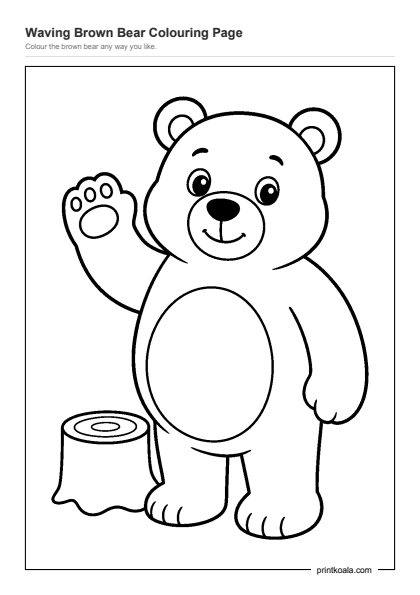
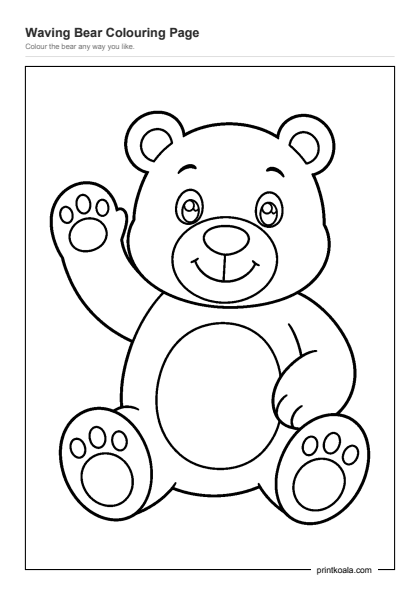
Waving Bear Coloring Page
Ages 2–47
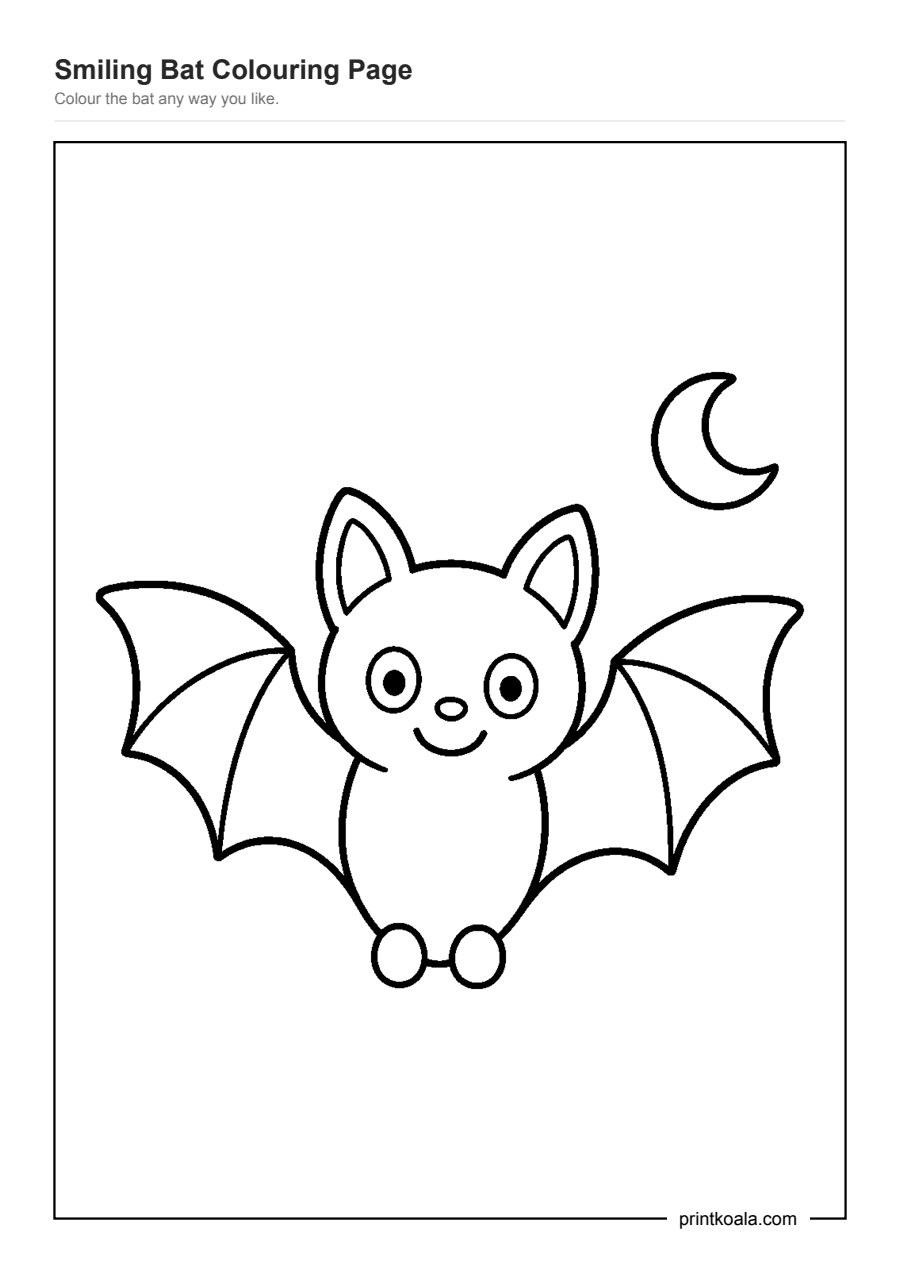
A round, front-facing bat with wings spread wide and a smiling face, sitting under a crescent moon.
Free, no sign-up. Downloaded 6 times · A4 · Print at 100% scale
This bat faces straight out at the child, wings stretched open on both sides, each wing divided into three broad panels by simple fold lines. Its body is one big rounded oval sitting on two small stubby feet, with a friendly round face: two big circle eyes with dark pupils, a tiny oval nose, a curved smile, and two pointed ears with a smaller ear shape inside each one. Up in the top corner sits a plain crescent moon, the only other thing on the page, there to say it's night-time without adding anything fiddly to color.
Most of this page is made up of big, easy shapes. The two wings and the round body are large enough to fill in with a single color and no real risk of going over a line, which is exactly what a first attempt at coloring inside the lines needs. The ears, eyes and moon are smaller and separate, so a child can decide whether the bat is purple, gray or bright pink, then pick out the ears and moon in a second color if they want to talk about what's different between them. There's nothing tucked into corners or crossed by extra lines, so the whole page reads clearly even before a single crayon touches it.
As coloring sheets go, this is a gentle one. The outlines are thick and well spaced, the enclosed areas are generous, and there's no shading or pattern work expected anywhere. It suits a child who is still getting used to a crayon and wants to see quick, satisfying results, and it works just as well as a calm five-minute activity for an older toddler who wants to finish something start to finish without help.
Let your child start with the wings, the biggest and easiest shapes, before moving to the smaller face and moon. If a color strays outside a line, call it part of the night sky rather than a mistake, there is no need for a redo.