🌻 Flowers & Garden
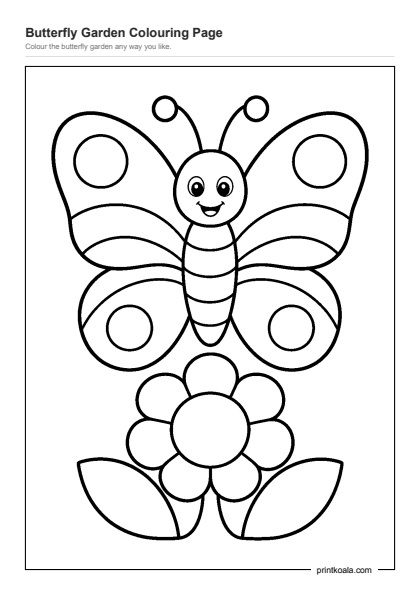
Butterfly Garden Coloring Page
Ages 2–514
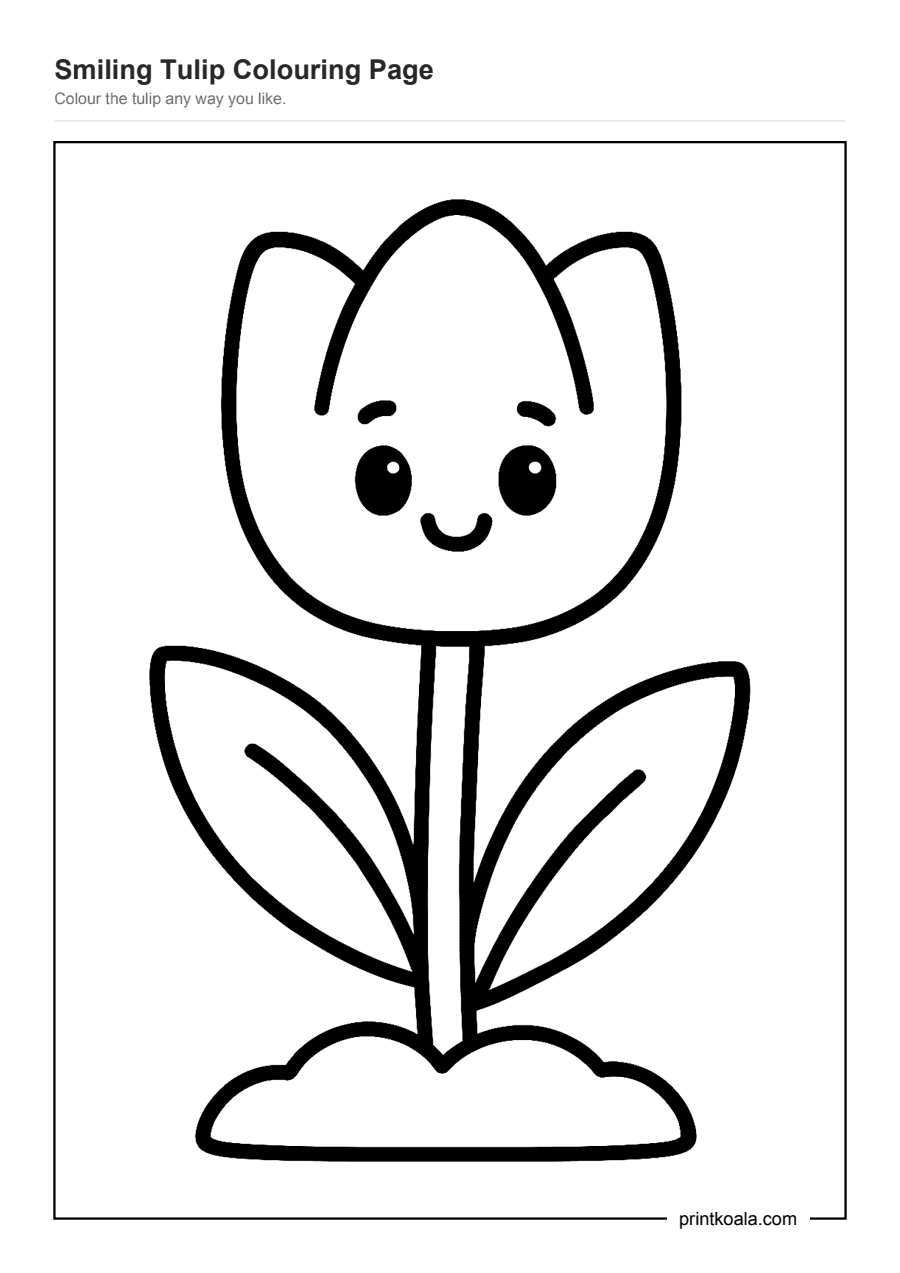
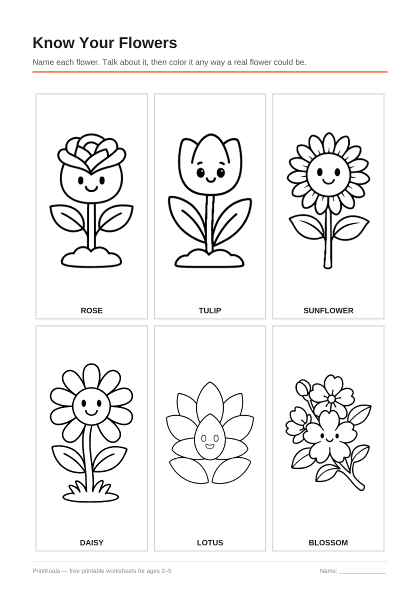
A single happy tulip with three big petals, two broad leaves and a small mound of soil, ready for bright spring colors.
Free, no sign-up. Downloaded 9 times · A4 · Print at 100% scale
This page has one tulip standing on its own, no background, no extra flowers. The flower head is made of three rounded petals, a tall one in the middle and a shorter one on each side, with a simple smiling face drawn into the center petal: two round dot eyes, two little eyebrow arcs, and a curved smile. Below the head is a straight stem drawn as two parallel lines, then two large leaves that sweep out to the left and right, each with a single curved vein line down the middle. The whole plant sits in a low, rounded mound of soil at the bottom of the page.
Everything here is big and open. The petals and leaves are large, closed shapes with nothing fiddly inside them, so a child can color the tulip head one color, the leaves another, and the soil a third without the crayon straying far from a line. The vein lines in the leaves and the eyebrow arcs on the face are the only small marks on the page, good for a child who wants to try adding a second shade or a darker outline once the main shapes are filled in. It is also an easy one to talk about while coloring: which color will the tulip be, why does it look happy, is the ground brown or green.
There is only one subject and no clutter, so this is on the easier end of the sheets in this set. It suits a younger child coloring their first flower, or an older toddler who wants to finish a whole picture without help. Because the shapes are so large, it also prints and colors well with chunky crayons.
Let your child start with the big center petal, then the two side petals, before moving to the leaves and soil. If they color outside a line, call it part of the garden rather than a mistake, and ask what color the smiling tulip should be.