🦋 Insects & Little Bugs
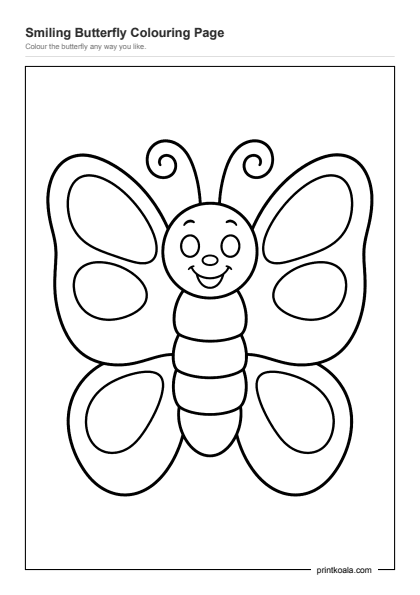
Smiling Butterfly Coloring Page
Ages 2–414
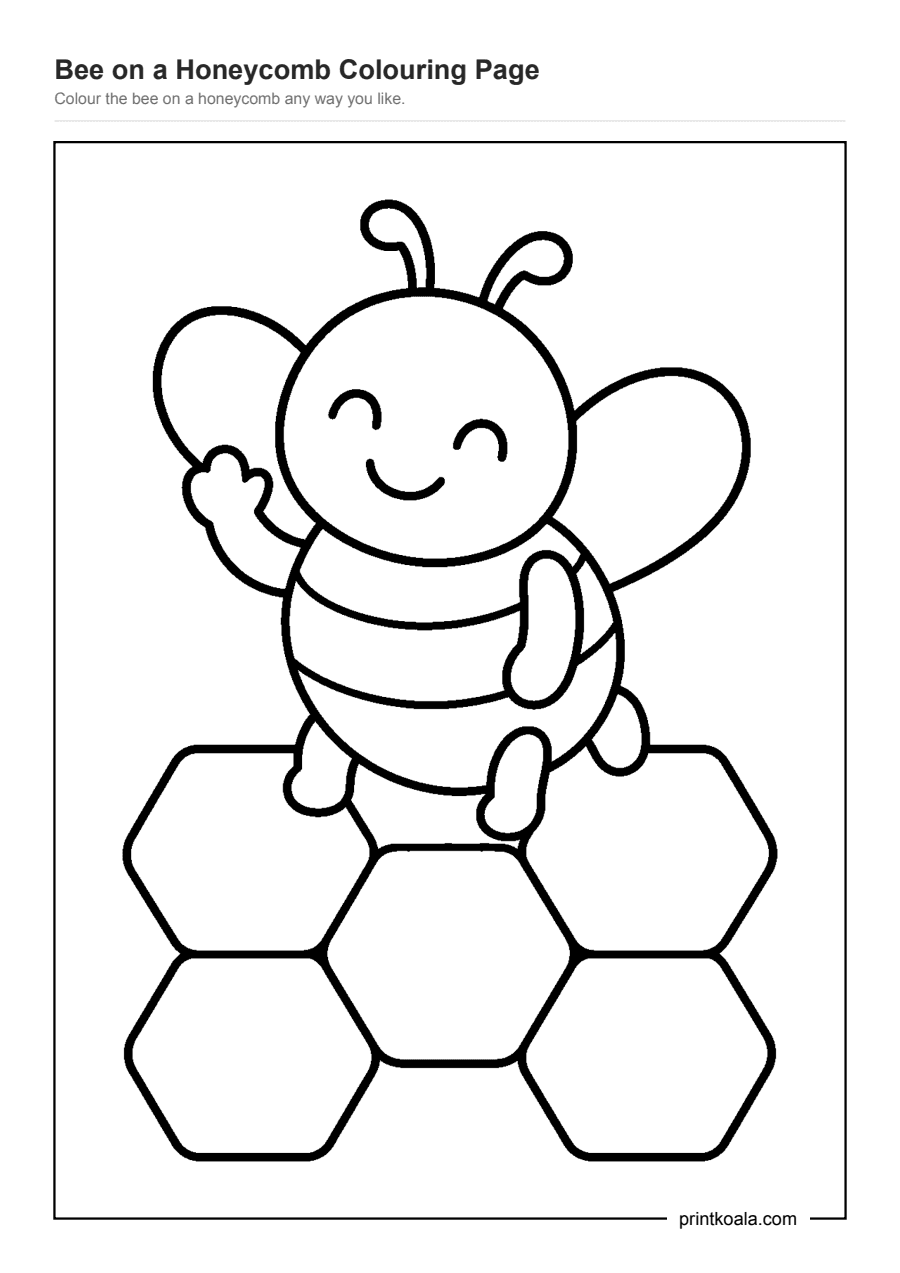
A round, waving bee with big oval wings sits on six honeycomb hexagons, all left blank and ready for color.
Free, no sign-up. Downloaded 6 times · A4 · Print at 100% scale
This bee is perched right on top of its honeycomb, one arm up in a wave, eyes closed in a happy squint, and a small smile on its face. Two curled antennae poke up from its head, and two large oval wings spread out to the sides. Its round body is marked with two thick stripes across the middle, and its legs dangle down over the honeycomb, feet just touching the top row of cells. Underneath, six hexagon cells are drawn in two rows of three, plain and empty, waiting to be filled in as the bee's home.
What makes this one easy to sit down with is the size of everything. The wings are two big empty ovals, the stripes split the body into just a few wide bands, and each honeycomb cell is a single clean hexagon with nothing else inside it. A child can hold a crayon inside any of these shapes without much steering. There's also a natural color conversation built in: bees are usually yellow and black, honeycomb is usually gold, so a parent can talk through the choices rather than leaving them a blank guess, while still leaving room for a purple bee if that's what gets picked.
This is a gentle, low-effort sheet next to others in the insect set, better suited to a child who is still working on staying inside lines than one hunting for a challenge. The honeycomb rows do ask for a bit more care where the hexagon edges meet, but there's nothing fiddly like tiny legs or antenna detail. It works well as a first bee page, or as a quick, satisfying coloring session before or after a bigger one.
Start with the two big wings or body stripes to build confidence, then move on to the honeycomb hexagons one at a time. If a color crosses a line, just add a matching outline in marker afterwards rather than starting again.