🦋 Insects & Little Bugs
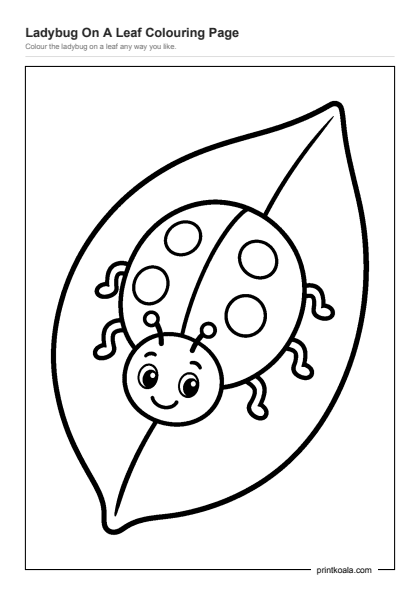
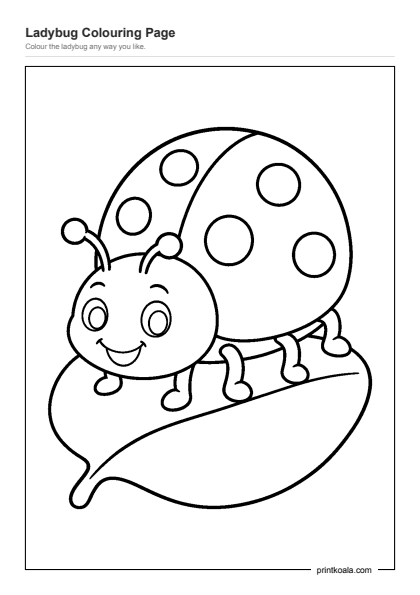
Ladybug Coloring Page
Ages 3–511
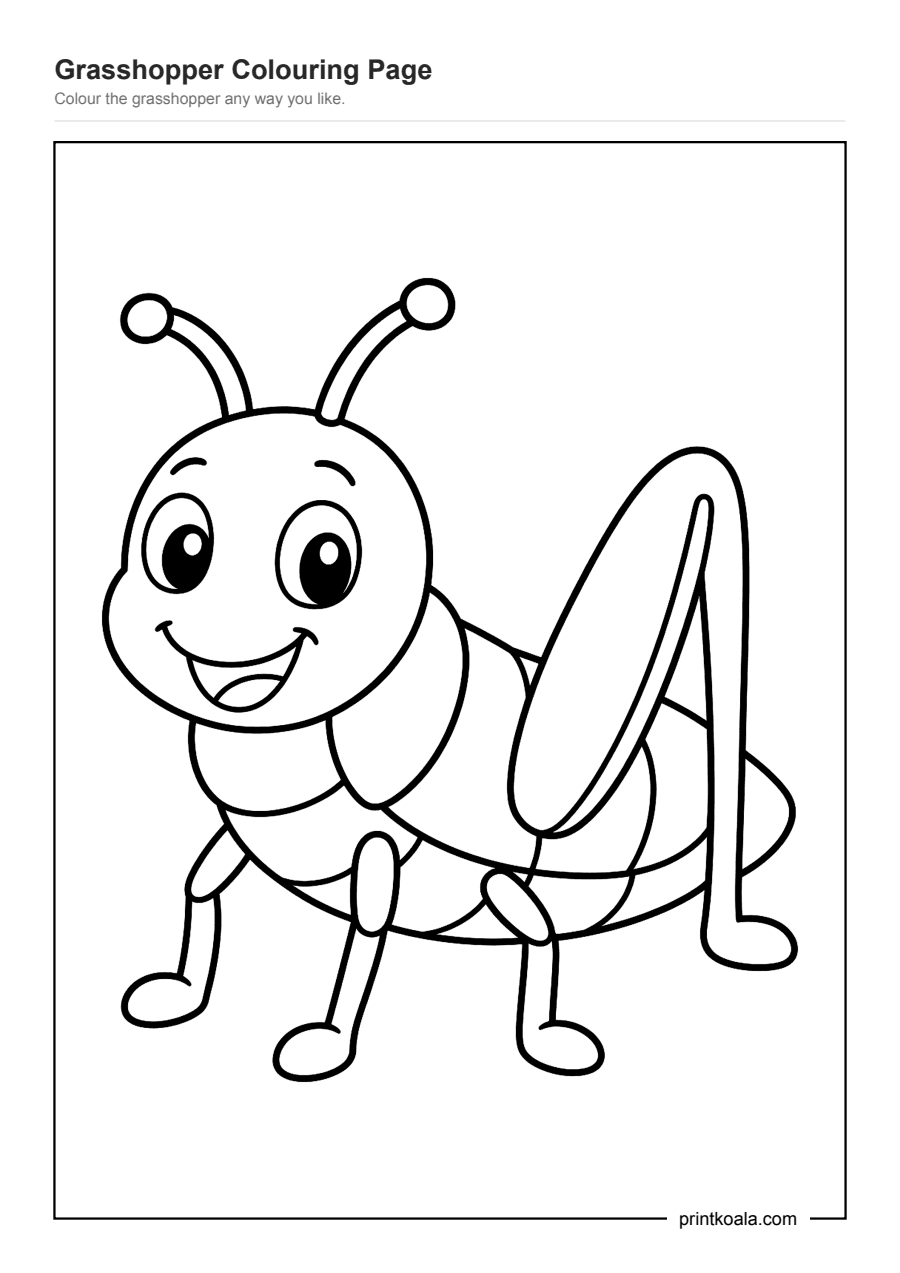
A grinning grasshopper stands on four legs, one leg blown up huge with a curved jumping thigh, its body split into simple rounded sections.
Free, no sign-up. Downloaded 16 times · A4 · Print at 100% scale
This grasshopper faces forward with a wide, toothy smile and two big round eyes, each with a little highlight dot and a curved eyebrow above it. Two thin antennae curl up from its head, each ending in a small ball. Its body is drawn as a stack of large rounded sections, head, collar, thorax and belly, separated by curved lines that arch across like ribs. Three ordinary legs sit underneath with small oval feet, but the fourth leg is the star of the page: a big bent thigh sweeps up over the back and down into a long thin lower leg, ending in its own oval foot, just like a real grasshopper's jumping leg. There is no background, just the insect on a plain white page.
That one oversized leg is what makes this sheet fun to work through. It gives a child one large, easy shape to fill in with a single bold color, while the row of small oval feet and the two eyes ask for a steadier hand to stay inside a smaller space. The curved lines across the body break it into four or five distinct sections, so a child can give the head one color, the middle another, and the back leg a third, without having to guess where one part ends and the next begins. The open mouth and big eyes also give a parent something to talk about while coloring, like why a grasshopper needs such a big leg to jump.
The bold outlines and total absence of fine texture make this an easy sheet, closer to the simple end of the Insects & Little Bugs category. It suits younger preschoolers who are still building control, with just enough small feet and eye shapes to stretch a slightly older child without frustrating a younger one.
Start with the big leg and body sections since they are the easiest wins, then move to the smaller feet and eyes last. If the eyes feel fiddly, skip the white highlight dot and just color around it. Ask your child why this leg is so much bigger than the others.