🦋 Insects & Little Bugs
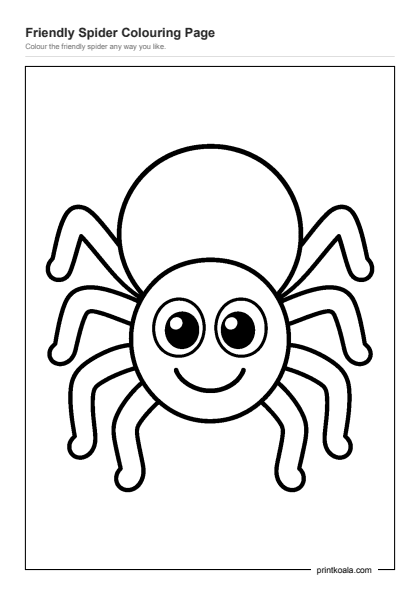
Friendly Spider Coloring Page
Ages 2–411
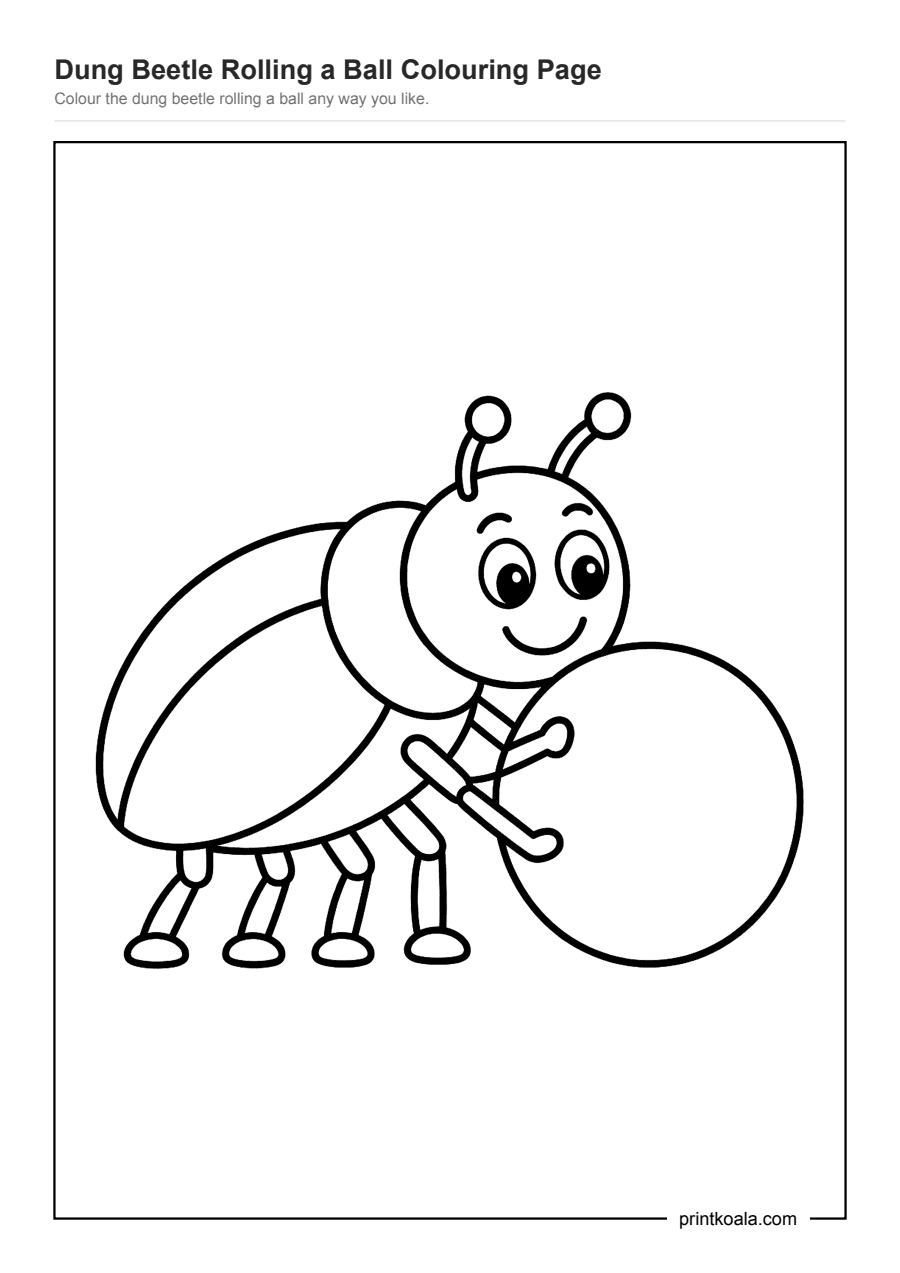
A smiling dung beetle with six simple legs pushes one giant plain ball across the page.
Free, no sign-up. Downloaded 6 times · A4 · Print at 100% scale
This page shows a round, friendly dung beetle in profile, standing on four legs with its other two legs stretched out to hold a huge ball almost as tall as its own body. The beetle has a smiling face, two big round eyes with a bright dot in each, and two antennae that end in little balls of their own. Its back is one large curved shell with a single line down the middle, and there is a rounded collar shape just behind its head. The ball itself is completely plain and empty, ready to be filled in with one solid color.
What makes this one worth printing is the size of the spaces. The shell and the ball are both big, open shapes, so a child can color them in with a crayon or a chunky marker without worrying about staying inside tiny lines. The six legs are drawn simply, each one just two curved outlines, so they add beetle character without turning into fiddly little boxes to fill. It is an easy page to talk about while coloring: ask what color the beetle should be, and whether the ball should match or be something completely different.
Because nearly everything on the page is a large, rounded area, this is one of the easier sheets in the bugs collection rather than a detailed one. It suits younger children who are still working on coloring inside lines, or anyone who wants a quick, satisfying page without much fine detail. Older preschoolers who like precision can still enjoy adding a second color to the collar or the antenna tips for extra interest.
Start with the big ball, since it is the easiest shape to keep inside the lines, then move on to the shell. If the legs feel fiddly, skip them until last or let an adult outline them first.