🐫 Desert & Grassland Animals
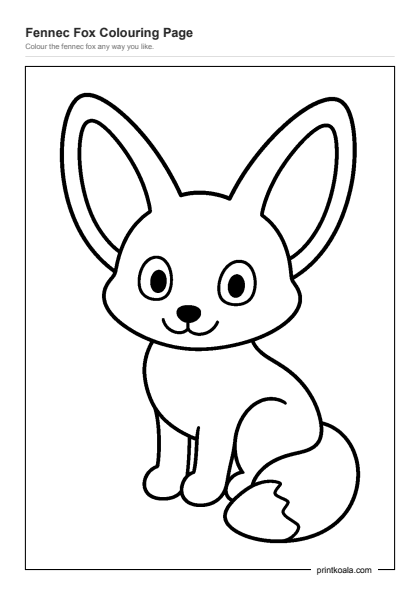
Fennec Fox Coloring Page
Ages 2–47
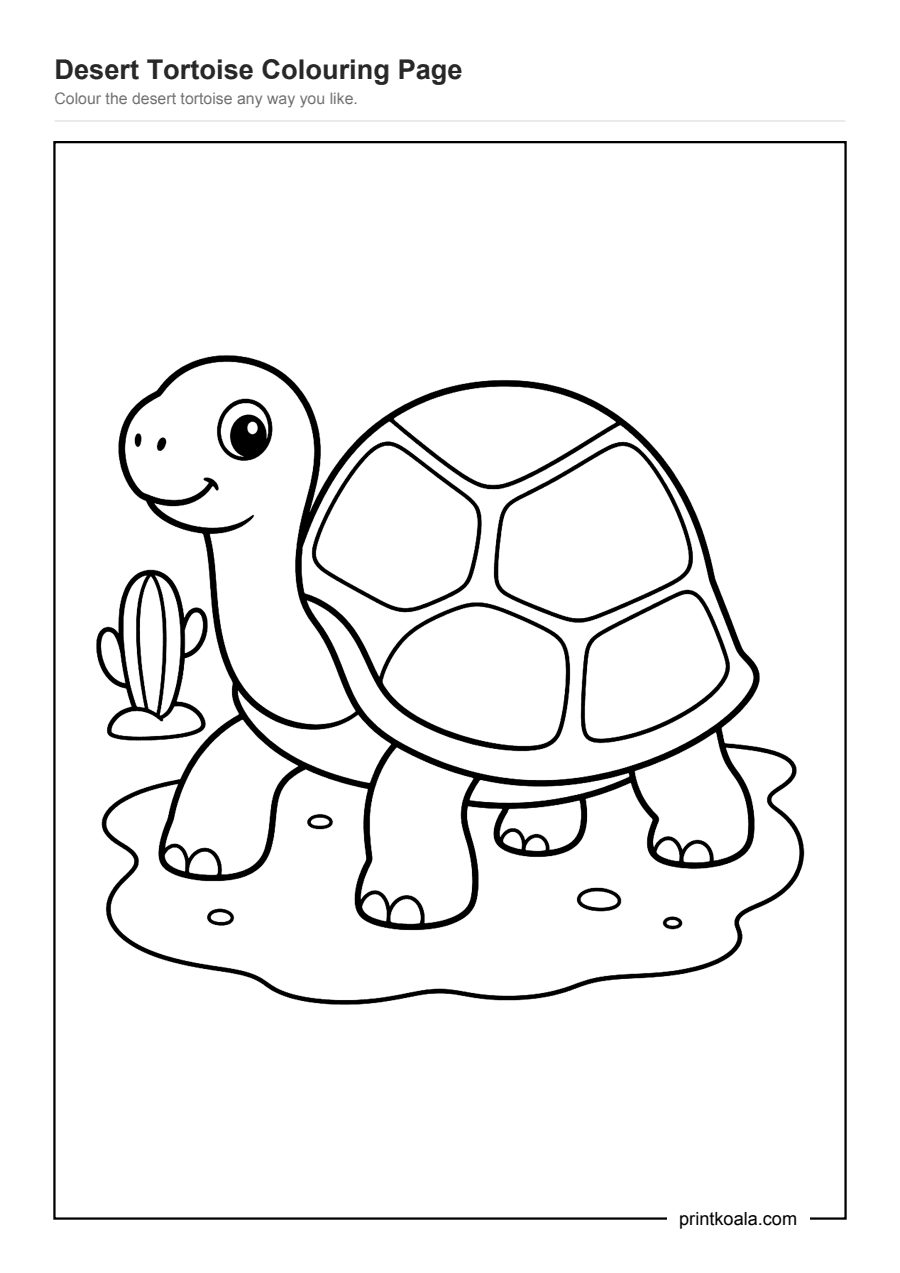
A smiling tortoise strolls past a single spiky cactus, its rounded shell split into six large panels ready to color.
Free, no sign-up. Downloaded 6 times · A4 · Print at 100% scale
This tortoise is caught mid-stroll, neck stretched out and head turned slightly toward the viewer, with a small round eye and a curved smiling mouth. Its shell is drawn as six big panels, one large one in the center and others fanning out around it, sitting on top of four sturdy legs, each foot showing a couple of rounded claws. To the left stands one small spiky cactus on a little mound of ground, and the tortoise's patch of ground is drawn as a wavy, irregular blob scattered with a handful of small pebbles.
What makes this one worth printing is the size of the shapes. The shell panels are big and closed off with clear thick lines, so a child can fill each one in without their crayon wandering into the next patch. The legs and head give slightly smaller, rounder areas for a change of pace, and the tiny pebbles and single cactus are optional extras for a child who wants to add a dab of green or gray once the tortoise itself is done. It is an easy sheet to talk through while coloring: how many shell panels are there, which leg is lifted, where the cactus is standing.
There is nothing fiddly here, no tight cross-hatching or narrow gaps, which makes it a good choice for a child still building control over a crayon or fat pencil. Older preschoolers who like to plan their colors out, one shade per shell panel, will also get something out of it, but this sheet does not push them to do so. It suits a quick after-lunch coloring session more than a long, detailed one.
Start with the biggest shell panel in the middle so your child gets a quick win, then work outward to the smaller panels and legs. If a line gets crossed, keep going rather than restarting. Ask them to count the shell panels as they finish each one.