🦁 Safari & Jungle Animals
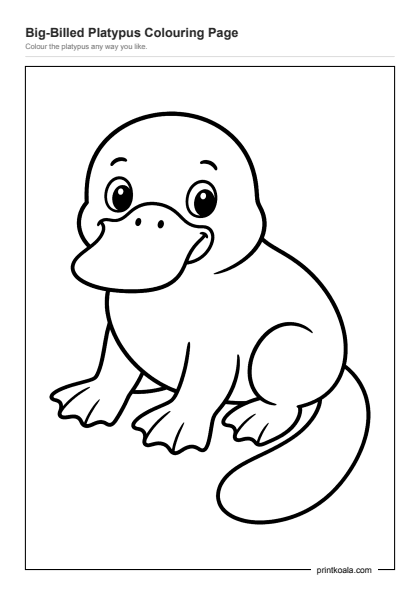
Big-Billed Platypus Coloring Page
Ages 3–58
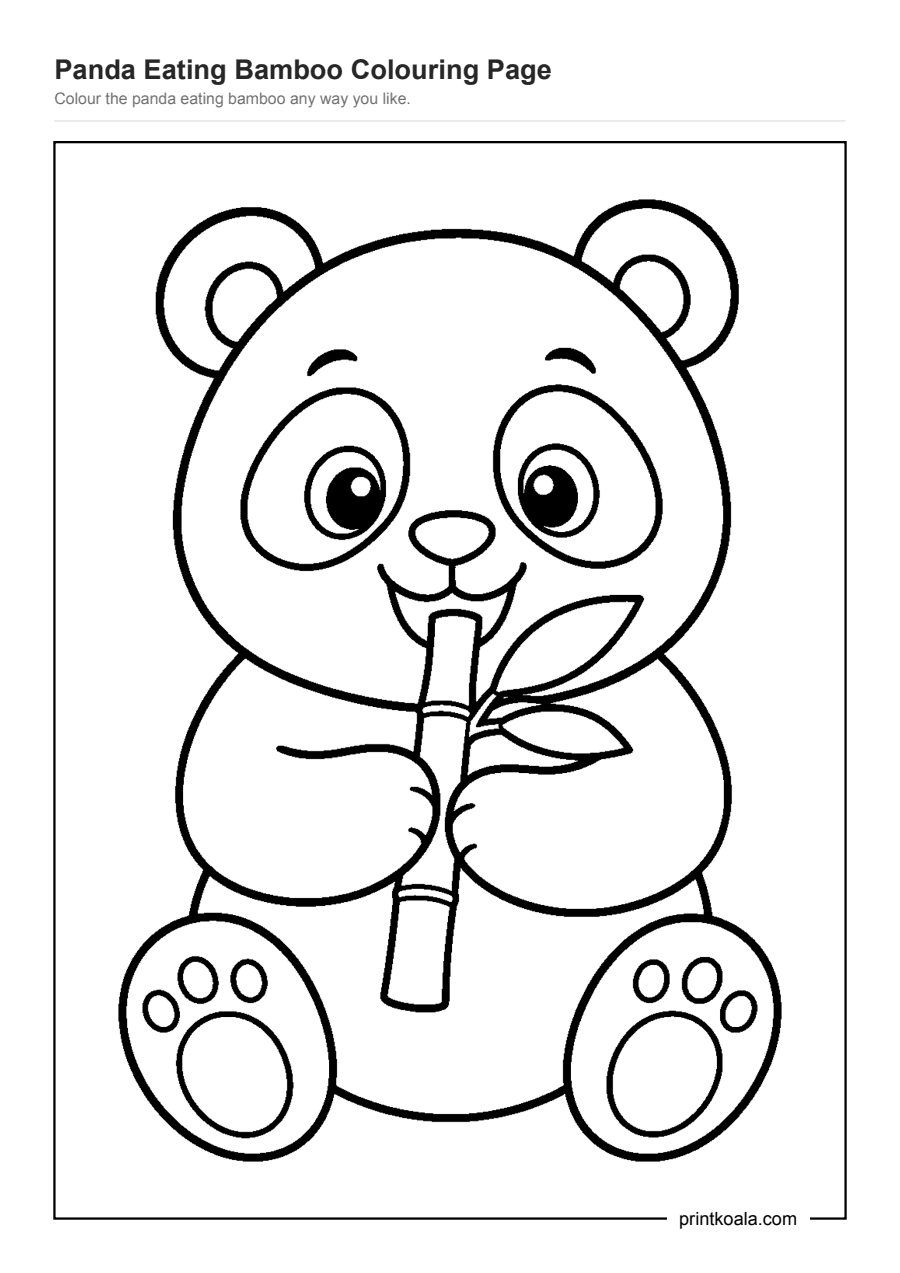
A round, seated panda holds one bamboo stalk in both paws, munching a cluster of pointed leaves, with big padded feet out front.
Free, no sign-up. Downloaded 9 times · A4 · Print at 100% scale
This panda sits square on the page, round head tipped forward, both front paws wrapped around a single bamboo stalk that runs from its mouth down to its lap. A cluster of pointed leaves branches off partway up the stalk. The eyes are two big circles inside soft oval patches, each with a tiny highlight dot left blank, and two round ears sit on top of the head. Both back feet are planted flat at the bottom of the page, and each one shows a set of paw pads: three small ovals across the top and one larger oval beneath them.
The drawing gives a child two very different jobs. The head, belly and rounded shoulders are wide open space, good for a first go with a new color and no worry about staying inside a line. The paw pads on each foot are the opposite: eight small ovals in total that ask for a steadier hand and probably a finer pencil or crayon tip. In between, the eye patches and ears are the classic place to reach for black, and the bamboo stalk with its segment lines gives a reason to switch to green partway through. It is an easy picture to talk about while coloring, too, since the panda is caught mid-bite.
Because most of the page is large, simple shapes, this one is friendly for a first coloring session, and the paw pads add just enough small detail to hold a slightly older child's interest without frustrating them. It suits a wide range of preschool ages, from a toddler coloring the belly in broad strokes to a five-year-old carefully working around each tiny paw pad.
Start with the belly and head, the biggest spaces, so your child feels quick progress. Save the eight small paw pad ovals for last, since they need the steadiest hand, and let an older child use a fine-tip marker there if crayon feels too clumsy.