🦁 Safari & Jungle Animals
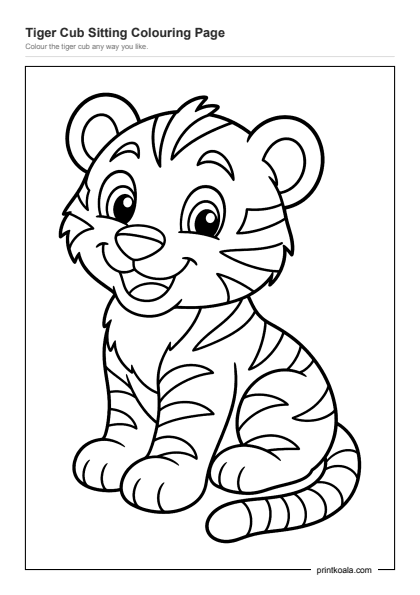
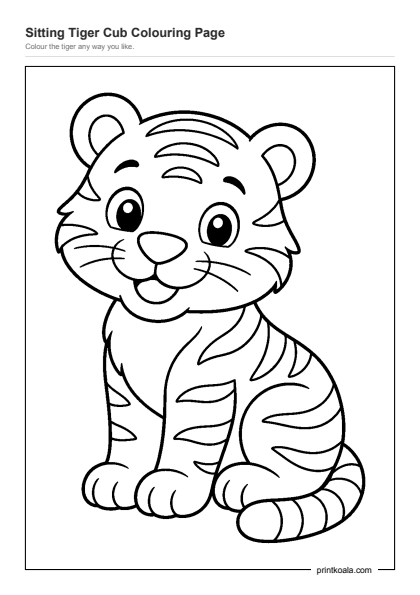
Sitting Tiger Cub Coloring Page
Ages 2–414
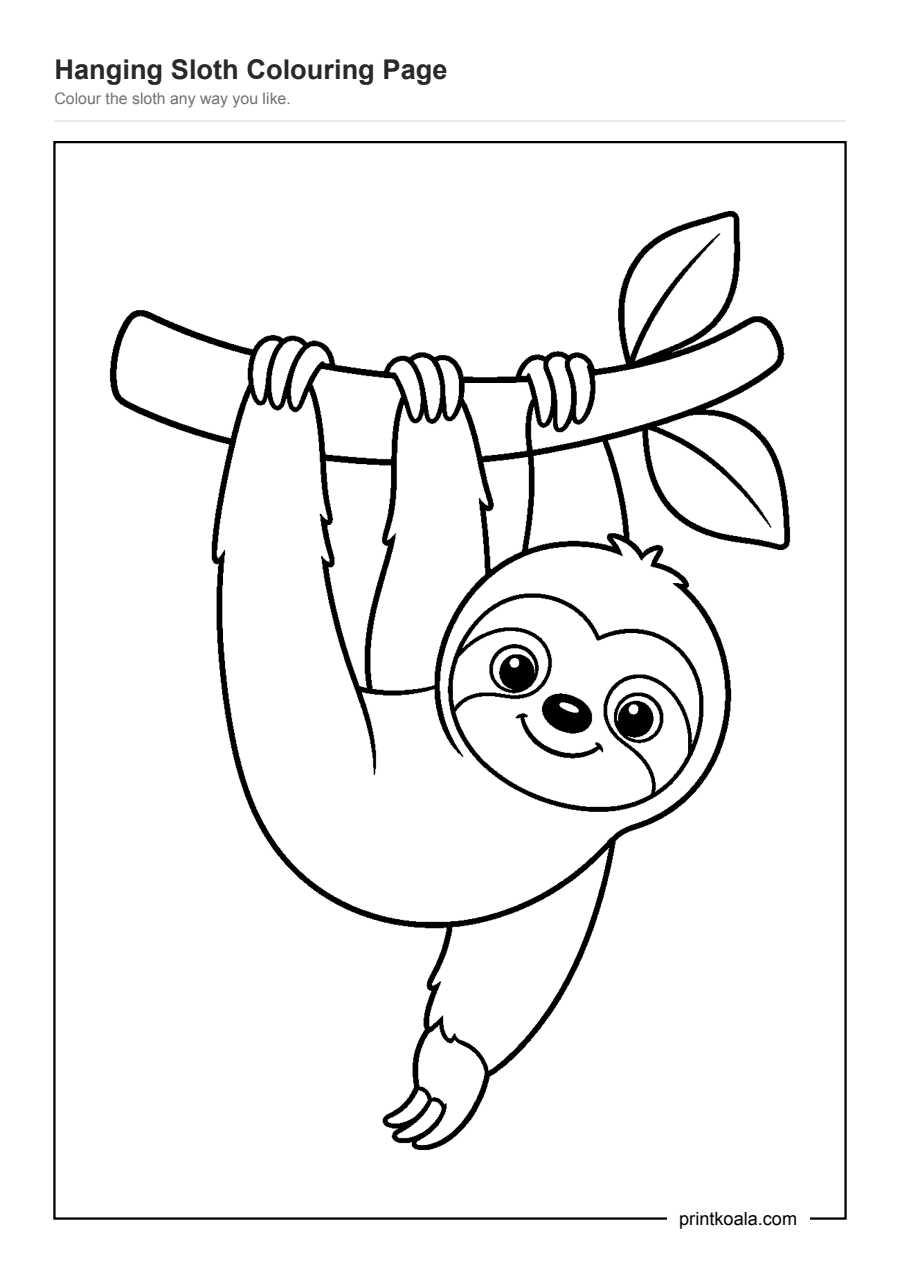
A smiling sloth hangs upside down from a curved branch by its front paws, tail curled below and three leaves in the corner.
Free, no sign-up. Downloaded 10 times · A4 · Print at 100% scale
This sloth hangs from a bendy branch, gripping on with both front paws while its back legs dangle loose underneath. Its body makes one long curve from the branch down to its round face, which sits off to one side with big circled eyes, a small oval nose and a easy smile. A tuft of fur sticks up between its ears. Off to the right, the branch sprouts three simple leaves, one large one up top and two smaller ones below it.
Most of this page is open space. The body, the face patches around the eyes, and the branch are all big, rounded shapes with nothing tiny trapped inside them, so a child can move a crayon in wide strokes without much fear of going over a line. The claws on each paw and foot are the only fiddly bits, and there are just a few of them. It is a good page for talking through what a sloth actually looks like while coloring it: the mask around the eyes, the curl of the tail, how the arms are longer than the legs.
Because the shapes are large and there is only one branch and one small cluster of leaves to fill in beyond the sloth itself, this sits on the easier end for preschoolers. It suits a child who is still building control over a crayon and wants to finish a whole page without it turning into a chore, and it is short enough to do in one sitting.
Start with the sloth's body and branch, the biggest shapes, before moving to the smaller face and leaves. If the claws feel too fiddly, let your child skip them or fill them in with one quick scribble rather than stopping altogether.