🦊 Forest & Woodland Animals
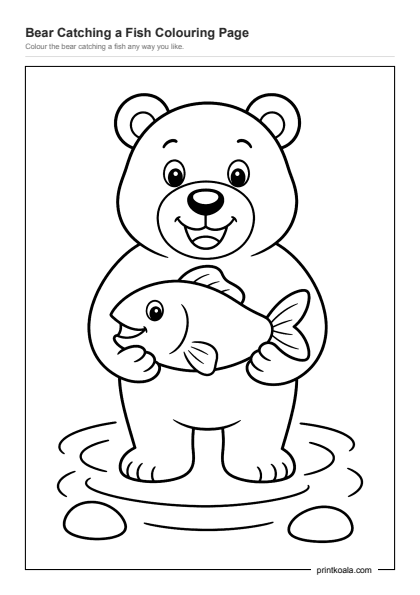
Bear Catching a Fish Coloring Page
Ages 2–510
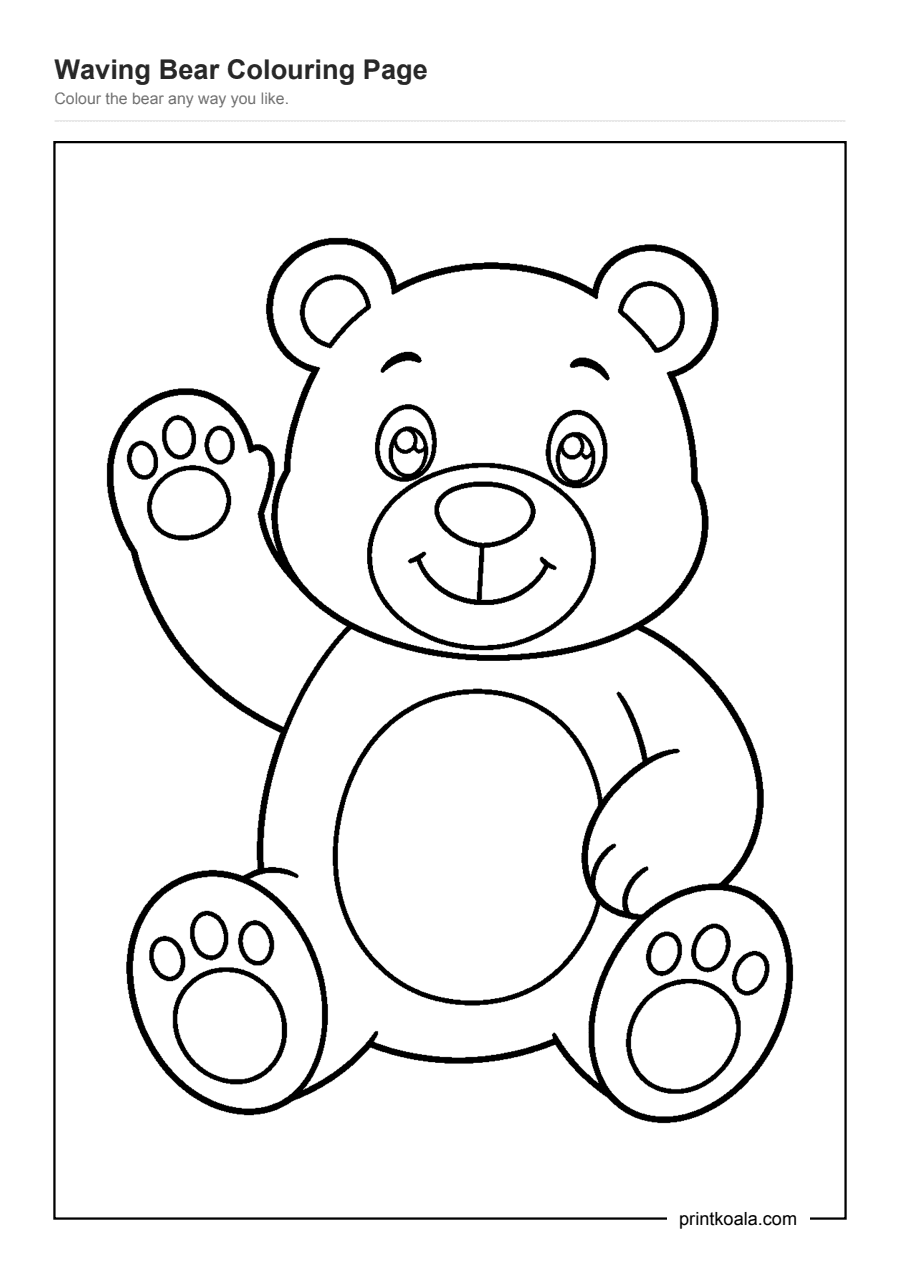
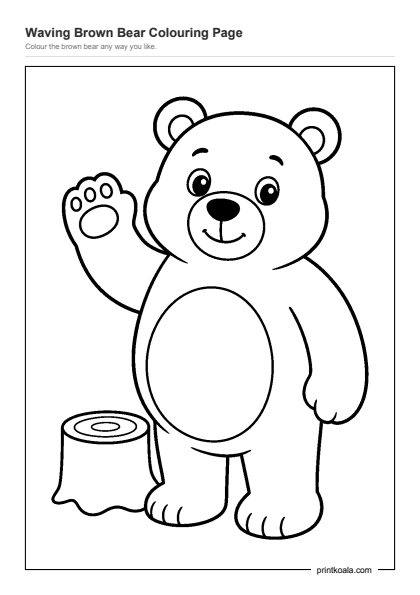
A round, sitting bear lifts one paw in a wave, with a big oval belly and paw pads to color on each foot.
Free, no sign-up. Downloaded 7 times · A4 · Print at 100% scale
This bear sits square on the page with its legs stretched out in front, one paw raised in a wave and the other resting down beside its round tummy. The face is kept simple: two oval eyes with tiny pupils, curved eyebrows, a small oval nose and a smiling mouth, all set inside one big head shape with two rounded ears. The belly is drawn as one large open oval, and each foot shows a bigger paw pad with three smaller toe pads above it, which repeats on the raised paw too. There is no background, no bow, no scenery, just the bear filling the middle of the sheet.
What makes this one worth printing is the size of the spaces. The belly, the head, the arms and the ears are all big, uninterrupted shapes, so a child holding a crayon for the first proper stretches of time can fill them without the tip sliding off the line every few seconds. The paw pads are the fiddly bit, small ovals that ask for a steadier hand or a fine-tip marker, and they are a natural spot for a parent to sit alongside and help. It is an easy page to talk over too: ask what color the bear should be, why it might be waving, whether all four paws should match.
Against other sheets in the woodland set, this is one of the simplest: no fern, no tree, no fur texture, just one friendly animal with a handful of small details worked into an otherwise open outline. That makes it a good starting page for a toddler still learning to stay inside the lines, and a quick, low-pressure one for an older preschooler to finish in a single sitting.
Start with the big belly oval so your child gets an early win, then move out to the head and arms. Save the small paw pads on the hands and feet for last, and hand over a narrower crayon or marker for those if the regular one keeps skidding off the lines.