✏️ Tracing & Pre-Writing
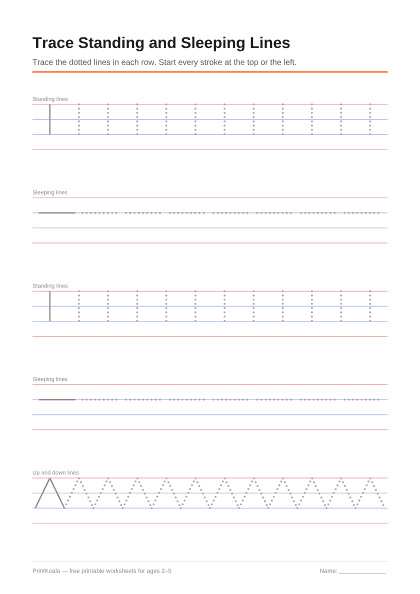
Trace Standing and Sleeping Lines
Ages 3–456
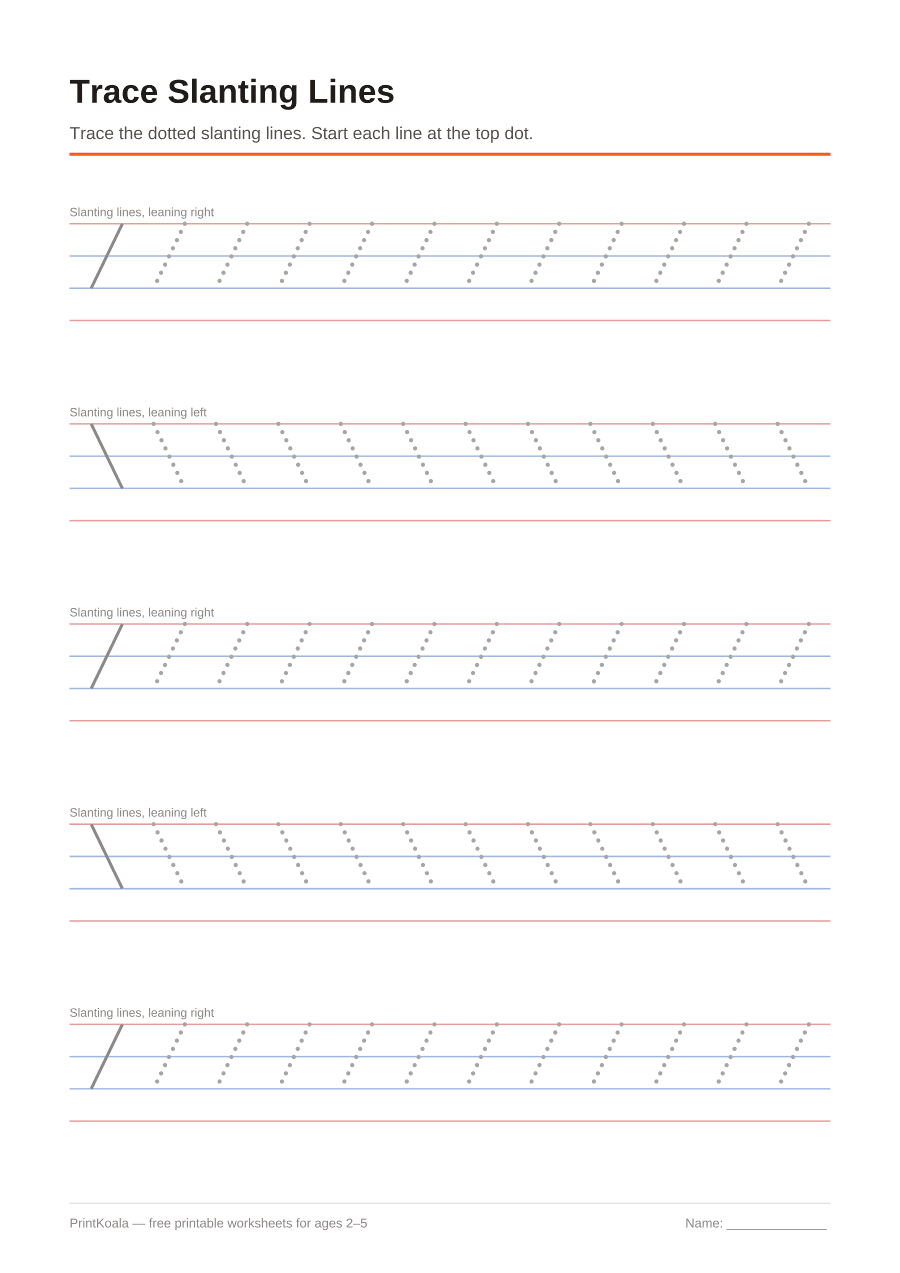
Your child traces dotted slanting lines on four-line handwriting guides, with rows leaning right alternating with rows leaning left.
Free, no sign-up. A4 · Print at 100% scale
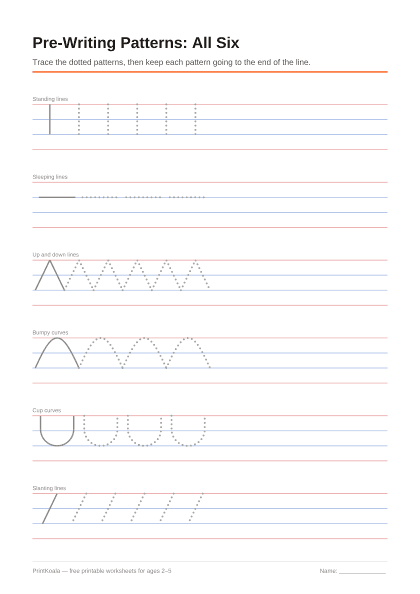
This page has five rows of slanting lines on four-line handwriting guides. Three rows lean right and two lean left, and they take turns down the page. Each row starts with a solid model line, followed by ten dotted lines to trace from the top line down.
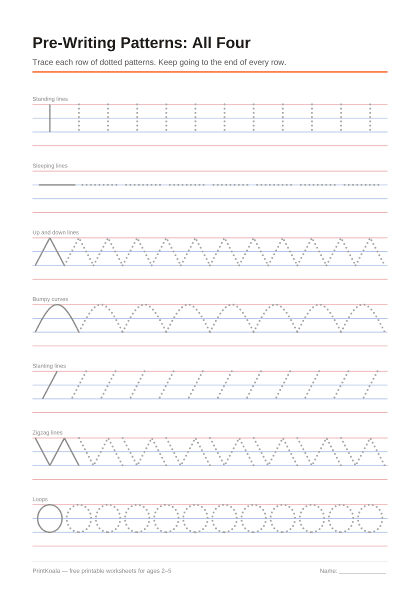
Slanting lines are the diagonal strokes in letters such as A, K, M, N, V, W, X, Y and Z. Most children can copy standing and sleeping lines before they can copy a diagonal, often somewhere around age four, because a slant means moving the pencil down and sideways at once. Switching direction every row keeps your child from getting stuck on one slant, and the dots give the hand a clear path to follow.
Before each row, run a finger along the solid model line together and say which way it leans. Then let your child trace slowly. A steady line that stays on the dots is better than a quick row that drifts off them.
A short, chunky pencil or crayon helps small hands grip for control. If the page feels long, do one right-leaning and one left-leaning row, then save the rest for another day.