🔤 Alphabet & Letters
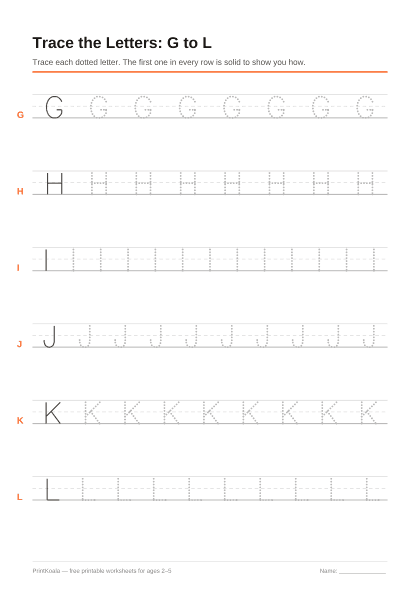
Trace Capital Letters G to L
Ages 3–560
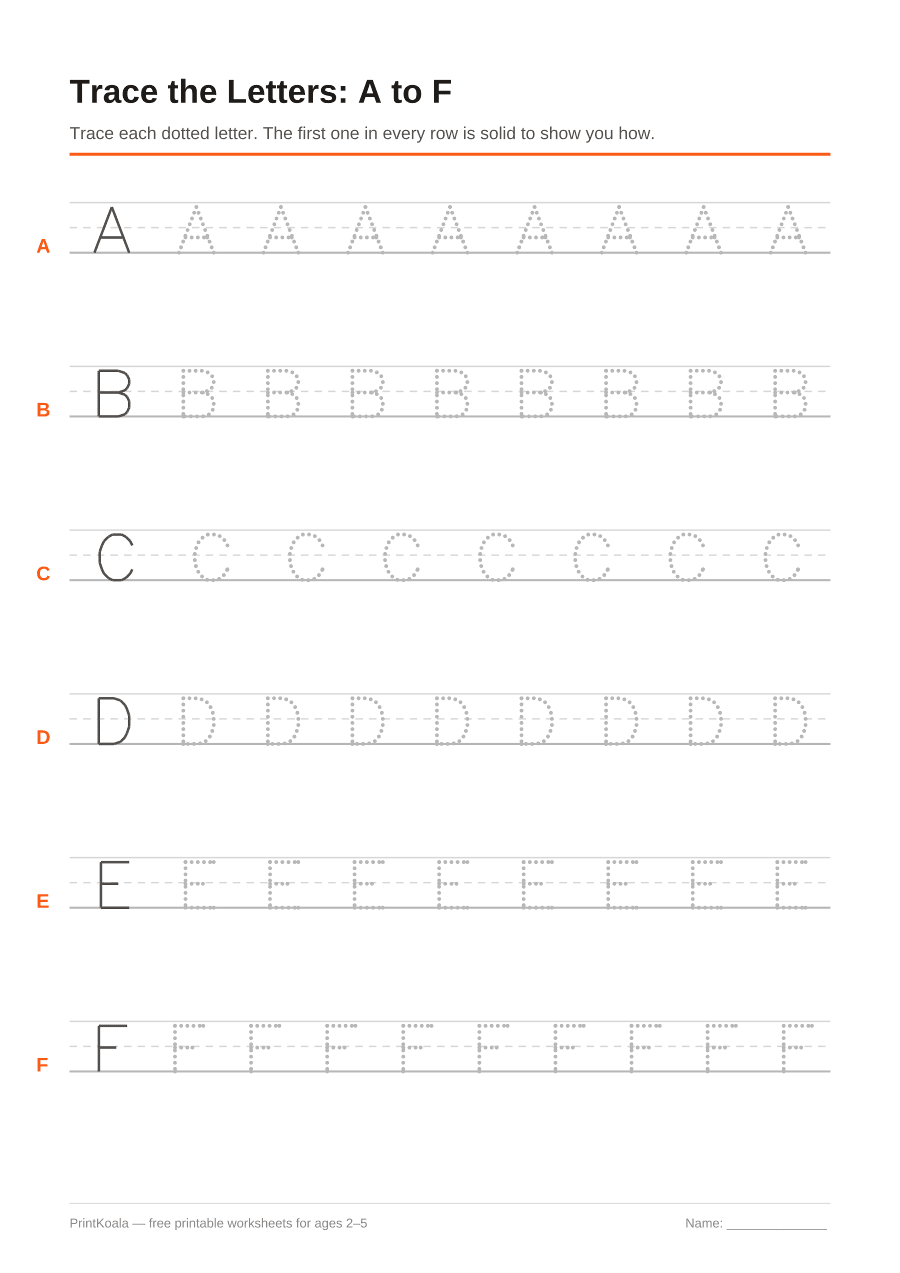
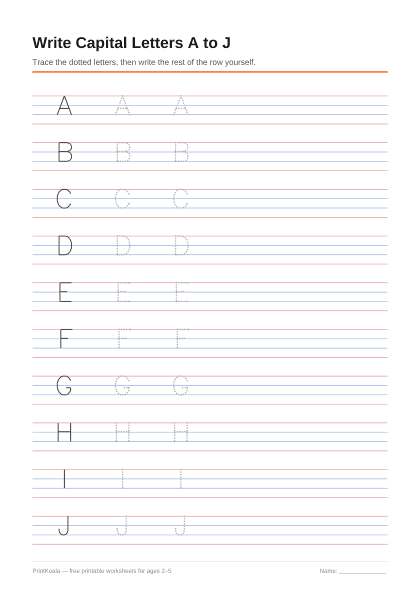
A one-page tracing sheet covering the capital letters A, B, C, D, E, F.
Free, no sign-up. Downloaded 79 times · A4 · Print at 100% scale
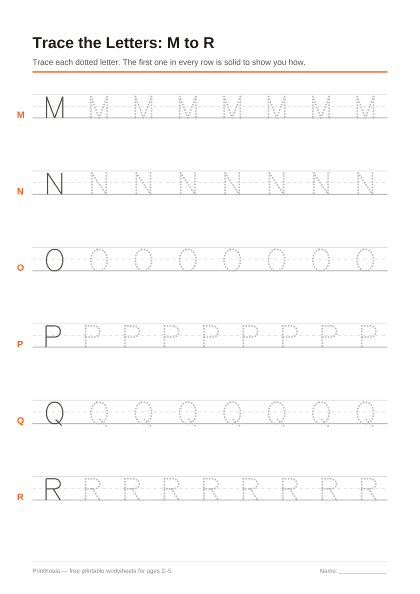
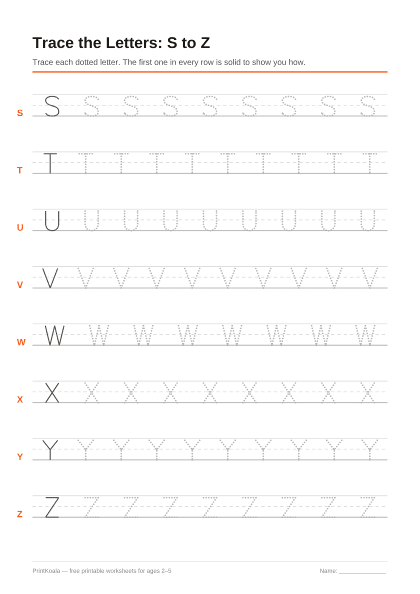
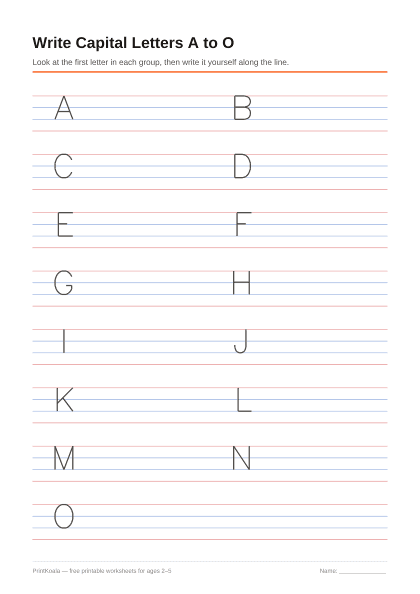
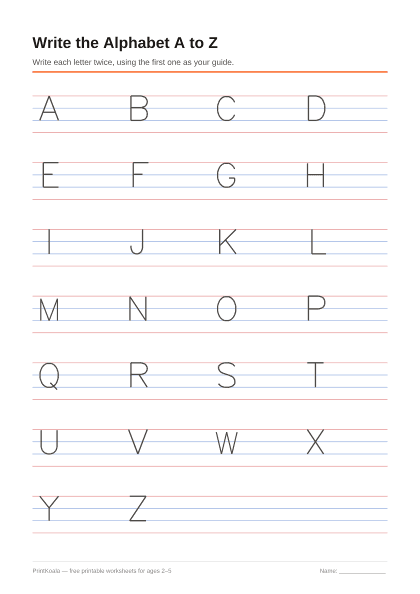
This printable gives your child one guided row for each of the capital letters A, B, C, D, E, F. Every row uses the three-line handwriting guide found in most preschool workbooks: a solid top line, a dashed middle line, and a heavier baseline. The first letter in each row is printed a little darker as a model to copy, and the rest are lighter so they gradually feel more like the child's own writing.
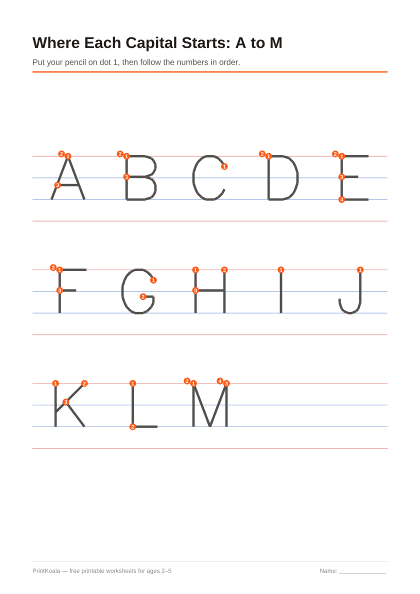
A starts at the top with two slanted strokes that meet at a point, then a crossbar. Children often draw the crossbar first, so it helps to say the order aloud: down, down, across. B and D are the pair to watch: both begin with a straight line down, then B adds two bumps and D adds one big one. C is a single curve that starts at the top and stops before it closes, and E and F share the same tall post, E taking one more arm at the bottom. Noticing that E is F with something added is the first time many children see letters as built from parts.
Capital letters come first for a reason. Their strokes are made almost entirely of straight lines and simple curves, which suits the level of hand control a three or four year old actually has. Lowercase letters, with their tighter curves and ascenders, are much easier once these shapes are familiar.
Print this at 100% scale on plain A4 or Letter paper. If your child is still building grip strength, slide the page into a clear plastic sleeve and let them trace with a dry-wipe marker — the same sheet then lasts for weeks.
Sit alongside your child and name each letter aloud before they trace it. B and D are the pair to watch here: count the bumps together before each row. Two or three rows in one sitting is plenty — stopping while they are still enjoying it matters more than finishing the page.