🦊 Forest & Woodland Animals
Squirrel Holding an Acorn Coloring Page
Ages 3–58
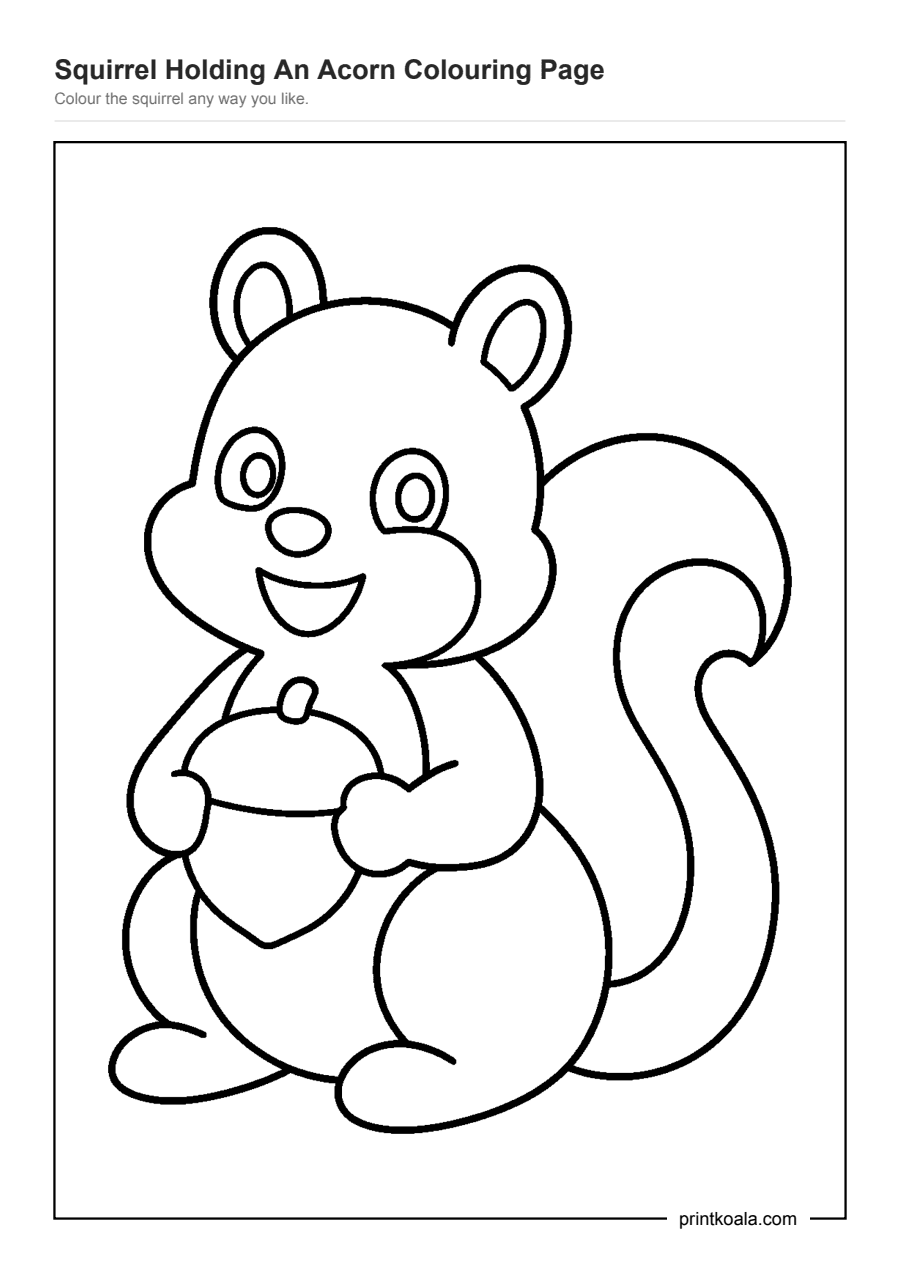
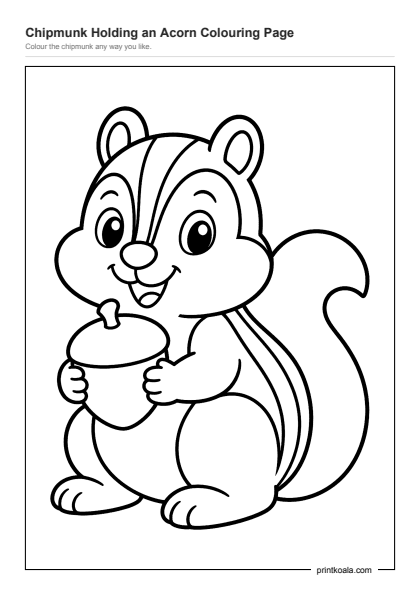
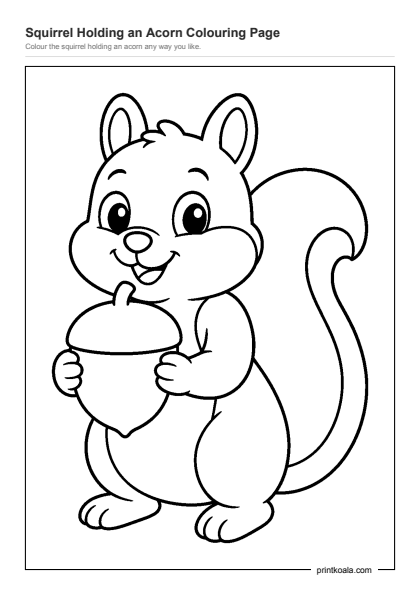
A round, smiling squirrel sits up and hugs one big acorn to its chest, its curled tail arching high behind it.
Free, no sign-up. Downloaded 7 times · A4 · Print at 100% scale
This squirrel sits upright on two feet, both paws wrapped around a single oversized acorn held right against its middle. Its face is turned slightly to one side with a wide open smile, two round eyes, a small oval nose and rosy cheeks. One thick, curled tail sweeps up behind its back and takes up almost half the page. There is no background, no tree and no scattered nuts — just the squirrel and its one acorn on a plain white sheet.
Nearly every shape here is large and stands well apart from the next: the tail, the round belly, the acorn, the ears. A child can fill the whole tail in one color and the belly in another without the crayon ever having to slow down for a tight corner. The only fiddly bits are the eyes, nose and the little cap on top of the acorn, so there is a small win for steady hands alongside the big, easy sweeps. It is also a natural page to talk over — ask what color a squirrel's tail should be, or whether the acorn should match the tree it fell from.
Because the lines are thick and the enclosed spaces are so few, this is one of the easier sheets in the woodland set. It suits a child coloring largely on their own for the first time, or a younger one who still needs big, forgiving spaces to stay inside. Older preschoolers who like more detail may finish it quickly and want a busier page next.
Let your child start with the tail or belly since those are the biggest, easiest spaces. Save the eyes, nose and acorn cap for last — if the crayon slips there, it barely shows against such a simple drawing.