🎸 Musical Instruments
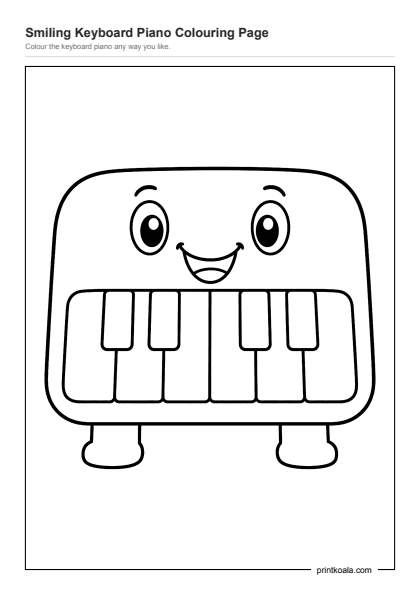
Smiling Keyboard Piano Coloring Page
Ages 2–418
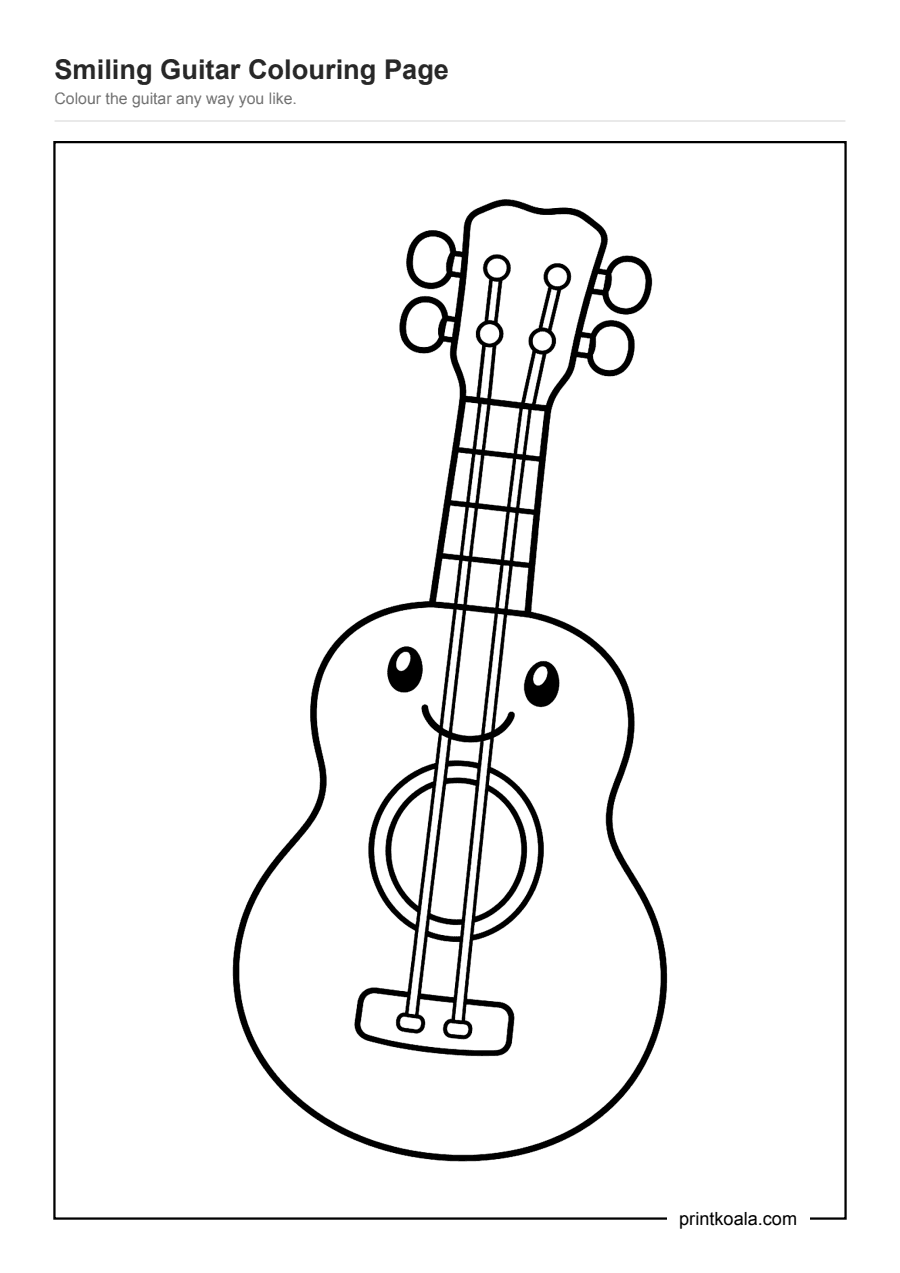
A big, round-bodied guitar with a happy face, a double-ringed sound hole and four tuning pegs at the top of its neck.
Free, no sign-up. Downloaded 9 times · A4 · Print at 100% scale
This guitar is drawn face-on, with a curvy, oversized body that takes up most of the page. Right above the sound hole sit two oval eyes and a curved smile, so the instrument reads as a cheerful character rather than a technical diagram. The sound hole itself is a neat double ring in the center of the body. Above it, a long neck carries three fret lines and two strings that run the whole length of the guitar, from a scalloped headstock with four tuning pegs and four small string-post circles, down through the body to a rectangular bridge with two little pegs near the bottom edge.
The body and neck give a child plenty of room to color in broad strokes with a fat crayon and still stay inside the lines, which is where most of the page will be won or lost for a younger child. The sound hole ring, the eyes, the tuning pegs and the bridge pegs are all small enough to ask for a steadier hand or a finer pencil, so the page naturally moves from easy to a bit trickier without ever getting fiddly. It is also an easy one to talk over while coloring: how many pegs are at the top, whether the strings should match the body or stand out against it, what color a guitar with a smile like that should be.
Because the fine parts are few and clearly separated from the big open shapes, this sheet sits on the easier end for its category. A two or three-year-old can manage it with an adult coloring the pegs and sound hole afterwards, and a four or five-year-old should be able to finish the whole thing unaided in one sitting. It works well as a first music-themed sheet before moving on to instruments with more detailed shading or overlapping parts.
Let your child color the big body and neck first while their crayon grip is loosest, then hand over a fine-tip marker for the sound hole ring, eyes and pegs. If the small circles at the top get scribbled over, that is fine — the guitar still reads clearly.